

Irati Nature Trail
Between gorges, tunnels and forests
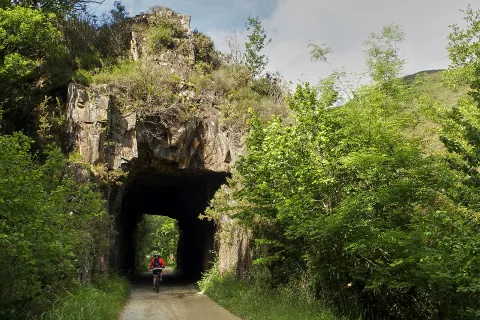
Here, where the old railway line runs alongside the course of the Irati River and the limestone walls of the gorge narrow the horizon, time moves slowly. Amidst tunnels carved into the rock and old stations that still echo with the sound of Spain’s first electric passenger train, the Irati Nature Trail reveals a serene Navarre, shaped by water, wood and industrial heritage.
The route crosses valleys and gorges where the silence is broken only by the flight of vultures or the constant murmur of the river. Today, that railway, originally built to transport timber from the Irati Forest, has been transformed into a pleasant path for walking or cycling at a leisurely pace, amongst historic bridges, forests and small villages that have kept their connection with the landscape intact.
Irati Nature Trail – general information
The Irati Nature Trail follows part of the route of the old “El Irati” railway, a line opened in 1911 that linked Pamplona with Sangüesa and went down in history as the country’s first electric passenger train. Today, the route covers nearly 50 kilometres and connects the Pre-Pyrenean Basins with the region of Sangüesa. Along the route, you’ll find old halting points, tunnels carved into the rock and bridges that still retain the railway character of the early 20th century.
The route shares the limelight with the river landscape. The rivers Irati, Salazar, Erro and Areta run alongside much of the route, creating a particularly pleasant setting for walking and cycle touring. It also links up with other sustainable transport routes such as EuroVelo 3 and various nature trails in Navarre.
How do you get to the Irati Nature Trail?
Access is possible from various points along the route, depending on the section you wish to explore.
- From Lumbier: One of the best-known access points is located next to the NA-150, very close to the Foz de Lumbier and the old railway tunnels.
- From Aoiz: The town serves as a convenient halfway point, offering amenities and direct access to various sections of the trail.
- From Sangüesa: The eastern end of the route allows you to start your journey in a setting steeped in history and close to the River Aragón.
- From Liédena: Next to the old station, you can still sense the railway’s past, now converted into a nature trail.
What to do on the Irati Nature Trail?
The route combines industrial heritage, nature and hidden corners where the landscape constantly changes between gorges, riverbanks and forests.
- Exploring the Foz de Lumbier: One of the most spectacular sections passes through this limestone gorge, where griffon vultures, Egyptian vultures and other rock-dwelling birds soar overhead.
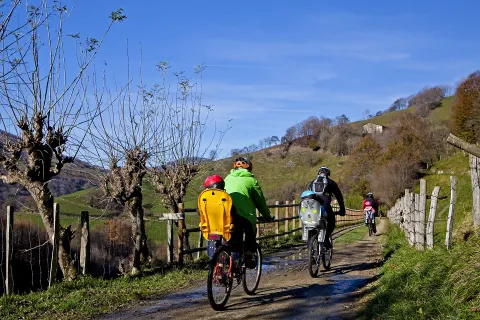
- Walking or cycling on gentle terrain: The comfortable surface and gentle gradient make the route enjoyable on foot or by bike, even for families.
- Discover old railway features: Tunnels, metal bridges, catenary poles and old stations are reminders of the industrial past of the old Irati railway.
- See the “carrico” over the gorge: This curious system suspended over the river was once used to transport people and materials from one side of the gorge to the other.
- Visit villages and historical heritage: Aoiz, Liédena or Urroz-Villa still have bridges, stately homes and small remnants linked to the history of the route and the nearby valleys.
- Enjoy the landscape in different seasons: Spring fills the riverbanks with greenery; autumn tints the forests with reddish and golden hues that completely transform the route.
Information about: Irati Nature Trail

Irati Greenway

Irati Forest

Irati Greenway | Bike Rides
-
Bidasoa Greenway
Here, where the River Bidasoa sets the pace of the valley and the old bridges still bear witness to … -
Plazaola Greenway
Here, where the old railway tracks once cut through damp mountains and dense forests, the Plazaola G…


