
Sangüesa region – Pre-Pyrenees
Where the rock learns to remember

Where the rock learns to remember
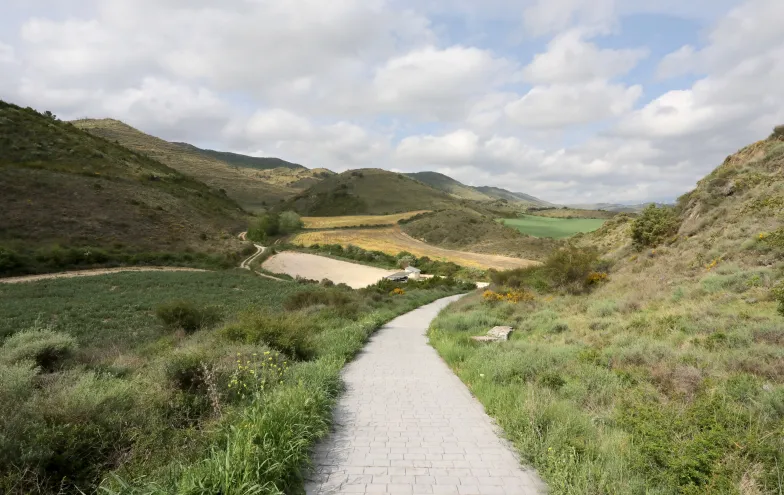
Between the first undulations of the Pyrenees and the lands that herald them, the region breathes with an ancient rhythm. Here, the gorges open like pages of stone, the forests hold shadows that know forgotten names, and the meadows retain the faint trace of the flock that passed at dawn.
It is not a static landscape, but a territory woven by human hands over centuries: paths marked by transhumance, clearings opened by the patient axe, tracks that still follow the pulse of ancient trade routes. The land offers what it is: tender white beans, slow-roasted lamb, shared wine; and in that simple gesture, it reveals its memory.
Here, stone, water and forest converse with history, leaving it to the traveller to decipher their signs.
Resuelve las dudas más habituales sobre los diferentes parques y zonas naturales: cómo llegar, qué visitar, normas, rutas y servicios para planificar tu experiencia con facilidad.
The Sangüesa – Pre-Pyrenees region boasts an extensive network of trails, notably the Irati Trail, the paths of the Foz de Lumbier, the Roman Road of Arce and the trails of the Roncal Valley. It also offers technical terrain for mountain biking and trail running in areas such as Esteribar and Vidangoz.
Yes, the Sangüesa – Pre-Pyrenees region is an area where you can experience the daily life of the villages, enjoy mountain cuisine (pochas, vegetables, lamb and cheese) and take part in local traditions such as rural sports, dances and traditional festivals.
In the Sangüesa – Pre-Pyrenees region, there are dense forests, limestone peaks, deep gorges, open meadows and rivers that shape the landscape. It is an area where wildlife (deer, wild boar, birds of prey) forms part of the landscape.
It stretches across the north and north-east of Navarre, as a gateway to the Pyrenees, encompassing valleys such as Roncal, Salazar and Arce, and following the course of rivers such as the Irati, the Urrobi and the Erro.
The Sangüesa – Pre-Pyrenees region is a region located in the Autonomous Community of Navarre, in north-eastern Spain. It lies in the transition zone between the central Navarrese valley and the foothills of the Pyrenees, hence the name ‘Pre-Pyrenees’.
Online
