

Camino de santiago
The pilgrim’s trail in Navarre
Here, where the first yellow arrows appear amidst mountains and damp forests, the Camino de Santiago crosses Navarre, leaving behind centuries of history, hospitality and encounters. The landscape changes with every stage: from the Atlantic green of the Pyrenees to the open plains of the Central Zone and the vineyards heralding the south.
Along the route, medieval bridges, monasteries, historic centres and small villages accompany the pilgrim’s journey. The Way does not follow a single route, but rather a network of paths connecting valleys, traditions and different ways of understanding the leisurely journey.
Why walk the Camino de Santiago in Navarre?
Navarre is one of the main gateways to the Camino on the Iberian Peninsula. Its territory encompasses some of the most iconic sections of the entire Way of St James, both for the historical significance of its monuments and for the variety of landscapes it traverses.
The route offers five distinct itineraries: the two branches of the French Way, the Baztan Way, the Ebro Way and the Sakana Way. Each has its own distinct character, ranging from the Pyrenean forests to the orchards of the Ribera.
In addition to its monumental heritage, the Way retains a strong tradition of hospitality. Hostels, churches, squares and small shops continue to form part of a culture linked to travel and encounters between walkers. In towns such as Roncesvalles, Puente la Reina or Estella-Lizarra, the past remains visible in the stone, whilst the local cuisine and everyday life keep the character of the region alive.
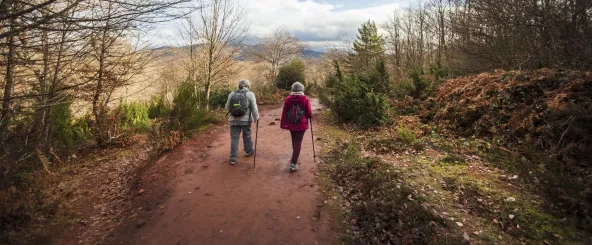
Stages of the Camino de Santiago in Navarre
Diverse routes to discover Navarre through its history, landscapes, and Jacobean tradition.
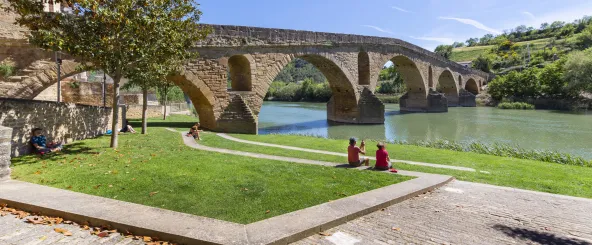
The French Way
Nature, tradition, and tranquility along one of the most authentic routes of the Camino de Santiago.
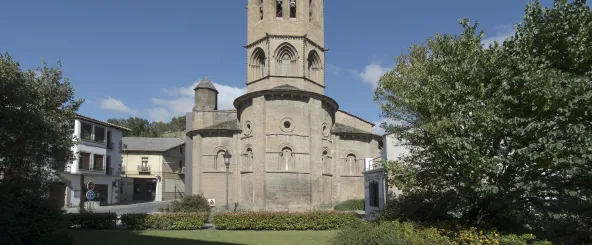
The Aragonese Way
A journey through mountain ranges, villages, and heritage sites that revives one of the oldest Jacobean routes.
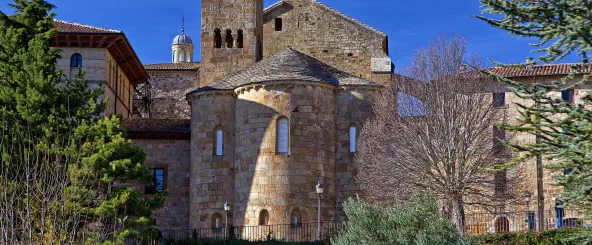
The Baztan Way
An ancient pilgrimage route traversing mountains, heritage sites, and stunning landscapes.
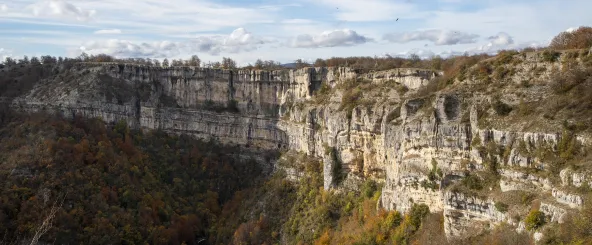
The Sakana Way
Heritage, nature, and tranquility on a historic Jacobean route that winds through rural landscapes and small villages.
