
Lumbier
The realm of the vultures and the gateway to the gorges

The realm of the vultures and the gateway to the gorges
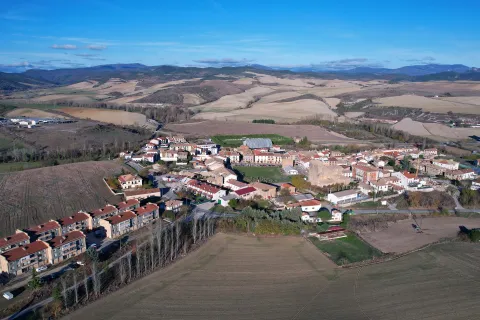
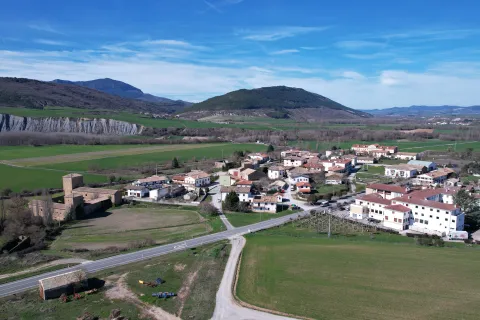
Where the rivers Irati and Salazar meet beneath the foothills of the Sierra de Leire, the landscape of Lumbier is centred on a hill with a flat summit. The character of the town, whose history dates back to the Iluberritani and the Roman city of Ilumberri, is evident in the stonework of its stately homes and in the sheer cliffs that guard the largest colony of griffon vultures in this part of the Pre-Pyrenees. The mineral landscape and the flow of water tell a story in which the stone and the flight of the birds of prey remain as clear records of a territory that breathes in silence.
The identity of this town in the Merindad de Sangüesa is rooted today in a medieval layout that retains the stamp of 1328 and in the traces of a history that has integrated the former timber industry into a bilingual way of life tied to the land.
Located 38 kilometres from Pamplona, the town serves as a transport hub to the valleys of Salazar and Roncal, maintaining an urban scale where the use of heritage and the relief of the surrounding mountain ranges define everyday life.
From geological wonders to architectural treasures, Lumbier offers something for everyone.

View from the stone bridge in Lumbier, with a village of traditional architecture in the background.

Lumbier Church with a clock tower, bell tower, cloister of stone arches, and a square with terraces.

Stone bell tower at Lumbier church, with two visible bells.
Resuelve las dudas más habituales sobre los diferentes parques y zonas naturales: cómo llegar, qué visitar, normas, rutas y servicios para planificar tu experiencia con facilidad.
Lumbier is situated in a privileged fluvial enclave where the Irati River and the Salazar River meet. It is precisely the Irati that has sculpted the famous Foz de Lumbier over millennia.
Online
