

The listening hillside and the speaking stone
Here, the landscape lies in the foothills of the Sierra de Leyre, where the stone bears witness to a history of passage and defence dating back to Roman times. From the parish church of Santa María de la Asunción in Liédena, the village descends towards the hillside, tracing narrow streets where the murmur of the River Irati meets the sheer drop of the gorge. The ancient bridges, gone but not forgotten, continue to mark the landscape with their silent traces. The stonework, solid and patient, bears the marks of battles and footsteps, of daily life and defensive strategy. In Liédena, every stone and every bend in the river reminds us that time here does not rush by: it pauses, stands still and accompanies us.
Liédena general information
Liédena occupies a territory where the course of the River Irati and the farmland have set the pace for generations. The town serves as a hub connecting the river basin and the Yesa reservoir, a natural and strategic stopping point that has welcomed travellers for over two thousand years.
Liédena’s identity is recognised not only in today’s local council, based on Calle Escuelas, but also in its history as a refuge and link to the historic town of Sangüesa and the Camino de Santiago , preserving the memory of those who walked these routes long before maps existed.
What to see in Liédena?
Liédena’s heritage offers a glimpse into the fusion of classical archaeology, historical engineering and the legacy of stately life.
- Roman villa of Liédena: Situated on a hillock on the right bank of the Irati, this 2nd–4th-century site reveals the classical origins of our settlement. The recovered mosaics, now in the Museum of Navarre, record the lives of those who inhabited these lands almost two thousand years ago.
- Church of Santa María de la Asunción: This church overlooks the village from above, retaining Gothic features beneath its 18th-century façade. Inside, the Renaissance altarpieces and the images of the Virgin of Belén serve as a record of the town’s spiritual culture.
- Remains of the Puente de Jesús or Puente del Diablo: At the mouth of the Foz de Lumbier, the stone bears witness to a medieval bridge destroyed in 1812 during the War of Independence. Its unfinished silhouette now stands as a testament to the legends and the erosive force of the water.
- Irati Greenway: The old route of Spain’s first electric passenger train has been restored as a nature trail. The route offers views of the gorge’s wild landscape and the remains of the old railway station.
- Civil architecture: A stroll through the village centre reveals stately homes with Baroque coats of arms and corners where carved stone coexists with the residents’ daily care for their surroundings.

Rural church of Liédena with a stone bell tower peeking out behind stone houses.

Liédena square with stone houses, balconies, and a courtyard.

Liédena square with stone Navarrese rural architecture.
Preguntas frecuentes
Resuelve las dudas más habituales sobre los diferentes parques y zonas naturales: cómo llegar, qué visitar, normas, rutas y servicios para planificar tu experiencia con facilidad.
According to the official INE records for 2025, the municipality has a population of 354 inhabitants.
Liédena is located in the foothills of the Sierra de Leyre, within the Merindad of Sangüesa, near the Yesa reservoir and the city of Sangüesa.
Liédena's main festivities are in honor of the Holy Relics and are celebrated for five days, coinciding with the last weekend of July. The calendar also includes the pilgrimage to La Granja on May 1st and the feast day of San Isidro on May 15th.
You might also be interested in
-
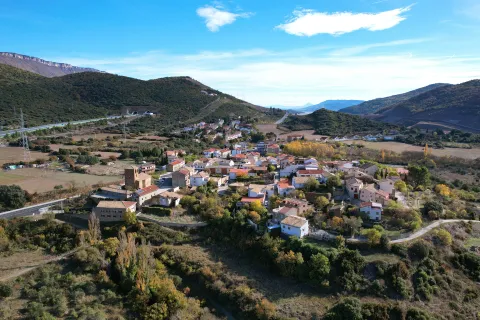
Yesa
The mountain that prays over the waterYesa nestles beneath the sheer slopes of the Sierra de Leyre, … -
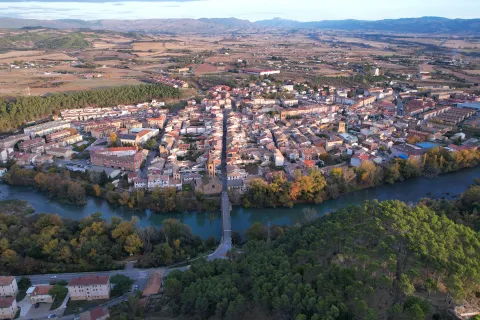
Sangüesa / Zangoza
The stone city that grew up beside the water Sangüesa unfolds upon the terrace of the River Ar… -
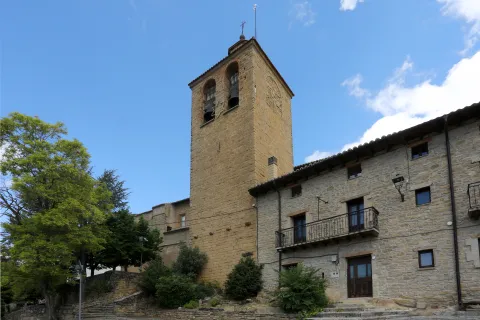
Sada
Where the land recalls the passage of RomeIn Sada, the landscape undulates amongst olive groves and … -
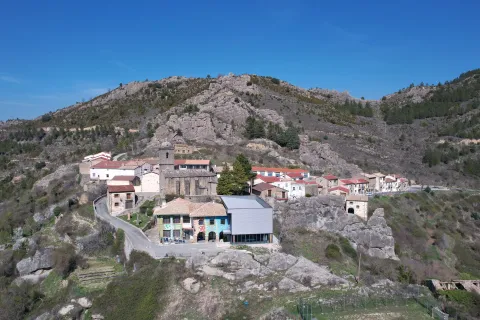
Petilla de Aragón
The border carved in stoneHere, the contours of the Sierra de Peña trace the outline of our insular …
AltaNavarra Chat
Online
