

The border carved in stone
Here, the contours of the Sierra de Peña trace the outline of our insular condition, a Navarre surrounded by Aragon as if the map had decided to dream. In this corner of the Sangüesa region , silence settles upon the cobbled streets and the echo of the ancient fortress clings to the rock with the same tenacity as the moss.
Between two crowns, between two memories, time does not move forward: it settles. The thought of Santiago Ramón y Cajal still hovers like a secret map beneath the circular flight of birds of prey. Everything takes place on the mountain ridge overlooking the Onsella valley, where the landscape, rather than defining boundaries, acts as a guardian.
Petilla de Aragón general information
Petilla de Aragón forms a Navarrese exclave divided into two territories: Petilla and Los Bastanes. Here, life unfolds at an altitude of 843 metres, blending the daily rhythm of a mountain village with the scientific legacy of Santiago Ramón y Cajal, who was born here in 1852. The administrative history of Petilla de Aragón records its historical affiliation with the Kingdom of Navarre since the 13th century, maintaining a unique identity that is evident in its landscapes of oak and pine trees, and in its recent partnership with other European ‘Nobel Towns’.
What to see in Petilla de Aragón?
In Petilla, the architectural heritage weaves a tapestry of medieval faith, the light of knowledge and the shadow of its walls.
- Parish Church of San Millán Abad: This 13th-century stone building features a nave with six-part Gothic vaults. Its Romanesque façade, with Jaqués-style chequered arches, reflects the solidity of medieval religious architecture and houses within a Gothic crucifix of gentle expression and a carving of the Virgin of Charity, patron saint of our town.
- Birthplace of Ramón y Cajal: The stonework of this house on Calle Mayor now houses a museum dedicated to the Nobel Prize-winning physician. The space allows visitors to view both the work of Santiago Ramón y Cajal and a recreation of a period home, integrating science into the traditional urban fabric.
- Remains of the castle: On the rock known as La Torreta, the stone still bears the carved grooves of what was once a defensive rock fortress. This is the spot where the terrain allows one to understand the ancient surveillance of the border crossings between the kingdoms of Navarre and Aragon.
- Stone wash house and streetscape: A stroll through the town centre reveals corners where civil architecture blends with the rock. The use of local materials in fountains and walls demonstrates how daily life has adapted to the harshness of the Pre-Pyrenees.
- Natural surroundings and Mount Selva: The paths climbing to the highest points of the municipality offer a glimpse of the biodiversity of a landscape where haste fades away. The summit of Mount Selva provides a view over the Onsella basin, where the mineral composition of the rocks dictates the course of the ravines.

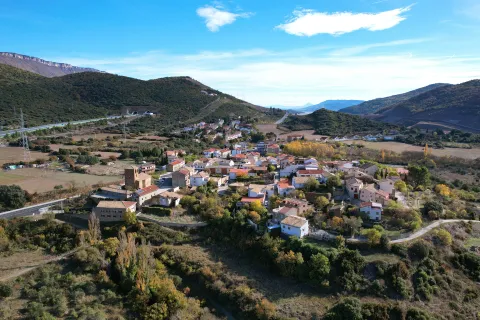
Village of Petilla de Aragón settled on a hillside with traditional houses and rock formations in the background.

Street in Petilla de Aragón with stone houses and traditional architecture.

Cobblestone street in Petilla de Aragón with white stone houses and a church tower in the background.
Preguntas frecuentes
Resuelve las dudas más habituales sobre los diferentes parques y zonas naturales: cómo llegar, qué visitar, normas, rutas y servicios para planificar tu experiencia con facilidad.
Petilla de Aragón belongs to Navarre due to a loan that Sancho VII the Strong of Navarre made to Peter II of Aragon in the early 13th century. Upon the death of the Aragonese monarch before returning it, the Navarrese king executed the guarantee of the debt, keeping the castle and the town, which were definitively incorporated into Navarre in 1231.
According to the official INE records for the year 2025, the municipality has a population of 29 inhabitants.
The patron saint festivities of Petilla de Aragón are celebrated on September 8th in honor of the Virgin of Charity. Additionally, this village maintains traditions such as the Saint Sebastian bonfire in January, with a fire lit in the square, music, and community snacks at the inn.
You might also be interested in
-
Yesa
The mountain that prays over the waterYesa nestles beneath the sheer slopes of the Sierra de Leyre, … -
Sangüesa / Zangoza
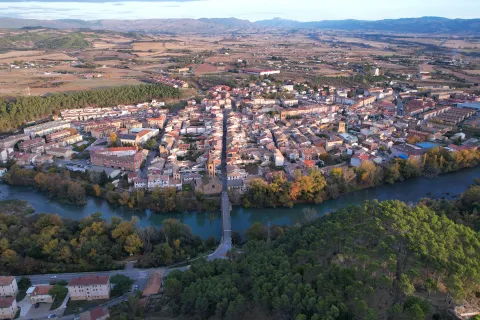
The stone city that grew up beside the water Sangüesa unfolds upon the terrace of the River Ar… -
Sada
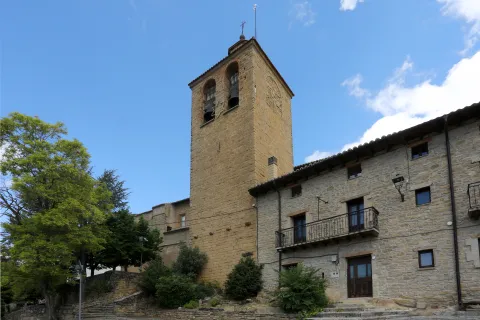
Where the land recalls the passage of RomeIn Sada, the landscape undulates amongst olive groves and … -
Liédena
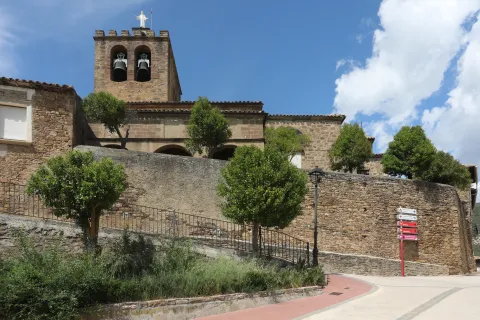
The listening hillside and the speaking stoneHere, the landscape lies in the foothills of the Sierra…
AltaNavarra Chat
Online
