

Where the land recalls the passage of Rome
In Sada, the landscape undulates amongst olive groves and vineyards, whilst the ancient Roman road (which linked Liédena with Eslava ) remains like a serene scar on the skin of the landscape. In this village in the region of Sangüesa , the stonework absorbs the dry light of the continental Mediterranean climate and returns it transformed into silence.
Sada is recognised in the pause of the paths that wind through oak groves and in the horizon of grain fields that undulate like a still sea. It was a transit point on the way to Vizcaya, and still seems to hold the echo of travellers. Here, history is not told aloud: it settles on the walls, where the border ceased to be a line and became character.
Sada general information
In this village, vines, olive groves and grain fields set the annual rhythm. For centuries, Sada formed part of a chain of medieval fortresses that protected this transit territory. In 1846, it separated from the Val de Aibar, asserting its administrative autonomy, and in 1980 it regained its official name, Sada, after decades as Sada de Sangüesa. Today, daily life is sustained by the primary sector and by a municipal administration that preserves the balance between tradition and continuity.
What to see in Sada?
Sada reveals itself as a crossroads of eras where stone, faith and the road converse without fanfare.
- Traces of the Roman road: The area still bears the mark of the ancient road that linked Liédena with Eslava, highlighting the origins of the settlements and the importance of the vine and olive trade since ancient times.
- Romanesque heritage and medieval bridges: The town centre and its surroundings are home to churches and chapels of Romanesque origin, integrating medieval stonework into the everyday landscape. Its bridges bear witness to the historical engineering required to span the region’s terrain.
- A branch of the Camino de Santiago: A branch of the route that came from Sangüesa and headed towards Moriones and Vizcaya passes through this town, serving as a record of pilgrims’ passage through the Valdorba.
- The legacy of the Aznárez family and St Francis Xavier: The town’s stonework preserves the memory of the Aznárez family, who were granted the castle of Javier in 1236, and the family connection to St Francis Xavier, whose maternal grandmother was a native of Sada.
- Trails amongst oak and holm oak trees: The natural surroundings offer hiking routes where the scrubland vegetation and local wildlife come to life, allowing visitors to observe the contrast between cultivated land and the pre-Pyrenean countryside.

Stone stairs ascending towards an arched portal at the Church of San Vicente in Sada.

Sandstone portal of the Church of San Vicente in Sada, with an arch and a dark wooden door.

Stone tower of the Church of San Vicente in Sada, seen from the back.
Preguntas frecuentes
Resuelve las dudas más habituales sobre los diferentes parques y zonas naturales: cómo llegar, qué visitar, normas, rutas y servicios para planificar tu experiencia con facilidad.
According to the official INE records for the year 2025, the municipality has a population of 130 inhabitants.
Sada historically bears the title of town and is an independent municipality of the Foral Community of Navarre.
The town of Sada does not have a specific meaning, although in Basque it is called Zare. Between 1916 and 1980, it was known as Sada de Sangüesa to differentiate it from the Sada that is in the province of La Coruña.
You might also be interested in
-
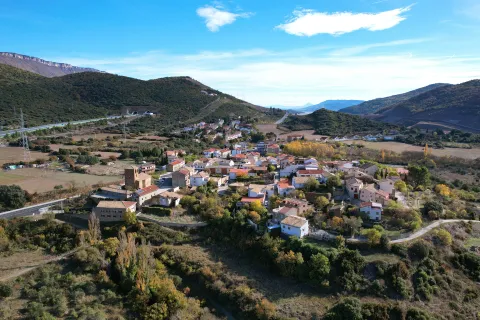
Yesa
The mountain that prays over the waterYesa nestles beneath the sheer slopes of the Sierra de Leyre, … -
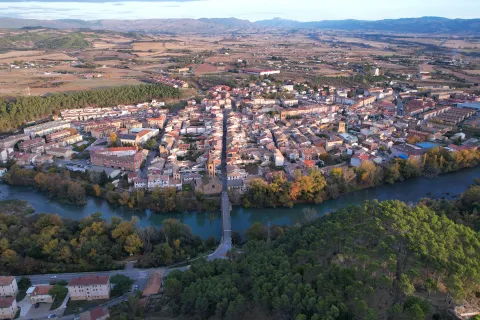
Sangüesa / Zangoza
The stone city that grew up beside the water Sangüesa unfolds upon the terrace of the River Ar… -
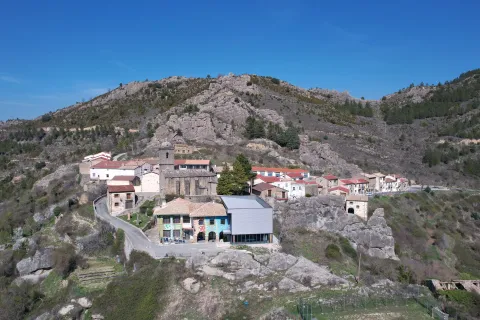
Petilla de Aragón
The border carved in stoneHere, the contours of the Sierra de Peña trace the outline of our insular … -
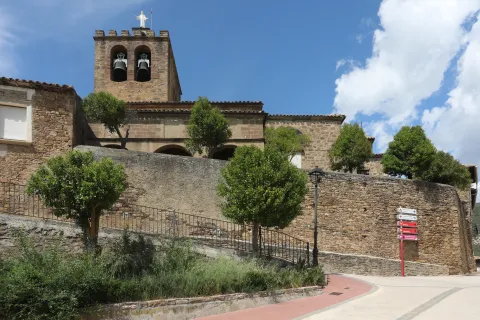
Liédena
The listening hillside and the speaking stoneHere, the landscape lies in the foothills of the Sierra…
AltaNavarra Chat
Online
