

The stone city that grew up beside the water
Sangüesa unfolds upon the terrace of the River Aragón as if the water had decided to hold it in balance. The layout of its streets preserves the ancient order of the ‘new town ’, , and each of its ashlars seems to have been placed not only to build, but to remember. As the capital of the district, Sangüesa breathes amidst the flow of the river and the distant echo of the Cortes of the ancient Kingdom. The bridges, the towers, the Gothic gateways: everything seems to rest in a serene gravity where nobility and everyday life coexist without ostentation.
Sangüesa general information
The town is situated 45 kilometres from Pamplona , in a strategic location in Eastern Central Navarre. With a population of 4,883, Sangüesa (also known as Zangoza by its co-official name) is organised around the River Aragón, which is joined in the vicinity by the waters of the Irati and the Onsella.
The ‘new town’, developed from 1122 under the charter of Jaca, consolidated its commercial and administrative character. Even today, Calle Mayor pulsates with that spirit of movement and encounter. The town forms part of the mixed zone, where Castilian and Basque coexist in a shared identity that looks to the past whilst remaining firmly rooted in the present.
What to see in Sangüesa?
Sangüesa offers a vertical journey through its history: towers, vaults and battlements.
- Church of Santa María la Real: This building, originally Romanesque in style, stands out for its façade, a complex work of medieval Navarrese art, where Leodegarius and the Master of San Juan de la Peña left their mark in stone. Its octagonal Gothic tower dominates the town centre, housing within it a Plateresque high altarpiece by Jorge de Flandes.
- Palaces and civil architecture: A tour of the city reveals the grandeur of the Palace of the Kings of Navarre, with its crenellated towers, and the Palace of the Marquises of Valle-Santoro, which features a monumental carved wooden eave and a marked colonial influence. On Calle Mayor, the House of the Sebastianes marks the birth of Henry II of Navarre in 1503.
- Bridge over the River Aragón: The current structure retains the foundations of the old Romanesque bridge commissioned by King Sancho Ramírez in the late 11th century. One of its ashlar pillars still bears a Roman inscription reading ‘ ’, integrating classical engineering into the everyday riverside landscape.
- Church of Santiago el Mayor: Of Romanesque origin and completed in the 14th century, this parish church was built to accommodate the local population and pilgrims on the Way of St James. Its bell tower is the visual landmark marking the centre of the town’s spiritual life.
- Convent of San Francisco de Asís: A Gothic complex housing a cloister and preserving the memory of the saint’s visit to the Kingdom in 1212. Its rooms showcase the region’s technical evolution through a collection of machinery from old tower clocks dating from the 18th to the 20th centuries.
- San Adrián de Vadoluengo: Located a short distance from the town centre, this Romanesque chapel stands as a stone landmark that bears witness to the architectural simplicity of the ancient routes leading to the Kingdom of Aragon.

Aerial view of the town of Sangüesa where the church stands out.

Aerial view of Sangüesa with the river traversing the town, surrounded by forests.

Aerial view of Sangüesa with the river traversing the town, surrounded by forests.
Preguntas frecuentes
Resuelve las dudas más habituales sobre los diferentes parques y zonas naturales: cómo llegar, qué visitar, normas, rutas y servicios para planificar tu experiencia con facilidad.
The inhabitants of Sangüesa are called sangüesinos and sangüesinas; in Basque, zangozarra.
The Aragón River flows through the city of Sangüesa, receiving the waters of the Irati and Onsella within its municipal area, thereby shaping the river landscape that gives meaning to its history.
The patron saint festivities of Sangüesa are celebrated from September 11 to 17. On January 20, the city also honors its patron saint, Saint Sebastian.
Near Sangüesa there are places worth visiting, such as Javier, known for its medieval castle; also Liédena, Aibar, Cáseda, and Rocaforte, identified as the primitive settlement of Sangüesa la Vieja.
Various studies link the toponym Sangüesa with the Latin Sanctorum Ossa (bones of saints). The city preserves numerous relics that uphold this tradition.
You might also be interested in
-
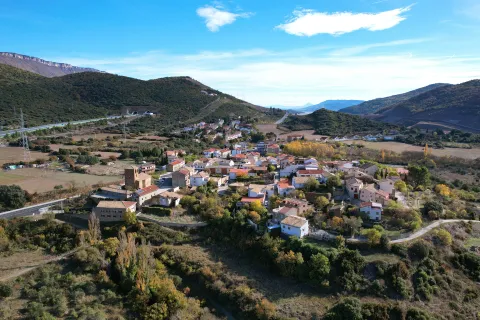
Yesa
The mountain that prays over the waterYesa nestles beneath the sheer slopes of the Sierra de Leyre, … -
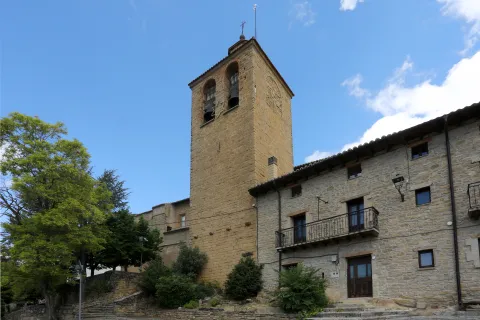
Sada
Where the land recalls the passage of RomeIn Sada, the landscape undulates amongst olive groves and … -
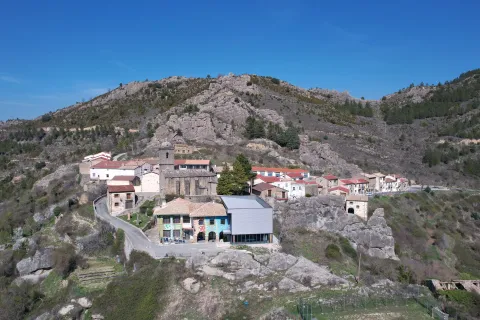
Petilla de Aragón
The border carved in stoneHere, the contours of the Sierra de Peña trace the outline of our insular … -
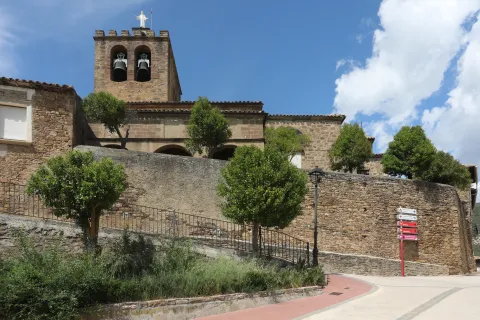
Liédena
The listening hillside and the speaking stoneHere, the landscape lies in the foothills of the Sierra…
AltaNavarra Chat
Online
