
Cáseda
Horizons of stone and water

Horizons of stone and water
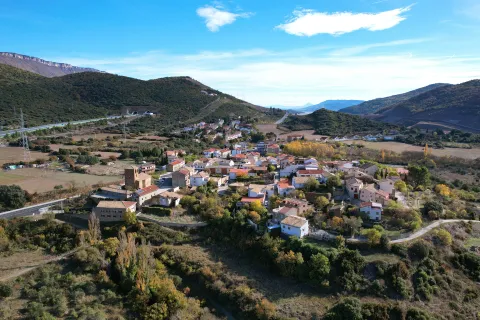
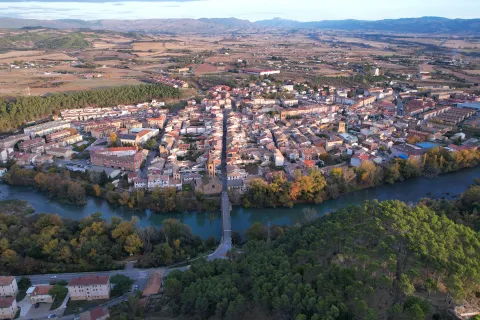
Here, the hamlet sits on a hill on the left bank of the River Aragón, under the constant watch of Mount San Pedro. From here, the mountain ranges of Ujué, Izco and Leyre seem to merge into a horizon where the southern plain and the rugged terrain unfold like chapters of a time that unfolds unhurriedly. The village reveals itself in the contrast between its stone terraces and the constant murmur of the water, where the memory of ancient border paths speaks of a past that remains suspended in the air.
Located in the Sangüesa region, Cáseda has an identity that unfolds across 85.6 km² where traditional agriculture and forests of pine and poplar trees interact with a unique dynamism. The valley’s recent history is intertwined with the founding, in 1975, of Viscofán, whose production centre stands today as a testament to innovation, integrating industrial cutting-edge technology into the fabric of a landscape which, though modern, continues to preserve the memory of every stone and every path.
Cáseda is best discovered step by step, amongst stones and water, churches and footpaths.

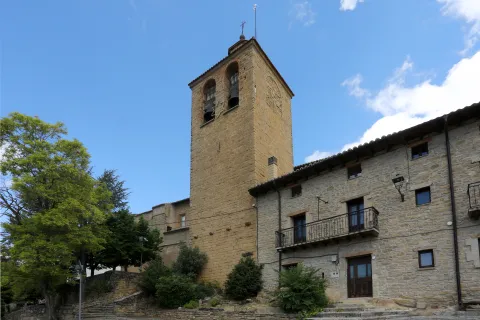
Church of Our Lady of the Assumption in Cáseda with a portal and an access staircase.

Cáseda Square, with stone arcades at the cultural center and town hall.

Facade of Cáseda's cultural center with stone arcades and a stone coat of arms in the center.
Resuelve las dudas más habituales sobre los diferentes parques y zonas naturales: cómo llegar, qué visitar, normas, rutas y servicios para planificar tu experiencia con facilidad.
Online
