
Hiriberri / Villanueva de Aezkoa
The heartbeat of stone and the memory of Berrendi

The heartbeat of stone and the memory of Berrendi
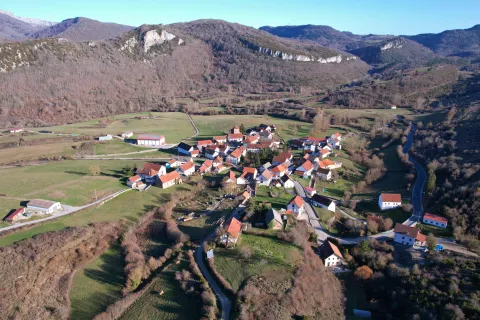
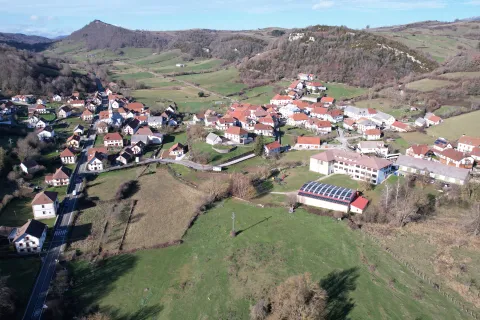
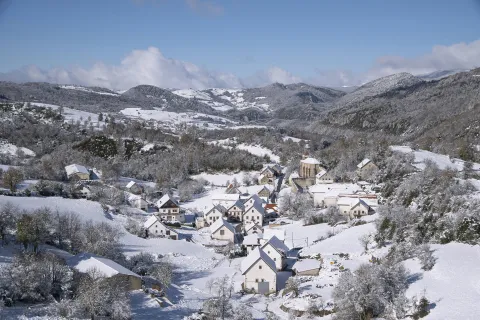
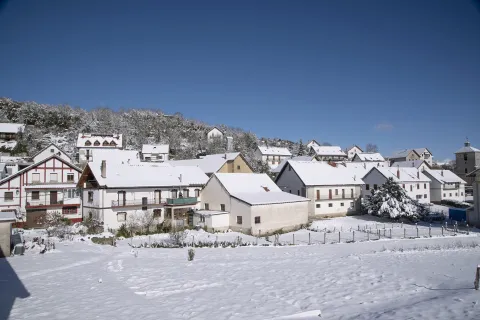
Under the constant presence of Mount Berrendi, stone does not merely build: it breathes and remembers. In Hiriberri (or Villanueva de Aezkoa in Spanish), the cobbled streets retain an ancient cadence, a leisurely rhythm where every step seems to converse with those who inhabited this place before us. The atmosphere is revealed in the stillness of its streets and in the persistence of a craft tradition that still carves boxwood with patience and precision. It is a land where wood and ashlar intertwine in silence, where ancient granaries watch over the passing of time and where life flows unhurriedly, sustained by the mountain and its tales.
The village lies at an altitude of 925 metres, nestled in the heart of the Aezkoa Valley . Hiriberri is first mentioned in 14th-century records as a royal estate, a status that has left its mark on the village’s organisation and collective memory. The identity of the place is shaped by high-altitude livestock farming and the use of the forest, with over 800 hectares of beech woodland enveloping the landscape. The language, Basque in its Aezkoan variant, remains here an invisible thread linking generations, whilst woodcraft — spoons, utensils, small works — keeps alive the patient craftsmanship of those who once worked these same materials. Today, Hiriberri retains a tranquil way of life, where every house, every doorway and every path forms part of a balance that withstands the passage of time.
In Hiriberri, every element of the landscape holds a story waiting to be slowly discovered.

Hórreo in Hiriberri-Villanueva de Aezkoa, surrounded by Pyrenean rural architecture.

Cobblestone street in Hiriberri-Villanueva de Aezkoa with stone houses under a clear sky.

Traditional stone houses in Hiriberri-Villanueva de Aezkoa with a vegetable garden and a limestone mountain in the background.
Resuelve las dudas más habituales sobre los diferentes parques y zonas naturales: cómo llegar, qué visitar, normas, rutas y servicios para planificar tu experiencia con facilidad.
According to the 2025 official register, the village of Hiriberri has a population of 96 inhabitants.
Online
