
Garralda
Where fire transformed the landscape

Where fire transformed the landscape
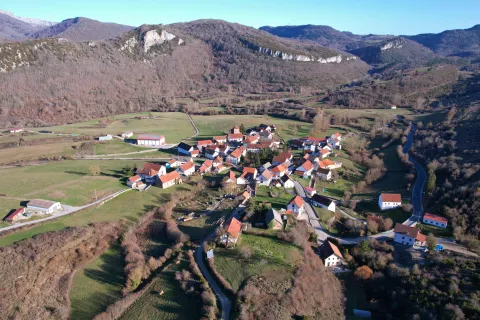
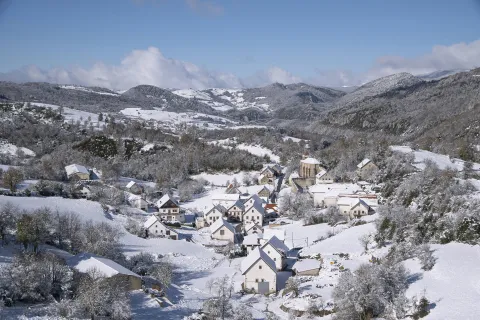
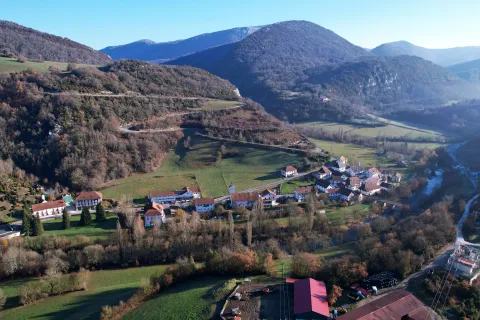
At the confluence of the Urrobi and Irati rivers, the stone holds a memory that has learned to be reborn. In Garralda, the atmosphere opens up into wide streets that are no accident, but the result of a past marked by fire that forced the space to be reinvented. It is a place where reconstruction is part of the landscape , and where the solidity of the farmhouses coexists with the constant whisper of the forest, allowing life to unfold in a calm that expands.
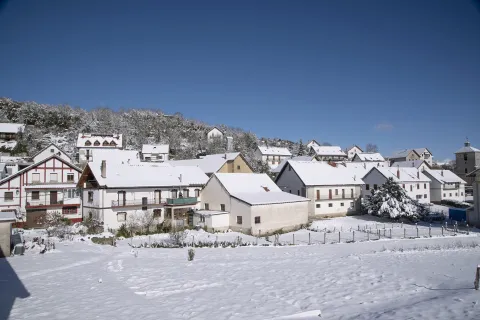
Garralda lies at an altitude of 846 metres, in one of the spots where the Navarrese Pyrenees strike the finest balance between forest, valley and natural connectivity. Covering an area of 21 km², Garralda acts as a link between territories, connecting different slopes and historic routes. The identity of the place is rooted in a tradition of collective nobility granted in the 12th century, a feature still recognisable in the coats of arms adorning the façades. The communal management of the land, particularly the beech forests, continues to set the pace for an economy linked to livestock farming and agriculture, whilst the village maintains a tranquil way of life that adapts to the changing seasons.
Garralda as a whole offers an insight into how time shapes the inhabited landscape.

A hórreo, a traditional stone agricultural building, in Garralda, among traditional houses.

Church with a bell tower and traditional stone houses in Garralda, surrounded by meadows and green Pyrenean hills.

Village of Garralda with a church with a pointed bell tower, stone houses, and red roofs.
Resuelve las dudas más habituales sobre los diferentes parques y zonas naturales: cómo llegar, qué visitar, normas, rutas y servicios para planificar tu experiencia con facilidad.
Online
