
Aribe
In the heart of the forest and the path

In the heart of the forest and the path
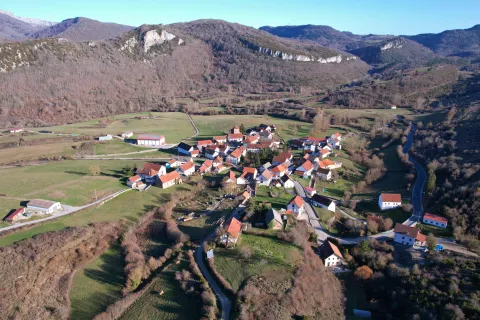
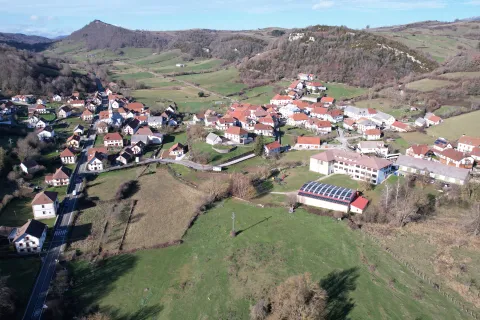
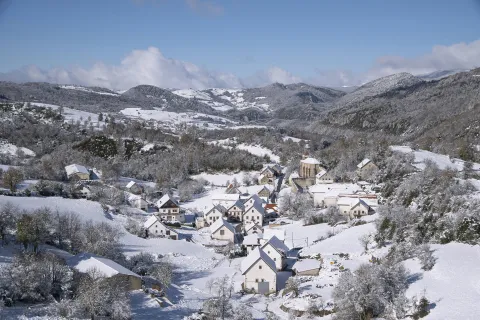
Where the Irati River cuts through the valley like a living line, Aribe stands amidst paths that cross without imposing themselves. The stone of its houses not only builds, but also preserves memory: that of those who passed through and those who stayed. The atmosphere glides between the constant murmur of water and the white light of winter, when the landscape grows still and everything seems to stand still. It is a place where time does not rush forward, but settles, allowing life and the land to recognise one another. Between forest and riverbed, Aribe remains a meeting point: discreet, essential, deeply rooted.
Aribe lies at an altitude of 701 metres, occupying a central position within the Aezkoa Valley ( ), making it a natural crossroads and hub. Its history dates back to ancient times, when the area was already inhabited, and continues to be marked by episodes of reconstruction following fires that left their mark on the stone of its houses. Today, those marks are not scars, but part of its identity. Life in Aribe revolves around livestock farming and forestry, in a balance that has been successfully maintained. Around 50 kilometres from Pamplona, the village offers essential services whilst remaining surrounded by a landscape of great natural beauty, where beech forests, deer and the flight of the bearded vulture are part of the everyday scenery. Here, everything seems to revolve around the river, as if the Irati River ( ) set the invisible rhythm of the place.
Every corner of Aribe holds a story that unfolds between the river and the mountains.

Street in Aribe with white stone houses and a village sign for Aribe.

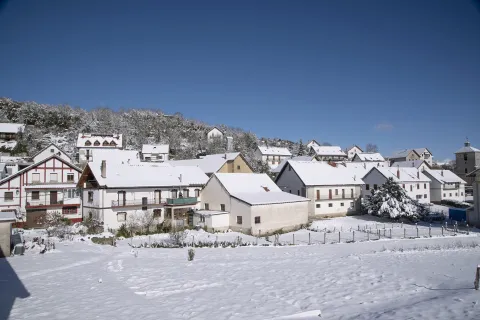
Traditional stone houses in Aribe with Pyrenean architecture, river and wooded mountains in the background.

Traditional stone house in the village of Aribe with ivy covering its facade.
Resuelve las dudas más habituales sobre los diferentes parques y zonas naturales: cómo llegar, qué visitar, normas, rutas y servicios para planificar tu experiencia con facilidad.
Online
