
Altsasu / Alsasua
Crossroads and memories carved in stone

Crossroads and memories carved in stone
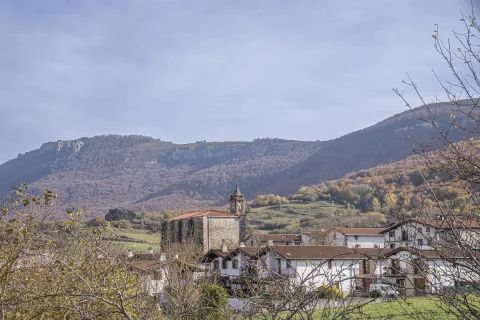
Here, where the mountains and the ironworks seem to converse with the wind, time slips by amongst beech woods and ancient stones. As you wander through this village, you sense the quiet strength of the farmhouses that have witnessed trains and everyday life, whilst the forests guard the landscape of the Burunda Valley. In Altsasu/Alsasua, history and daily life intertwine, revealing the identity of the mountains and the subtle rhythm of the transport links that criss-cross this area.
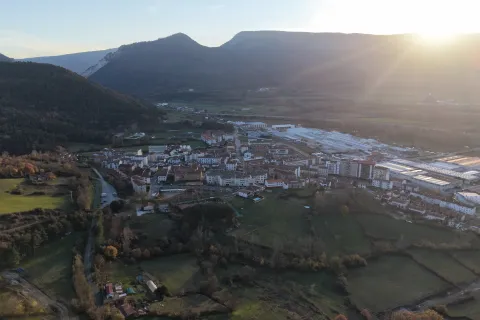
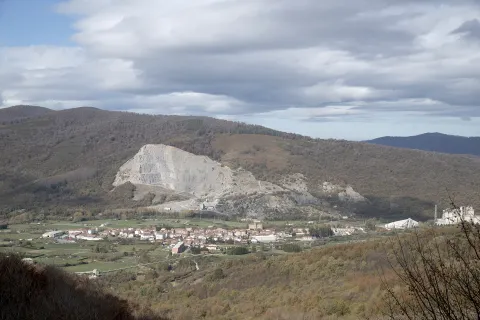
This village stands at 526 metres above sea level on the western edge of the Barranca, acting as a strategic point between Navarre, Gipuzkoa and Álava. The rivers Araquil and Altzania wind their way through the valley, surrounded by the forests of Urbasa to the south and Altzania to the north. The sub-Atlantic climate, with frequent rainfall, sustains a landscape where three-quarters of the territory is covered in beech and oak trees.
Altsasu holds a history of resistance and transformation. Tradition recalls Altsasu/Alsasua as the cradle of the Navarrese monarchy with the coronation of García Jiménez in the chapel of San Pedro. After centuries of feudal rule and border conflicts, the arrival of the railway in 1864 and industrialisation transformed our town, earning us the title of “Muy Ilustre Villa” in 1907. Today, it forms part of the Basque-speaking region, preserving the Basque language as a living thread of daily culture.
Altsasu is not explored in a straight line, but in layers, because every step reveals a different era.

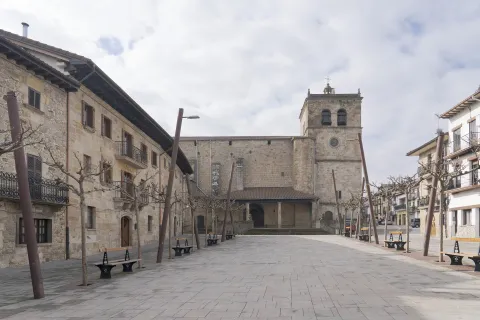
Main square of Altsasu surrounded by stone buildings with a mountain in the background.

Facade of a traditional Basque house with a stone coat of arms in the center in Altsasu.

Facade of Alsasua's town hall with a heraldic shield in the main square and surrounded by gardens.
Resuelve las dudas más habituales sobre los diferentes parques y zonas naturales: cómo llegar, qué visitar, normas, rutas y servicios para planificar tu experiencia con facilidad.
There are two main interpretations of the meaning of Alsasua. Philology suggests it derives from the Basque word haltza (alder) and the suffix -zu, meaning simply ‘The Alder Grove’. However, legend has it that after a small hamlet called Altsa (the alder) was burnt down, a new settlement arose to which the word sua (fire) was added, interpreted as ‘the burning of the alder’.
Alsasua is renowned for being a key transport hub, both for rail (the junction of the Madrid–Hendaye and Castejón–Alsasua lines) and road transport. It is also notable for its sporting tradition, being home to the Caja Rural cycling team and hosting the San Silvestre race, considered the oldest of its kind in Navarre. Historically, Alsasua was the scene of the Battle of La Venta (1834), where Zumalacárregui secured a significant victory during the Carlist Wars.
According to the official INE census for 2025, Altsasu has a population of 7,717.
Online
