
Urdiain
A valley of water, forest and living tradition

A valley of water, forest and living tradition
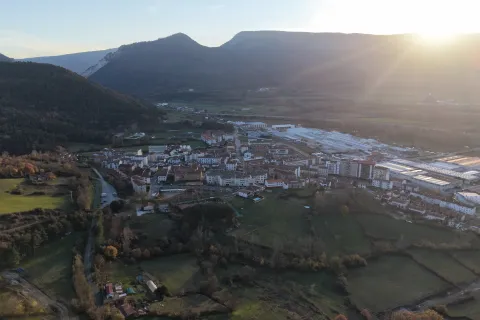
In Urdiain, the River Arakil marks the meeting point between mountain ranges and valleys, and the oak forest stretches out like an ancient echo where time stands still. Urdiain is recognised by the sound of its springs, which seem to restart the world every New Year’s Eve, and by the presence of a farmhouse that has survived royal roads, traditions and cinematic tales. It is a place of roots and contemplation, where the Burunda dialect, carved stone and the damp forest coexist in the same slow rhythm.
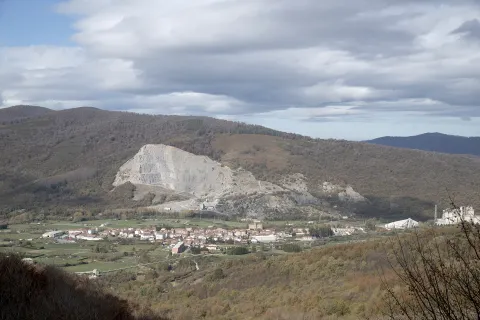
Urdiain is situated in the region of the Sakana- , at an altitude of 549 metres. Its municipal area stretches between the Arakil river plain and the foothills of Urbasa and Aralar, in a highly humid environment that nourishes its forested landscape.
Its economy combines industry in the Alsasua region with farming and livestock rearing on the communal hills. It forms part of the Basque-speaking area, being the only municipality where the Burunda dialect survives naturally.
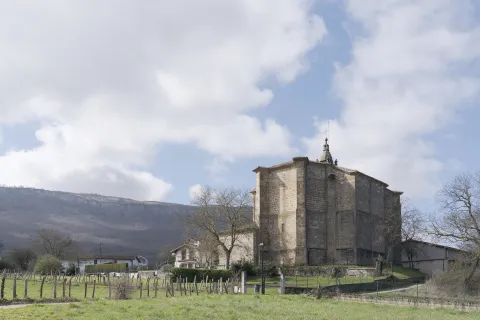
Urdiain boasts religious heritage, historical remains and natural areas linked to its forest surroundings.

Stone town hall in Urdiain with a balcony, stone coats of arms and a flag, in front of an iron sculpture.

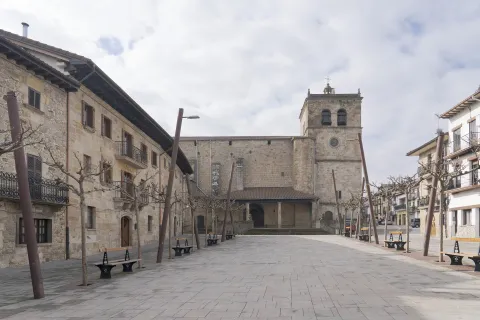
Stone church with a bell tower and clock in Urdiain square, surrounded by traditional stone houses.

Urdiain square with stone houses and traditional architecture under a cloudy sky.
Resuelve las dudas más habituales sobre los diferentes parques y zonas naturales: cómo llegar, qué visitar, normas, rutas y servicios para planificar tu experiencia con facilidad.
The main celebrations are:
According to the official INE register for the year 2025, Urdiain has a population of 647 inhabitants.
Urdiain is a municipality in Navarre whose name probably means ‘a place owned by someone called Urdi-’. It derives from the combination of the personal name Urdi- (unidentified) and the Basque-Navarrese suffix -ain, which indicates ownership. It is common in the area to use this form to refer to ancient estates or villages linked to a specific owner.
Online
