
Irurtzun
The paths that never end

The paths that never end
Between the Dos Hermanas (Bihaizpe) hills and the old route of the Plazaola- , Irurtzun unfolds as a place where everything finds its rhythm. Here, the routes linking Pamplona, San Sebastián and Vitoria intersect with the profound tranquillity of the beech forests surrounding the Trinidad de Erga.
This is a land marked by passage: of travellers, of stories, of seasons. The rock, firm and ancient, holds the memory. The paths, always open, invite you to continue. In that tension between transit and permanence, Irurtzun finds its way of being in the world: discreet, solid and full of nuances.
Irurtzun is situated in the north-west of Navarre, within the Merindad of Pamplona and the Arakil Valley region. Its municipal area, covering just 3.5 km², has historically played a key role as a connecting point between the Pamplona basin and the territories to the north and west.
Over time, this strategic position made it the scene of significant events. Among these, the 1512 battle at the Ozkia Pass stands out, in the context of the conquest of Navarre, as do the clashes during the War of the Convention in 1794. Today, it retains its identity as an independent municipality, consolidated during the industrial and railway development of the 20th century.
As you explore Irurtzun, you enter a landscape where geology, history and ancient paths intertwine naturally.

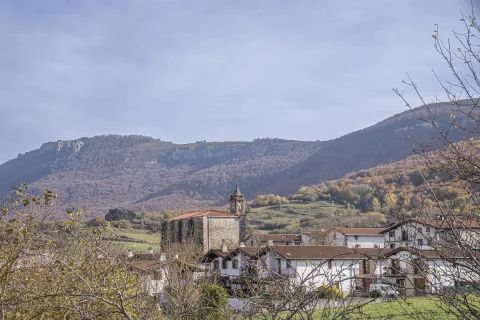
Panoramic view of Irurtzun, residential buildings and mountains in the background under a cloudy sky.

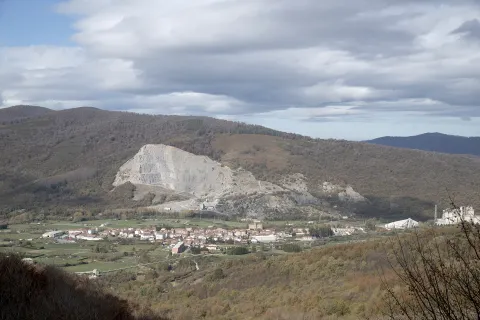
Aerial view of Irurtzun with mountains in the background, a village surrounded by forests and meadows.

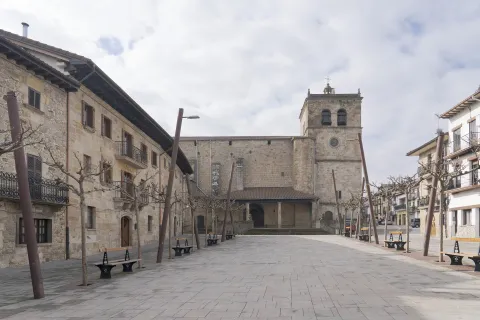
Town Hall and main square of Irurtzun with modern and traditional architecture.
Resuelve las dudas más habituales sobre los diferentes parques y zonas naturales: cómo llegar, qué visitar, normas, rutas y servicios para planificar tu experiencia con facilidad.
Irurtzun is situated in the Arakil Valley, and is therefore linked to the River Arakil, which flows through this region.
The patron saint’s festivities in Irurtzun traditionally begin on the third Wednesday of July and last for five days, featuring dance and music in the square.
According to the official register of relevant data, the latest figures available show that Irurtzun had 2,299 inhabitants as of 1 January 2022.
“Irurtzun” is a place name of Basque origin which, according to unofficial etymological interpretations, could mean “a place with an abundance of yezgo” (a wild plant).
Online
