

Ultzama Valley
A land of slow-flowing water and deep roots
Here, where the very name of the valley seems to hold an ancient elevation of meaning — as if the land were recalling the ‘highest’ part of itself — the landscape unfolds as a mosaic of meadows, beech woods and unbroken silence. Time does not move forward in Ultzama: it settles. It filters through the mist that entangles itself in the damp oak groves of Orgi, and remains suspended on the gentle peaks that trace the invisible divide between the waters flowing towards the Cantabrian Sea and those seeking the Mediterranean.
It is a land of roots and contemplation, where the stone of the manor houses and the constant murmur of the Ultzama and Arkil rivers coexist in a mineral harmony that needs no explanation. Here, identity reveals itself, slowly, as if it had always been there.
Ultzama Valley general information
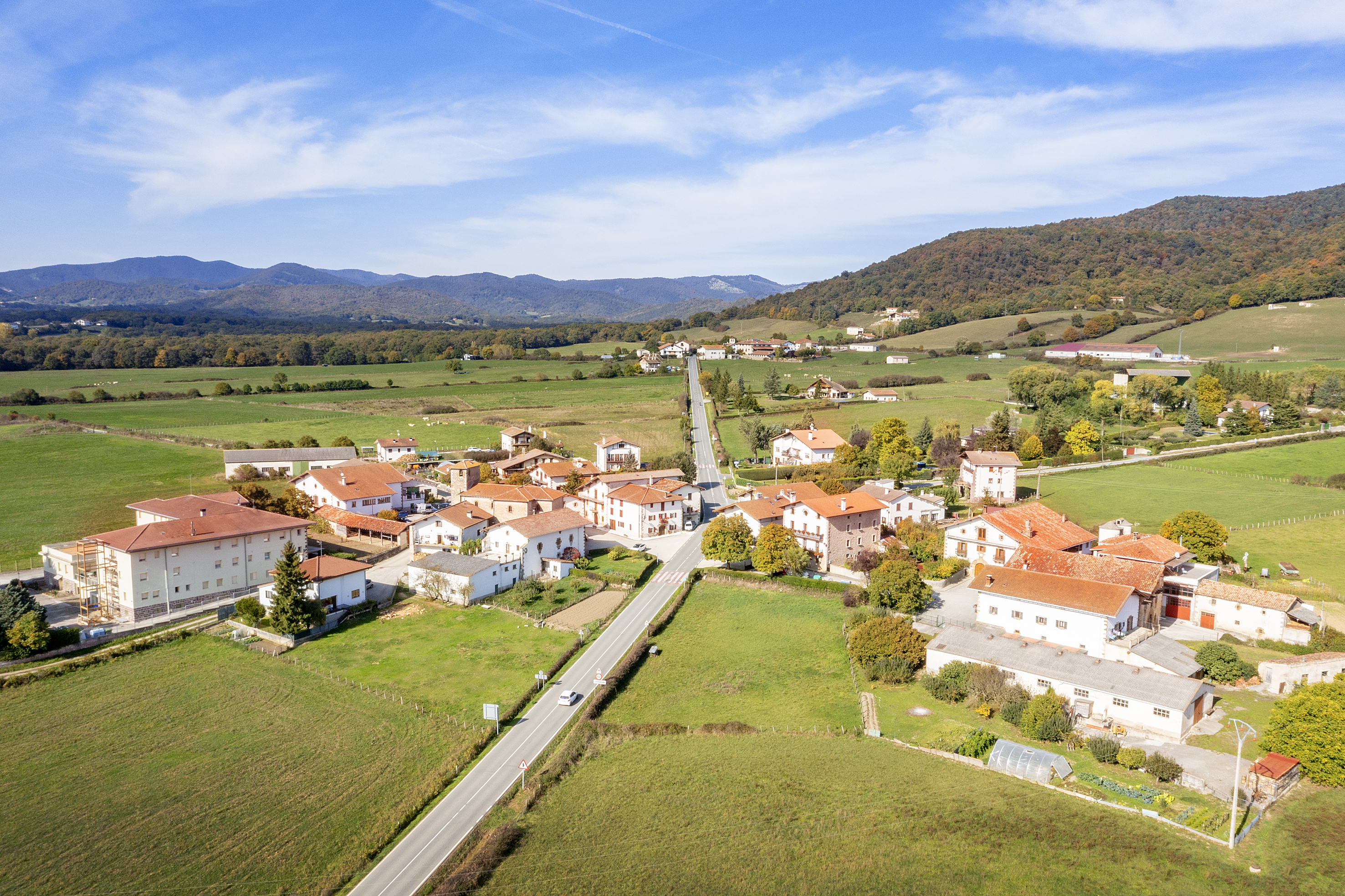
It is a region in the north-west of Navarre, in the district of Ultzamaldea, some 22–25 kilometres from Pamplona. It covers an area of around 96–98 km² and serves as a transitional space between the Atlantic and Mediterranean regions of Navarre, traditionally known as the “Navarrese Switzerland”. Its terrain is gentle, with an average altitude of 542 metres, and is covered by dense vegetation shaped by the humidity.
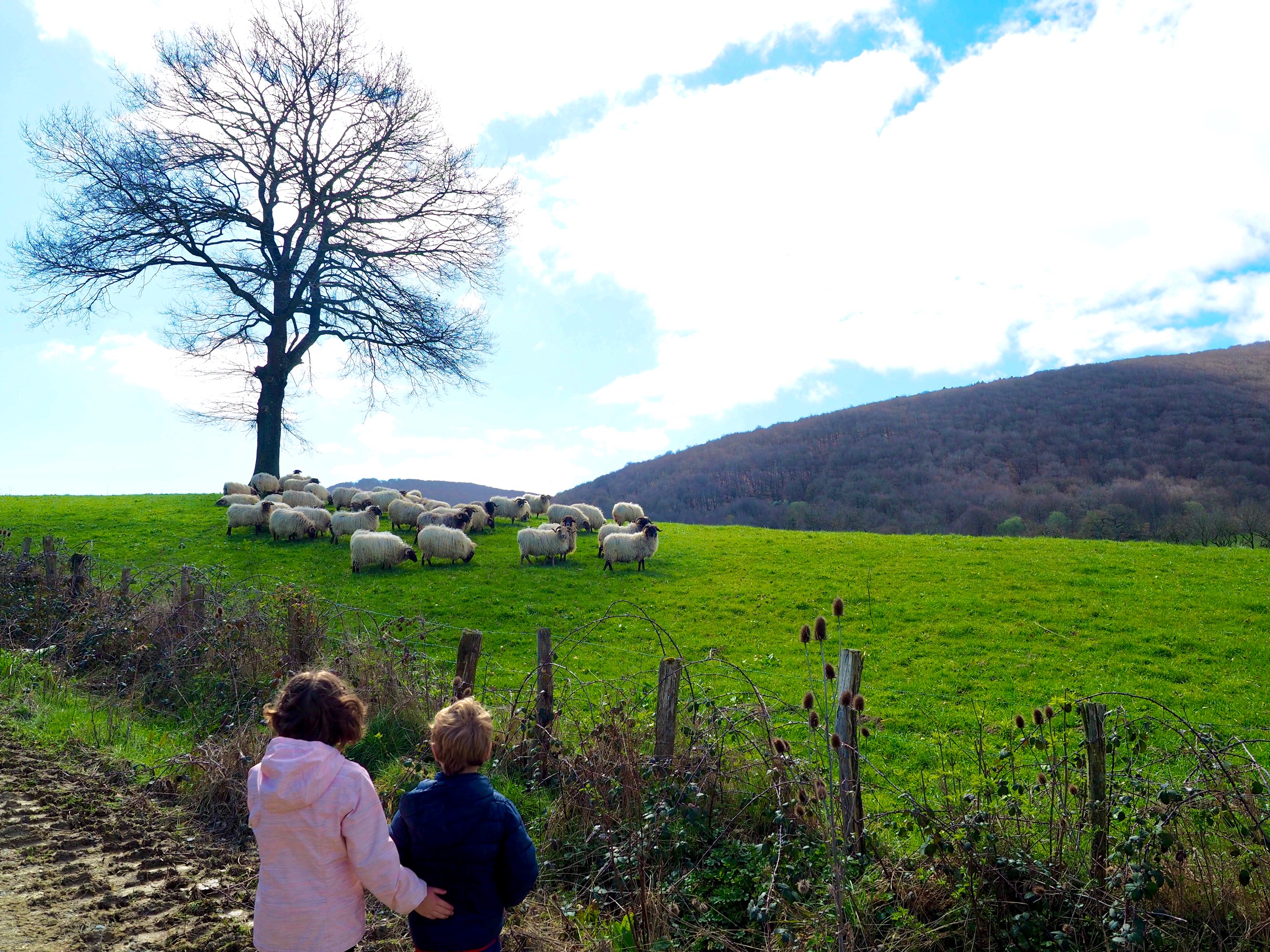
It has been inhabited for over 15,000 years and has had a consolidated structure since the 11th century. It is organised into 14 councils —hamalauak bat— and belongs to the Basque-speaking area, where the Basque language remains part of daily life. Its main activity is cattle, sheep and horse farming, which maintains the landscape and its gastronomic tradition. Over 80% of the territory is communal land and is protected within the Natura 2000 network.
How to get to the Ultzama Valley?
Access to this area is easy from the main roads in northern Navarre, as if the valley were inviting you to reach it at your own pace.
- From Pamplona, the journey takes just over twenty minutes via the N-121-A or the NA-411, a short drive that leaves the city behind to enter a denser, quieter landscape.
- From Donostia, the journey follows the A-15 and the turn-offs towards Lekunberri or Latasa, taking approximately an hour – enough time to notice how the landscape becomes more lush and green as you travel on.
- The Velate Pass marks one of the valley’s natural boundaries and serves as a historic crossing point on the ‘ ’ route of the Camino de Santiago Baztanés, where the passage is not only physical but also steeped in history.
What to do in the Ultzama Valley?
Here, the landscape unfolds as if one were stepping into an ancient memory that still breathes.
- Exploring the Orgi Forest (Lizaso): An 80-hectare forest observation area that is home to the only example of a lowland wet oak forest in Navarre. It features flat, accessible trails such as ‘the labyrinth’ or ‘the path’.
- Foraging in the Mycological Park: With over 5,800 hectares of woodland and 848 recorded species, it offers a regulated system for the study and collection of mushrooms and fungi via daily permits.
- Hiking through the countryside: The landscape can be explored via routes such as the one to the Hermitage of Santa Lucía de Arañotz or the local paths connecting the villages, such as the Auzarabide trail (Zenotz-Iraizotz-Larraintzar).
- Sport and landscape: A region for playing golf amongst centuries-old oak trees at the Ulzama Golf Club (Eltso-Gerendiain) or horse riding through the Auza ravines.
- Shepherding culture and gastronomy: Experience daily life at the Ultzama Farm School or the Ezkurdi Beekeeping Museum, culminating in a tasting of curd cheese made using red-hot stones to give it its characteristic toasted flavour.
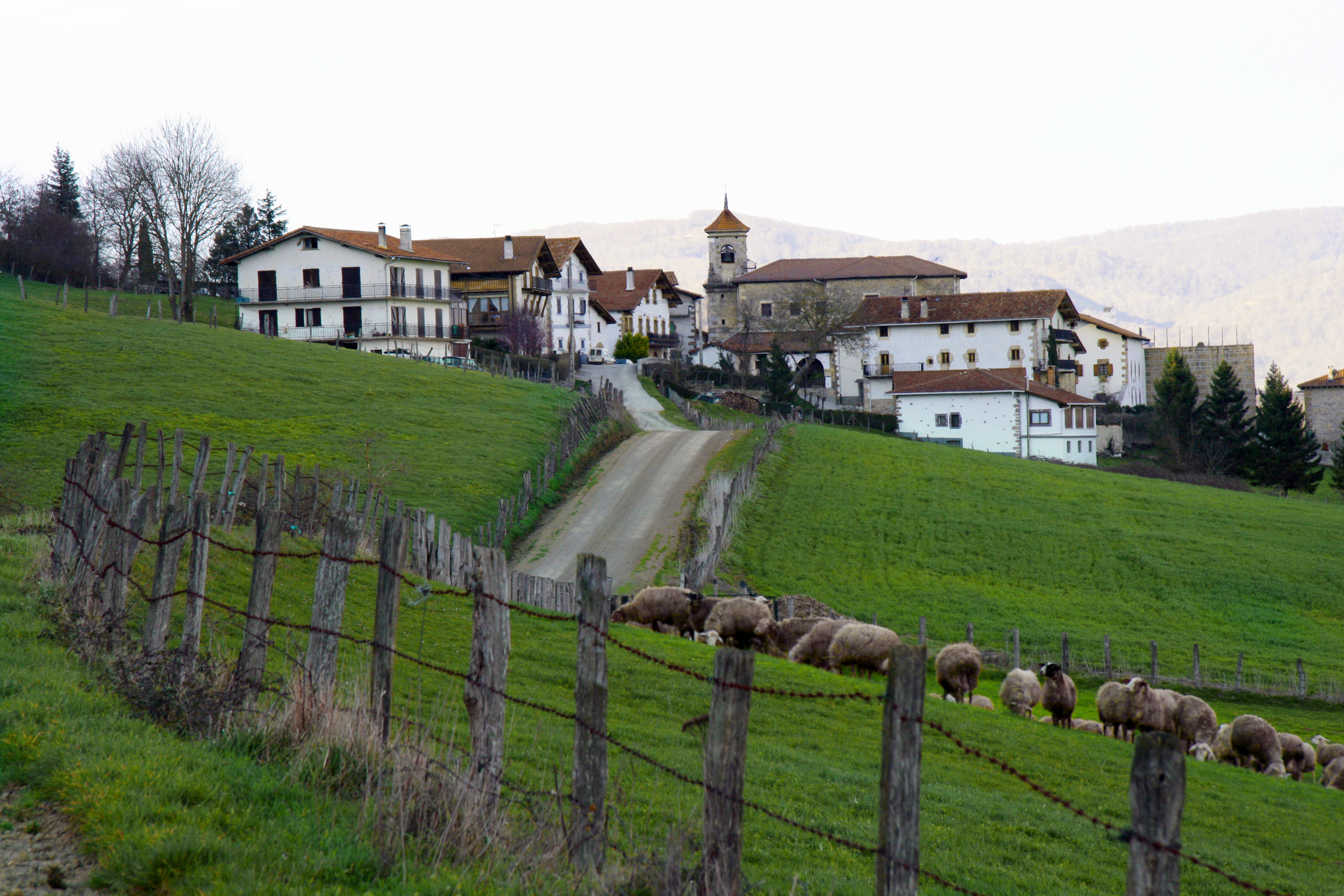
- Heritage exploration: A place to appreciate the solidity of the ashlar masonry in the grand houses with their flower-filled balconies and the medieval complex of Velate Monastery.
Información sobre: Ultzama Valley
Valle de Ultzama
Valle de Ultzama
Valle de Ultzama
-
Araitz Valley
Here, where the mountain seems to lean in to listen to its own echo and the Malloas cut across the s… -
Roncal Valley
Here, where the landscape bears the mark of Navarre’s only glacial valley and the River Esca marks t… -
Belagua Valley
Here, where ancient ice left its mark on the only glacial valley in this land and the limestone of L… -
Salazar Valley
Here, where the river that gives it its name winds its way down through the shade of beech trees and…
