

Where water holds memories and stone speaks names
In Leache, the landscape does not impose itself: it hints at its presence. The hill gives way to the stonework of an old washhouse, and the echo of water flowing down towards the 13th-century well sets the pulse of a place that has learnt to endure.
At the entrance to the Zona Media, the silhouette of a palace tower rises as if it still guards invisible paths. In this enclave of the Sangüesa region , the stone is not a ruin, but a story; the water is not a resource, but a thread that runs through it all. Past and present do not follow one another: they coexist. They brush against each other on street corners, they recognise one another in the silence of the streets, in that way of being far from haste and close to the essential. This is a place that breathes softly and keeps the rhythm of its elements intact.
Leache general information
Leache nestles discreetly in the Sangüesa region. Its inhabitants form a community small in number but vast in memory. Part of the Tierras de Javier Tourism Consortium, the municipality has been documented since the 14th century, when it already appeared in records detailing boundaries, taxes and lineages. Today, alongside this written heritage, a unique initiative is taking shape: the Atlas of an Emotional Territory, a project that gathers traces, stories and dreams to understand how a place is conveyed beyond the maps. Here, identity is cultivated and recognised in the continuity of the landscape and in the will to remain.
What to see in Leache?
Leache is a dialogue between defence, water and Romanesque faith.
- Palace tower: A testament to the historic civil architecture that defines the town centre and highlights the town’s administrative importance within the district.
- 13th-century well and building: A structure protecting access to water, preserving the original masonry from seven centuries ago as a testament to medieval engineering.
- Medieval washhouse: A stone-built space that remains as a record of traditional uses and the community’s former social gathering places.
- Parish Church of La Asunción: A late Romanesque church where the façade, the perimeter walls and the base of the tower at the foot of the building are preserved, demonstrating the solidity of the religious architecture of the period.

Stone stairs with a modern metal railing in Leache, framing an archway leading to the village.

Sandstone arch framing Leache church.

Leache Church with a sandstone tower, portal, and bell tower in a cobblestone square.
Preguntas frecuentes
Resuelve las dudas más habituales sobre los diferentes parques y zonas naturales: cómo llegar, qué visitar, normas, rutas y servicios para planificar tu experiencia con facilidad.
Leache has a population of about 40 inhabitants.
The patron saint festivities of Leache (Navarre) traditionally take place around May 15th, coinciding with the feast day of Saint Isidore. This date is listed as official in Navarre's local festive calendars and marks the central day of the celebrations in the municipality.
Leache is located in the east of the Foral Community of Navarre, within the comarca of Sangüesa. It is about 48 kilometers from Pamplona and is part of a rural environment characteristic of Eastern Middle Navarre.
You might also be interested in
-
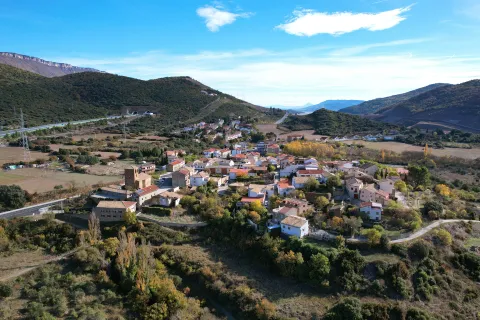
Yesa
The mountain that prays over the waterYesa nestles beneath the sheer slopes of the Sierra de Leyre, … -
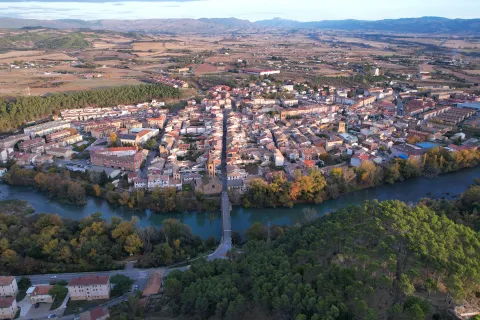
Sangüesa / Zangoza
The stone city that grew up beside the water Sangüesa unfolds upon the terrace of the River Ar… -
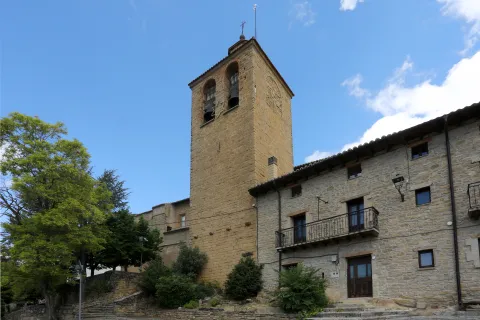
Sada
Where the land recalls the passage of RomeIn Sada, the landscape undulates amongst olive groves and … -
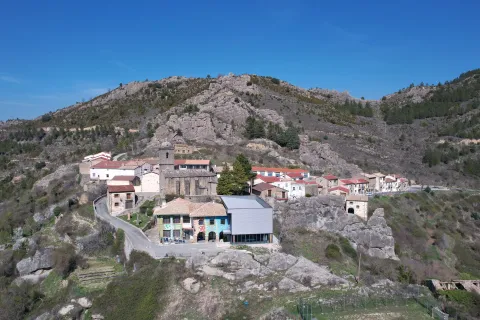
Petilla de Aragón
The border carved in stoneHere, the contours of the Sierra de Peña trace the outline of our insular …
AltaNavarra Chat
Online
