
Aibar / Oibar
The charm of the medieval streets

The charm of the medieval streets
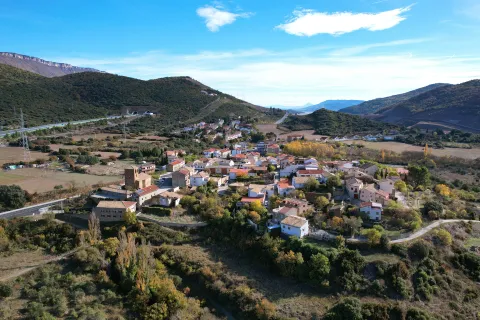
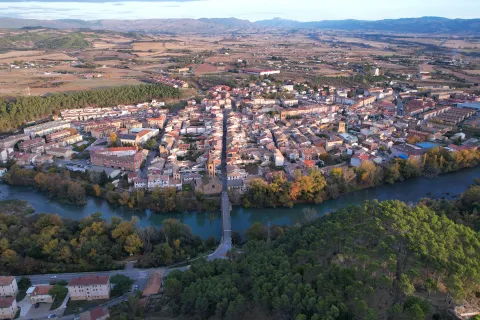
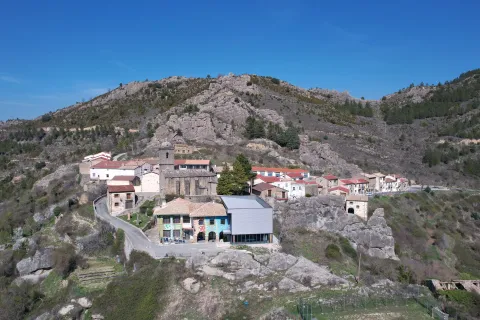
Aibar is a journey back in time. Here, the cobbled streets, laid out on the hillside that once marked the historic border with the Kingdom of Aragon, seem to hold ancient secrets in every cobblestone. In this town in eastern Central Navarre, the ashlar blocks and the outline of the Sierra de Izco create a landscape where the memory of forgotten defences and ancient trades unfolds as if it had always been there.
They call it the village of the goblins, a name whose origin has been lost in the echo of the centuries, but which still beats in the very essence of the place, revealing itself in arches that conceal passageways, in narrow streets that invite you to lose your way, and in the silent mystery of its hilltop neighbourhoods.
Our town stands in the Sangüesa region , perched 531 metres above sea level, in the heart of the Aibar valley. Its identity beats in a centre where Basque and Spanish intertwine, weaving a delicate balance in the so-called mixed zone. The chronicles trace its history back to the year 882, when the Aybaria hill fort was mentioned, a witness to a strategic past that still resonates in the solidity of its medieval walls and in the enduring traditions born of the land, such as the liquid gold extracted in its ancient oil mill.
Aibar is an open-air museum that invites you to stroll around, keeping a close eye on the details of its façades.

Street in Aibar with traditional houses and architecture of the region.

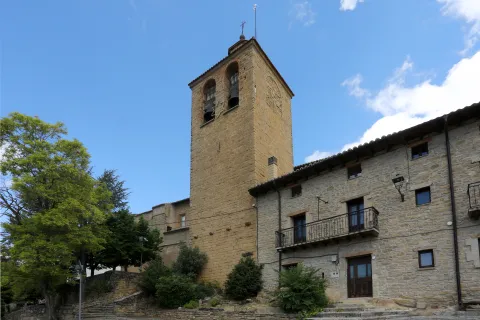
Rural sandstone church in Aibar, with a square medieval-style bell tower.

Passage between stone walls with stairs and a metal railing in Aibar, surrounded by sandstone houses.
Resuelve las dudas más habituales sobre los diferentes parques y zonas naturales: cómo llegar, qué visitar, normas, rutas y servicios para planificar tu experiencia con facilidad.
Online
