
Urzainqui / Urzainki
The echo of the river and the enduring forest

The echo of the river and the enduring forest
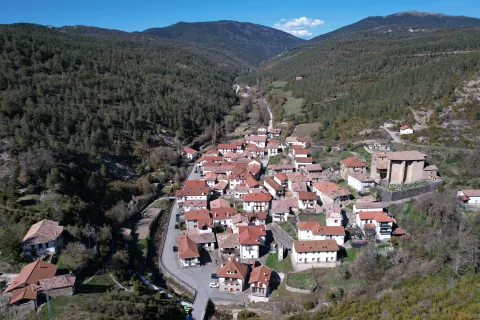
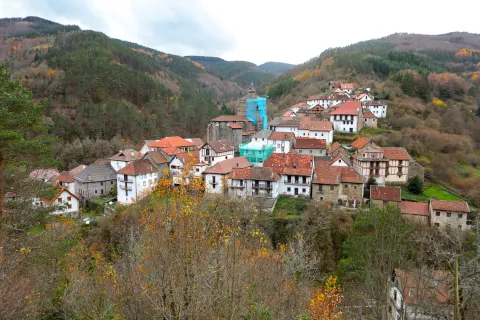
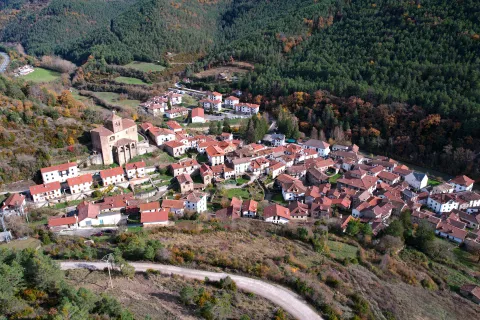
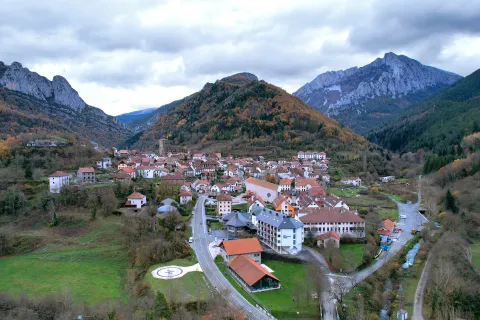
Here, where the Esca flows between ancient limestone formations and deep forests, time seems to stand still. In Urzainqui, stone not only supports houses: it also preserves memory; that of the logs that floated down the river and of those who learned to live in tune with the water. The village reveals itself at a leisurely pace, amidst the constant murmur of the river and the silent presence of the mountains. It is a place of tranquil passage, where the forest, the architecture and daily life come together in a subtle harmony from which the identity of Roncales emerges.
The village is situated at an altitude of 725 metres, in the heart of the Roncal Valley ( ) , and is the smallest municipality in the region. Its town layout retains the traces of a past linked to the river transport of timber, centring on its old wharf, now a visible reminder of the river. The history of Urzainqui is marked by episodes of resistance and continuity, from the granting of collective nobility in the 15th century to the moments of conflict that left scars on its hamlet. Today, the village maintains a direct relationship with its surroundings: the forest, livestock and the natural rhythm continue to shape life. The Basque language remains a living presence, and forestry continues to draw from the mountains a wealth that forms part of its deepest identity.
Visitors will discover a heritage where history blends naturally into the landscape.

Stone church with bell tower in Urzainqui surrounded by snowy forest and traditional mountain houses.

Stone church with bell tower in Urzainqui, surrounded by snow with Pyrenean forest and a river in the foreground.

Stone church with bell tower in Urzainqui, surrounded by snow with Pyrenean forest and a river in the foreground.
Resuelve las dudas más habituales sobre los diferentes parques y zonas naturales: cómo llegar, qué visitar, normas, rutas y servicios para planificar tu experiencia con facilidad.
Online
