
Vidángoz / Bidankoze
The echo of witchcraft and the breath of the ravine

The echo of witchcraft and the breath of the ravine
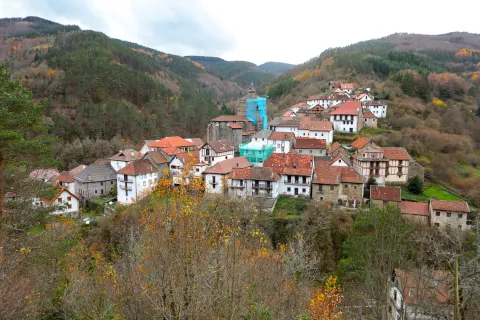
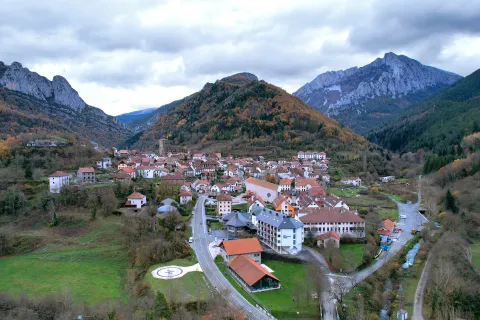
Where the Biniés ravine cuts its way through the limestone and the green gloom of the beech forests, time is not measured: it is merely hinted at. In Vidángoz, the atmosphere is revealed in the gravitas of the stone houses and in an ancient memory that seems to inhabit the doorways and corners. It is a land of silence inhabited , where the traces of ancient rites and everyday life intertwine in a dense stillness, allowing the mystery of the Pyrenees to emerge unbidden.
The village stands at an altitude of 791 metres, nestled within the deep heartbeat of the Roncal Valley. Its identity unfolds across a territory of almost 39 km² where the landscape transitions between ancient flysch and the limestone peaks that crown the horizon. Over the centuries, Vidángoz has maintained its status as a free community since being granted noble status in 1412, consolidating its independence in the 19th century. Today, life remains closely linked to livestock farming and the forest, striking a balance between tradition and continuity. The town centre is divided into four neighbourhoods —Iriburua, Iriartea, Iribarnea and Egullorre—, each with its own character, all united by a shared history. It is no coincidence that they are known as brujosi: here, the legendary is not a tale, but a way of being in the world.
In Vidángoz, every corner seems to hold a story that is not fully revealed, but rather sensed.

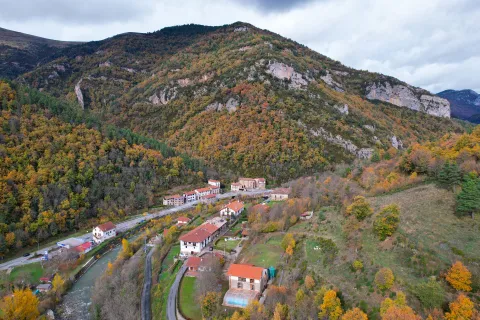
Prominent rocky outcrop next to a road in Vidangoz, with traditional houses and Pyrenean vegetation in the background.

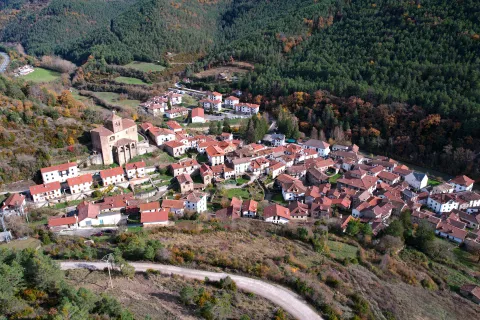
Panoramic view of Vidangoz with red-tiled roofs, a fortified church, and forested mountains in the background in the Navarrese Pyrenees.

Cobblestone street in Vidangoz with traditional stone houses.
Resuelve las dudas más habituales sobre los diferentes parques y zonas naturales: cómo llegar, qué visitar, normas, rutas y servicios para planificar tu experiencia con facilidad.
Online
