
Garde
Where the stone holds memories and the forest responds in silence

Where the stone holds memories and the forest responds in silence
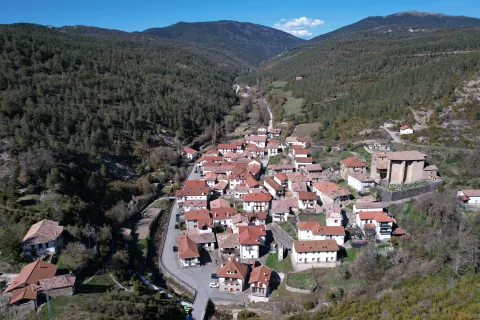
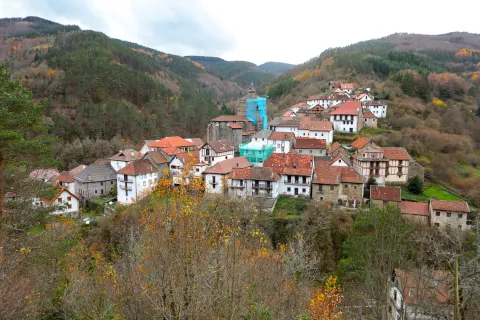
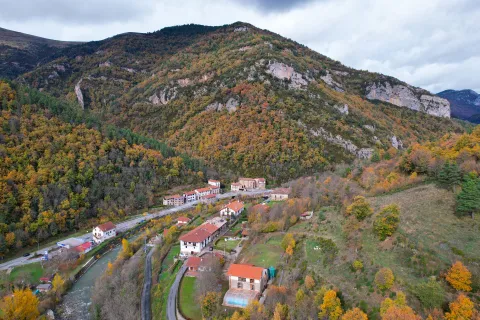
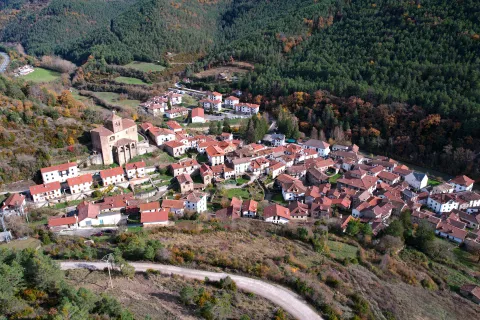
Here, where the Gardalar ravine murmurs amongst hillsides and pine forests, the stone of the walls and the wood of the mountains preserve a history that endures. In Garde, the atmosphere is revealed in the serene alignment of its emblazoned houses, in that street-village layout that seems to follow an ancient logic. All around, the pine forests spread a deep silence, where the wind barely disturbs the landscape’s equilibrium. It is a land of permanence, where the memory of the ancient border guards and the constant, whisper of the water coexist in a dense calm. Here, the mountain hints at something, and those who pause to listen understand.
The village sits at an altitude of 737 metres, at the southern end of the picturesque Roncal Valley , where the territory opens out towards Aragon. This location has shaped its character: a place of watchfulness, passage and defence. For centuries, its inhabitants took on the role of guardians of the kingdom, serving as crossbowmen on the frontier. That legacy lives on in the collective memory, alongside milestones such as the nobility granted in 1412 or the participation in the Tribute of the Three Cows, one of the oldest agreements still in force in Europe. Today, livestock farming, the forest and the cultivation of the land continue to set the daily rhythm in Garde. Against this backdrop, the culture of Roncales and the legends that run through the valley—of witches, shepherds and ancient paths—remain like an invisible veil that accompanies every step.
Every point on the map acts as a gateway to the valley’s memory.

Traditional stone and white house in Garde with wrought iron balconies and a red tile roof.

Monument to a historical figure in Garde's square with stone houses and trees in the background.

River with a stone bed and a stone bridge in Garde, surrounded by forest and stone walls in the Pyrenean valley.
Resuelve las dudas más habituales sobre los diferentes parques y zonas naturales: cómo llegar, qué visitar, normas, rutas y servicios para planificar tu experiencia con facilidad.
It is located in the northeast of Navarre, occupying the southern part of the Roncal Valley and marking the border with the community of Aragon.
Online
