
Aria
The whisper of the hillside and the memory of the pasture

The whisper of the hillside and the memory of the pasture
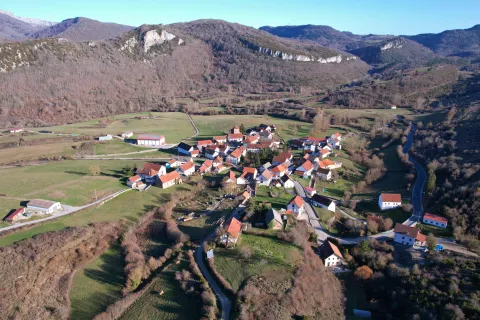
Clinging to the slope as if the mountain were holding it in balance, Aria reveals itself in the silence of its most hidden corners. It is not a place that imposes itself, but one that allows itself to be discovered. The atmosphere glides along the path that climbs towards the barns, where the shingled roofs seem to converse with the wind. Everything in this landscape speaks of a life that has learned to adapt to harsh conditions: meadows bordered by hazel trees, paths that curve with the terrain, and forests that embrace without encroaching. It is a land where time is felt, where pastoral life and the mountains have woven together a way of being in the world that still endures.
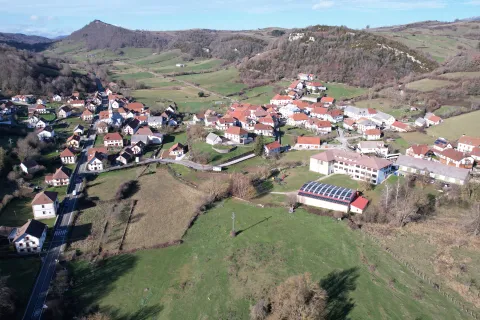
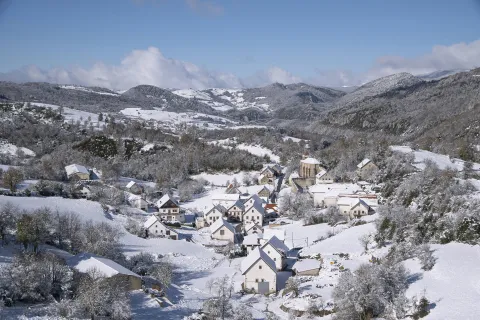
Aria lies at an altitude of 859 metres, covering an area of 8 square kilometres in the Aezkoa Valley . Its identity has been forged through the patient cultivation of the land – potatoes and cereals – and mountain livestock farming, where the Pyrenean cow, sheep and mare have been an essential part of the landscape and daily life for generations. Today, the village maintains a calm that is not emptiness, but continuity. In this Basque-speaking area, Aezkera still resonates like a fragile yet persistent echo, a language that clings to the land just as the paths, the houses and the memory do. Aria remains, and in that permanence it finds its meaning.
To explore Aria is to discover how life and the mountains have learnt to coexist without imposing themselves on one another.

A hórreo, a traditional stone agricultural building, in Aria, in a green mountainous Pyrenean landscape.

A hórreo, a traditional stone agricultural building, with firewood underneath, in Aria, in a green mountainous Pyrenean landscape.

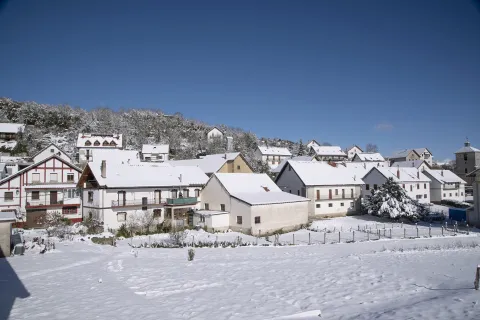
Group of houses in the village of Aria, in a Pyrenean landscape of green mountains and forest.
Resuelve las dudas más habituales sobre los diferentes parques y zonas naturales: cómo llegar, qué visitar, normas, rutas y servicios para planificar tu experiencia con facilidad.
Online
