
Arakil
The trail beneath the mountains

The trail beneath the mountains
In this valley, where the River Arakil winds its way between the Aralar, Andía and Urbasa mountain ranges, the stone preserves the memory of passage and the landscape unfolds like a silent record of what once was and still remains. The restored ancient washing places and the ever-watchful gorges create an atmosphere where history tells its own story.
Arakil is a land of passage, a place where the journey matters as much as the stay. Here, the Romanesque chapels, the route of the Calzada XXXIV and the daily life of its villages coexist without haste, allowing the identity of the Sakana to emerge between the riverbed and the steadfastness of the rocky outcrops.
Arakil is situated in the north-west of Navarre, within the district of Pamplona and the Sakana region. Its territory has historically functioned as a natural corridor between regions. The municipality’s origins date back to the mansio Aracaeli, a stop on the Roman road linking Astorga with Bordeaux, whose legacy has defined the valley’s open and busy character.
The municipality comprises thirteen local councils, maintaining a decentralised structure following Irurtzun’s independence in 1996. Arakil forms part of the Basque-speaking area, where the Basque language remains a living expression of local culture. Although farming and livestock rearing continue to be present, they now coexist with more industrialised models, whilst most of the territory retains its forested character.
The valley offers a journey through different layers of time, visible in its landscape and architecture.

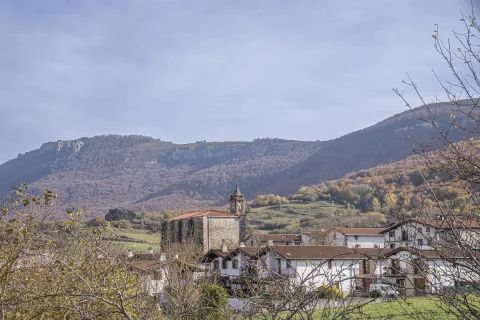
Traditional stone houses with red tile roofs in a mountainous setting in Arakil.

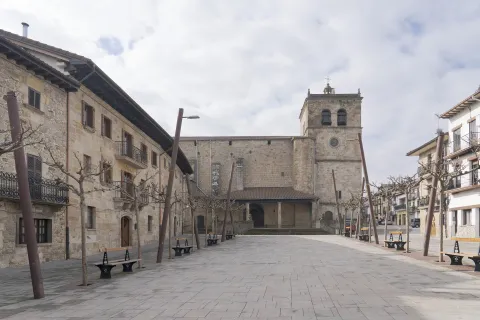
Main street of Arakil with traditional white Basque houses lining the sides and the mountain behind.

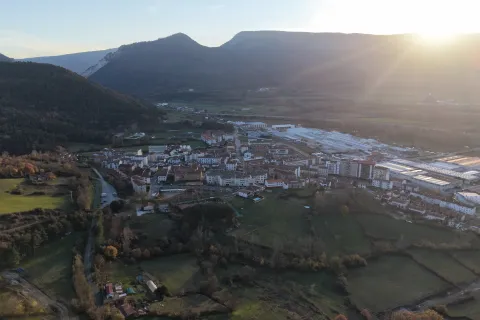
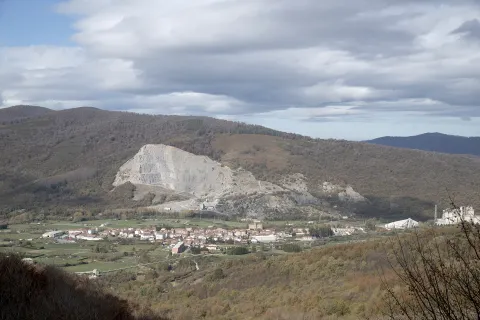
General view of Arakil village surrounded by green meadows and mountains.
Resuelve las dudas más habituales sobre los diferentes parques y zonas naturales: cómo llegar, qué visitar, normas, rutas y servicios para planificar tu experiencia con facilidad.
The administrative headquarters of Arakil Town Hall is located in Irurtzun, in the municipal building constructed in 1988.
According to the latest official figures available from 2025, Arakil had 990 inhabitants.
The name derives from the Roman station Aracaeli, although some studies link it to the Latin ara coeli, meaning ‘altar of heaven’.
Online
