
Orbara
The murmur of the Irati and the memory of the red stone

The murmur of the Irati and the memory of the red stone
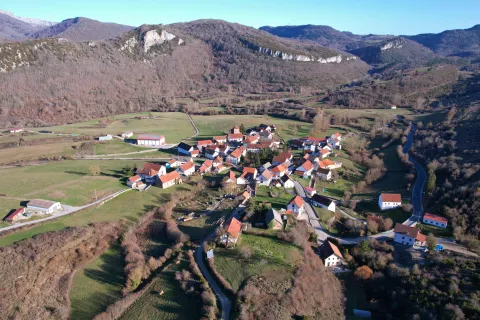
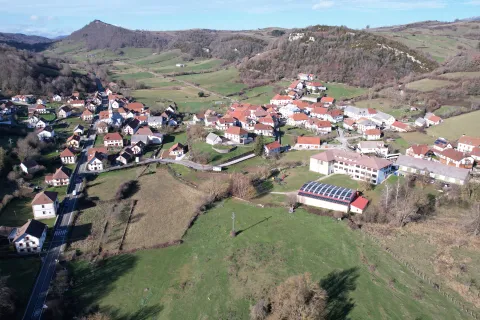
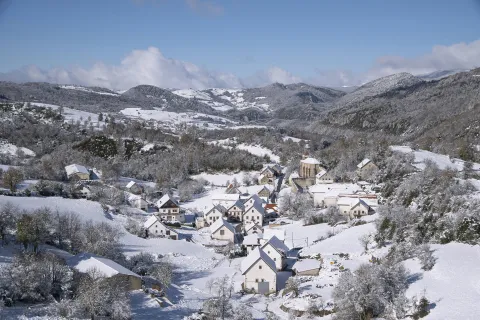
On the banks of the Irati, the landscape is shaped by the flow of the water and the stillness of the rock. Beneath the boulders descending from Mutia Peak, Orbara unfolds as a refuge where time neither stands still nor imposes itself. The atmosphere is reflected in the reddish hue of its houses and in the constant murmur of the river Irati , which accompanies every step. It is a land where the forest envelops daily life and where the legacy of old industries still beats, woven into a landscape that reveals itself slowly.
Orbara is a municipality in the Aezkoa Valley , situated at an altitude of 763 metres. It stretches across a landscape where the forest dominates the view: beech and oak trees form a continuous landscape that defines both its shape and its rhythm. Covering an area of 9 km², the village’s identity has been forged around the communal use of woodlands and pastures, a tradition that still resonates in the organisation of the valley through its General Assembly. In this enclave of Basque-speaking Navarre, life goes on quietly: a small community that keeps alive the relationship between stone, forest and river.
In Orbara, the landscape and history flow to the rhythm of the river.

Stone hórreo in Orbara.

Stone church with a bell tower in Orbara, built of light-colored stone and covered with dark slate.

Orbara village square with a stone church and traditional white houses.
Resuelve las dudas más habituales sobre los diferentes parques y zonas naturales: cómo llegar, qué visitar, normas, rutas y servicios para planificar tu experiencia con facilidad.
Online
