
Loizu
The silence of the ravine and the echo of millennia

The silence of the ravine and the echo of millennia
In a secluded hollow sheltered by Mount Mendi, Loizu unfolds as a place where time seems to have stood still. The ravine holds the sound of water and the stone preserves a memory that needs no words. The atmosphere is felt in the constant presence of the spring, in the way life is organised around it, and in the distant echo of those who inhabited this very place thousands of years ago. It is a place where the most ancient history and everyday life coexist without conflict. Between the simplicity of the farmhouse and the solidity of the stone, Loizu remains a place where existence is measured in silence, in continuity, in a calm that invites you to pause.
Loizu is a village in the Erro Valley ( ), situated at an altitude of 726 metres amidst gentle hills that follow the course of the River Erro. Its origins as a royal fiefdom date back to the 13th century, when it was already documented as paying taxes to the crown. As in other municipalities in the valley, community life was organised through a system of rotating shifts among residents for local government. Today, Loizu retains an intimate scale and an identity deeply rooted in its surroundings. Its village retains its rural essence, whilst its significance transcends its size thanks to one of the most important archaeological finds in Navarre: the Man of Loizu.
Exploring Loizu is to connect directly with the area’s earliest inhabitants.

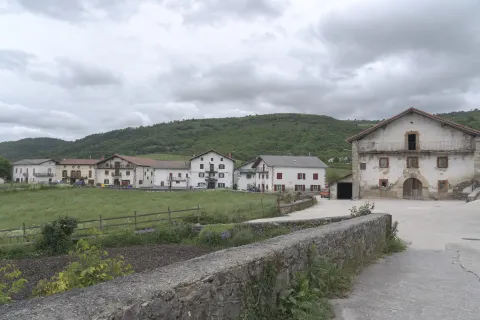
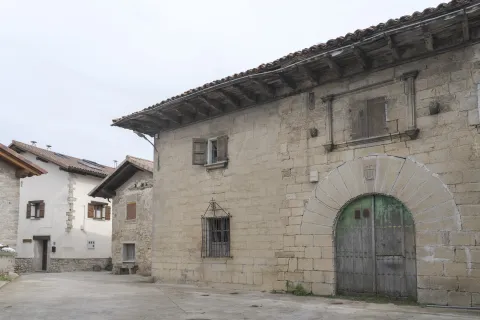
Traditional stone buildings in Loizu (Pyrenees) with a wooded mountain in the background.

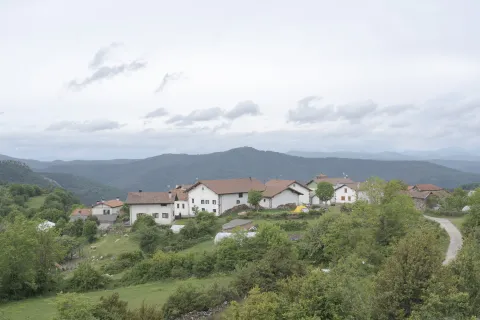
Street with white houses with wooden windows in Loizu, Pyrenees, surrounded by vegetation and a wooded mountain in the background.

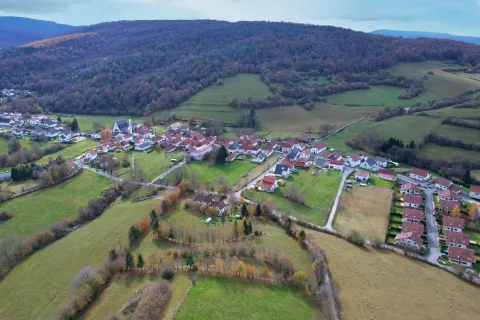
Church of Loizu, surrounded by wooded mountains, Navarrese Pyrenees.
Resuelve las dudas más habituales sobre los diferentes parques y zonas naturales: cómo llegar, qué visitar, normas, rutas y servicios para planificar tu experiencia con facilidad.
Because these are the oldest complete human remains found in Navarre, dating back more than 11,000 years. This discovery positions Loizu as a key point for understanding human presence in the Pyrenees during the Mesolithic period.
Online
