
Aurizberri / Espinal
Where history moves to the pace of the walker

Where history moves to the pace of the walker
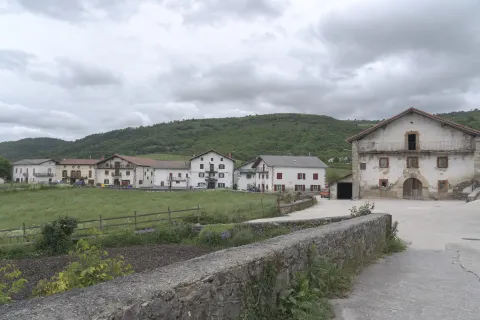
On the plain that opens up towards the Pyrenees, the landscape stretches out like a threshold between worlds. Aurizberri-Espinal lies along this route, where the stone of the houses and the footsteps of travellers create a scene that repeats itself endlessly. Founded over seven centuries ago by royal decree, the place retains the essence of a waystation: paths that invite you to carry on, façades that watch over the movement, and a calm that accompanies the journey. Amidst beech woods and hawthorns, daily life intertwines with an older memory, that of the dolmens and the first inhabitants of these mountains. The murmur of the River Urrobi and the continuity of the Camino de Santiago sustain a landscape where the dynamic and the permanent coexist without contradiction.
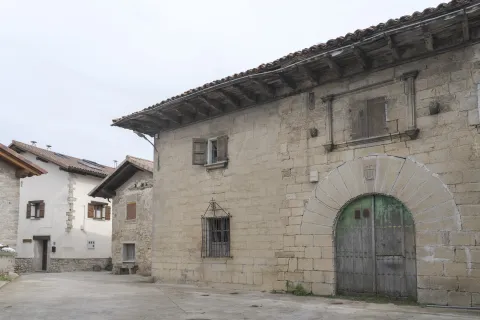
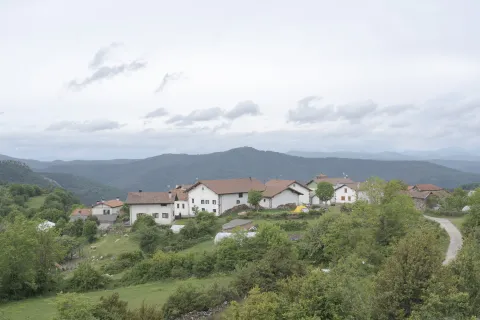
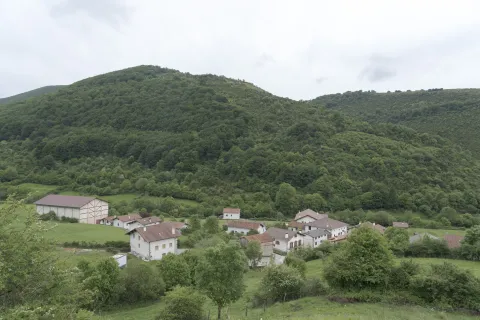
Aurizberri-Espinal is the most populous municipality in the Valle de Erro , situated at an altitude of 871 metres in a setting with a marked Pyrenean influence. Its climate, with cold winters and mild summers, shapes both the landscape and ways of life. The town has a linear layout, with the houses arranged along the route of the road and the Camino de Santiago . Over the centuries, Aurizberri has been a welcoming place, rebuilt after several fires and adapted to the needs of each era. Its economy combines traditional activities, such as potato farming and the communal management of extensive beech forests, with a growing service sector and small industrial initiatives located in the Urrobi industrial estate.
Aurizberri reveals itself as a place where memory remains visible.

Espinal Church with a bell tower and a grey slate roof, in the Navarrese Pyrenees.

Main street of Espinal with traditional red-roofed houses, white and stone facades, and mountains in the background.

Espinal Church with a red brick bell tower, surrounded by traditional houses.
Resuelve las dudas más habituales sobre los diferentes parques y zonas naturales: cómo llegar, qué visitar, normas, rutas y servicios para planificar tu experiencia con facilidad.
Online
