
Ardaitz
The stone shelter beneath the Sierra de Labia

The stone shelter beneath the Sierra de Labia
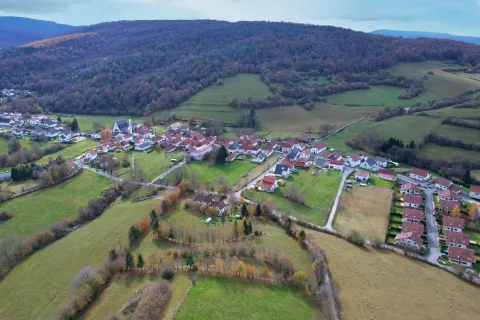
Perched on a hill overlooking the left bank of the River Erro, the landscape shifts between plain and hill, as if the land had found a point of balance. Ardaitz stands on that boundary, sheltered by the steep slopes of the Sierra de Labia. The houses, with their ancient inscriptions, and the Gothic fountain that still holds water, speak of a time that has settled into the present. Memory is felt in everyday life: in the gentle sounds of the surroundings, in the shape of the walls, in the continuity of a place that has never ceased to be inhabited. Between the prehistoric legacy of the dolmens and the solidity of medieval architecture, Ardaitz presents itself as a place where everything unfolds with a precise calm, as if every element found its place within the same continuity.
Ardaitz is the southernmost hamlet in the municipality of Erro, situated at an altitude of 610 metres. Its location, bordering the Labia mountain range and the Erro river valley, has historically defined its character. Since medieval times, the village formed part of a royal domain system, with residents who, as early as the 13th century, contributed to the crown through the payment of taxes. Social organisation revolved around the administration of the valley, combining communal structures with the settlement’s own distinct identity. Its hamlet, , retains significant architectural value, with ashlar buildings, towers and features dating back to the 16th century, reflecting the historical importance of the old family estates.
Ardaitz invites you to explore a landscape where history is preserved in every corner.

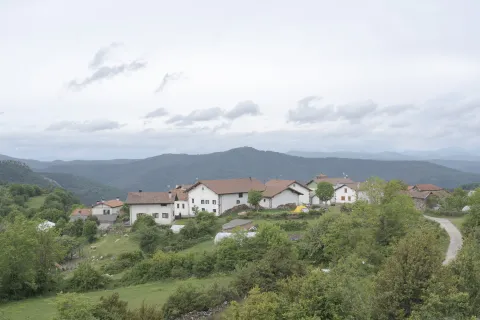
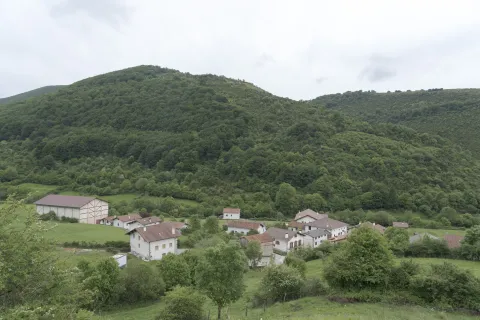
Group of traditional Pyrenean buildings in Ardaitz surrounded by vegetation on a wooded hillside.

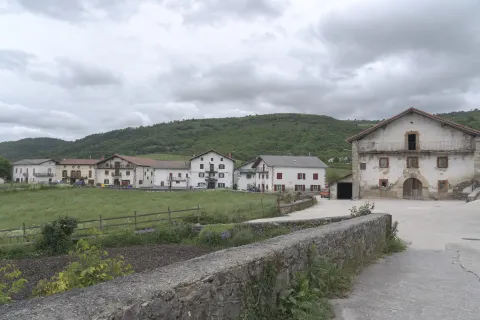
Street with a traditional stone farmhouse in Ardaitz, Navarran Pyrenees, with a masonry facade and wooden door.

Stone medieval church portal, wooden bench, and vegetation in Ardaitz, Navarran Pyrenees.
Resuelve las dudas más habituales sobre los diferentes parques y zonas naturales: cómo llegar, qué visitar, normas, rutas y servicios para planificar tu experiencia con facilidad.
Online
