
Erro
Where the pass watches the passing of time

Where the pass watches the passing of time
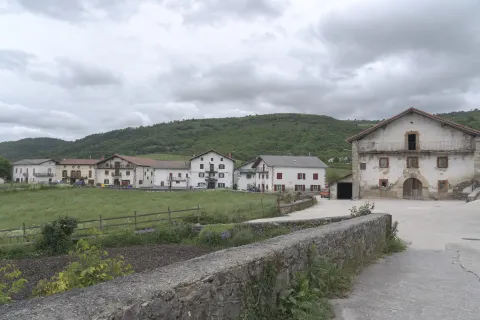
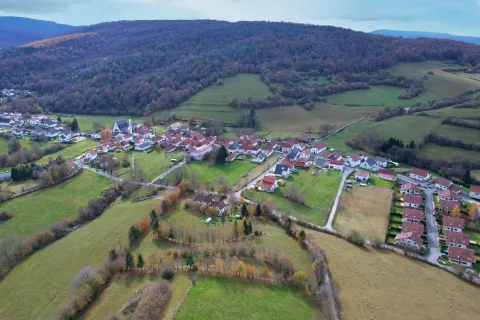
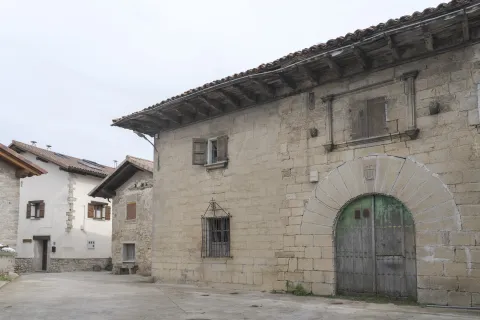
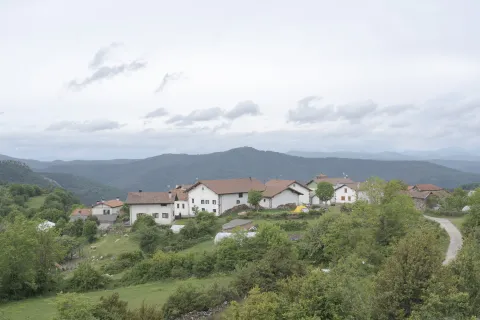
Here, at the point where the valley opens out and the pass rises, Erro stands as a place of transit and permanence. The river sets the rhythm of the landscape whilst the hillside holds the gaze, creating a space where everything seems to converge without haste. The farmhouse, rebuilt after the fire, retains a serene harmony, as if every stone had learnt to remain. At this crossroads, where ancient routes—such as the Roman road or the ‘ ’ Way of St James —meet the constant flow of water, life unfolds naturally. Erro is a place of continuity, where the movement of the past and the stillness of the present merge under the watchful eye of the mountain pass, which overlooks the valley like a gentle boundary between landscapes.
Erro is the main centre of services for the Valle de Erro , with an estimated population of 146 inhabitants in 2025. Its location, at an altitude of 801 metres and at the foot of the mountain pass that gives it its name, has historically shaped its role as a strategic point within the region. The village’s current appearance is the result of a reconstruction process following the fires of the 19th century, which gave rise to a uniform and orderly settlement. Today, Erro serves as the hub for the valley, housing essential services such as the state school, the doctor’s surgery, the pharmacy and the care home. This role reinforces its character as a vibrant centre within a rural mountain setting.
Erro is a place where landscape, history and everyday life intertwine naturally.

Erro village covered in snow with a church and snow-capped mountains in the background under a clear sky.

Stone church with a pointed bell tower in Erro, snowy square with staircases and traditional Pyrenean buildings.

Snowy square of Erro with stone houses, a fountain, and snow-covered trees under a clear sky.
Resuelve las dudas más habituales sobre los diferentes parques y zonas naturales: cómo llegar, qué visitar, normas, rutas y servicios para planificar tu experiencia con facilidad.
It is located in the north of Navarre, integrated into the municipality of Valle de Erro, about 31 kilometers from Pamplona and situated at the foot of the Erro Pass.
Online
