
Etxalar
The essence of traditional Navarran architecture

The essence of traditional Navarran architecture
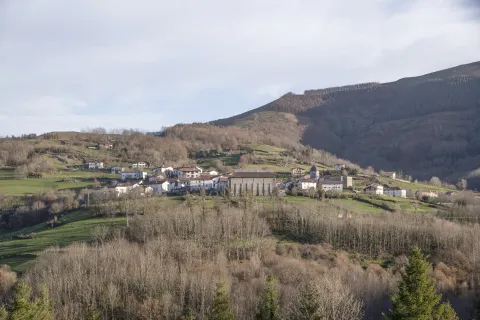
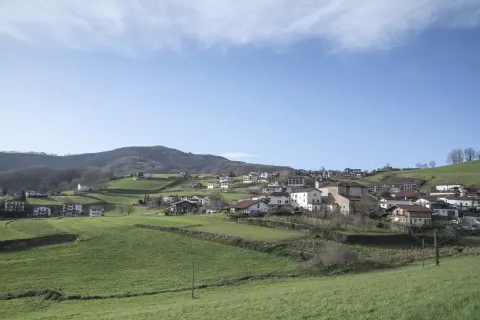
The streets preserve a traditional stone-built architecture that has woven the passage of the centuries into the town’s daily life. In this landscape of Bortziriak, the contrast between the red stone and the whitewashed facades defines the identity of a hamlet nestled between the River Tximista and the surrounding mountains.
Here, the landscape reveals itself in the solidity of its manor houses and in the footpaths that bear witness to ancient tales, allowing the atmosphere of the Navarran mountains to unfold at a leisurely pace.
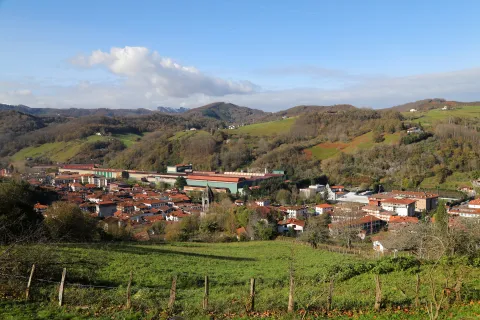
Within the 47.05 km² that make up Etxalar, life unfolds at a leisurely pace for its 804 inhabitants. This village serves as the link between the Baztan Valley and the Bortziriak region, and also borders the neighbouring village of Sara, on the other side of the boundary.
Here, identity is deeply rooted in the land and its ancestral traditions. This place offers visitors the chance to explore the old ironworks and the historic Gaztelu tower house, which served as the armoury of the Kingdom of Navarre in the Middle Ages. By preserving these wonderful sites, Etxalar has managed to keep its pride and culture intact. Strolling through its streets is like walking through a living museum, where the red stone and white facades contrast with the endless green of the forests that surround it.
The town’s heritage allows you to observe customs that have remained alive and structures that tell the story of the border.

General view of the village church of Etxalar.

Group of traditional houses seen from outside the church in Etxalar.

Group of traditional houses seen from outside the church with stelae in Etxalar.

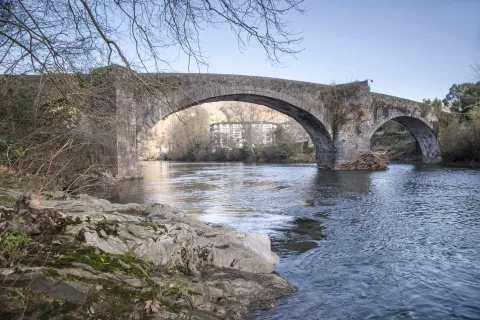
River running through the village of Etxalar.

Stelae outside the church of Etxalar.
Resuelve las dudas más habituales sobre los diferentes parques y zonas naturales: cómo llegar, qué visitar, normas, rutas y servicios para planificar tu experiencia con facilidad.
Online
