
Lesaka
The contours of the bridges and the solidity of iron

The contours of the bridges and the solidity of iron
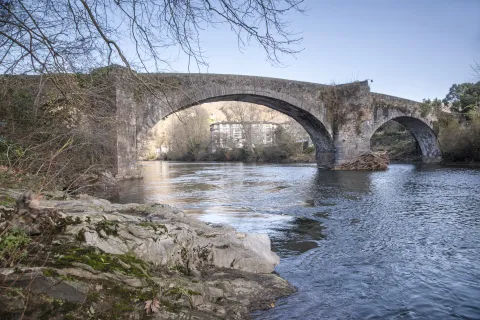
Here, the River Onin flows through the stonework of the bridges, marking the stone and water that define the town’s daily life. In this part of the Bortziriak region , the traces of the old ironworks remain woven into the stately architecture that inhabits the landscape between meadows and peaks. It is a setting defined by the strength of metal and the silence of its cobbled streets, where industrial heritage coexists with the unhurried rhythm of a land that simply unfolds.
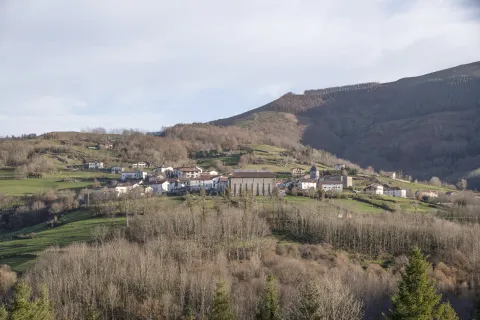
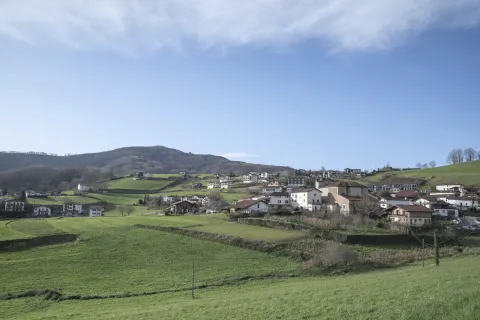
Lesaka covers an area of 54.7 km² of rolling countryside that hugs the Bidasoa, the river that marks the borders with Bera and Irún. Lesaka is the heart of Bortziriak, neighbouring Etxalar, Igantzi and Arantza, and guardian of a history that began long before the town itself, as evidenced by the dolmens of Agiña.
Although the town centre you can explore today dates back to the 14th century, Lesaka remains vibrant thanks to its resilience. This town has weathered fires and attacks on the Navarrese border, and survived thanks to its ironworks and the fortnightly markets granted by King John of Albret and Queen Catherine I in 1499. In 1958, the arrival of industry transformed its economy, but failed to erase the essence of a stately village that is proudly preserved.
Lesaka’s heritage allows you to observe the union between stately architecture, sacred art and the memory of the peaks.

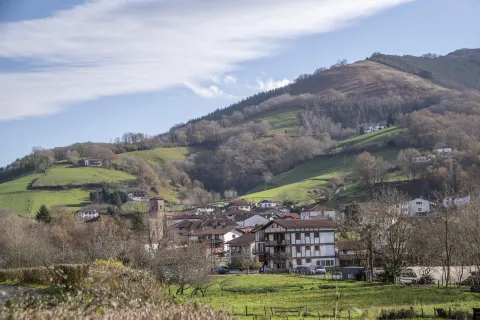
Street in Lesaka with stone houses, church in the background in Baztan-Bidasoa.

River crosses the town of Lesaka with stone houses and a tower on the sides.

River crosses the town of Lesaka with stone houses and a tower on the sides.
Resuelve las dudas más habituales sobre los diferentes parques y zonas naturales: cómo llegar, qué visitar, normas, rutas y servicios para planificar tu experiencia con facilidad.
Online
