
Bera
The trail of the border and the words carved in stone

The trail of the border and the words carved in stone
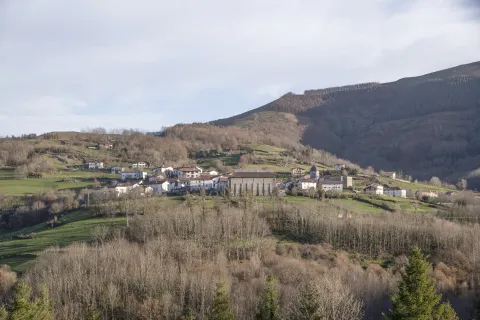
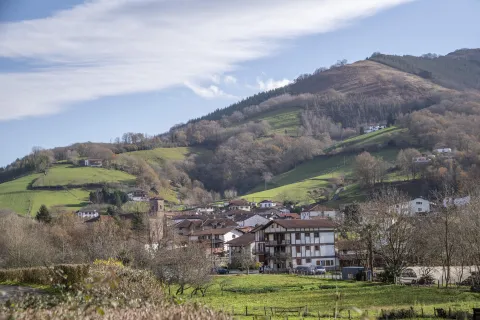
At the point where the Bidasoa River meets the border with Gipuzkoa and Lapurdi, the stonework of Bera preserves the memory of royal journeys and the chronicle of the written word. Here, the landscape unfolds amidst large houses with double eaves and bridges that have witnessed the passage of centuries, weaving the literary heritage into the character of its squares and market gardens. This is a region that reveals itself in the solidity of its walls and the flow of the river, where the culture is reflected in the substance and silence of its neighbourhoods.
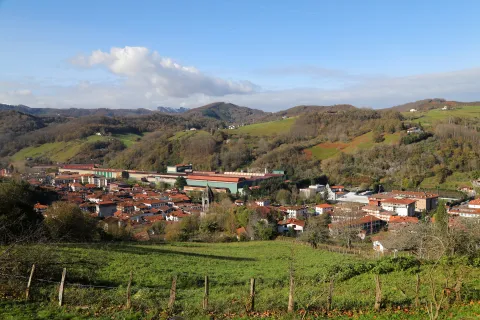
Here, life is measured by the green of the mountains and the constant flow of the Bidasoa. As part of the region of Bortziriak (the Five Villages), Bera shares its landscape and traditions with Arantza, Etxalar, Igantzi and Lesaka.
Bera covers 35.6 km² of green countryside, bordering Basque-French territories such as Biriatu and Azkaine to the north. The identity of this town is linked to its status as a border town. Ever since King Charles III the Noble granted privileges to its inhabitants in 1402 for the defence of the territory, Bera has been the scene of major historical events: the troops of the Duke of Wellington in 1813, episodes of the Carlist Wars and the declaration of war on Amadeus of Savoy. Today, that history is palpable in the solidity of the farmhouses and the tranquillity of Bera’s squares.
Bera cannot be described; it must be explored with a keen eye. Every corner is an invitation to discover the elegance of its architecture and the traces of those who lived here centuries ago.
Itzea, home of the Baroja family: In this 17th-century mansion, with its double Renaissance eaves, the Baroja family found their creative refuge. Although private, its exterior tells tales of literature. Nearby, the Oteiza stele pays homage to Pío, and the Errotatxo corner reveals a character where literature inhabits the stone without disrupting the neighbourhood’s leisurely pace.
Church of San Esteban: This church houses an organ of great artistic value and an outdoor garden of disc-shaped stelae. These circular pieces record ancient rites and link faith with the mineral legacy of our ancestors.
Town Hall and Plaza de los Fueros: The neoclassical building, dating from 1776, stands out for its portico of six arches. The designs on its façade, restored using sketches by Julio Caro Baroja, lend a visual identity that shares the town centre’s history with the respectful observer.
San Miguel Bridge: This landmark spanning the Bidasoa connects Bera with Lesaka. Restored through auzolan (community work), the bridge is not presented as a static monument, but as a living symbol of the unity and shared effort among neighbours.
Civil architecture and manor houses: Bera is a living museum. The layout of Legia and Alzate streets reveals a succession of palaces such as Lazarobaita and Aroztegia. Their coats of arms and balconies bear witness to a prosperity linked to the land that remains etched in the town’s memory.

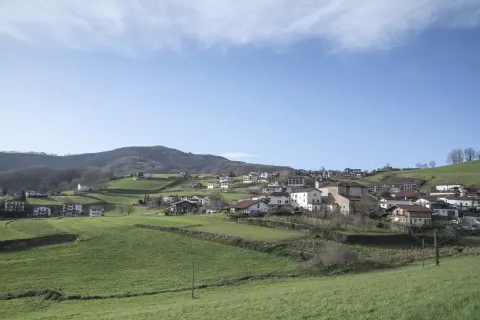
Green meadow in the surroundings of Bera.

Church of Bera seen from under an arch.

Town Hall of Bera.
Resuelve las dudas más habituales sobre los diferentes parques y zonas naturales: cómo llegar, qué visitar, normas, rutas y servicios para planificar tu experiencia con facilidad.
Bera, the town in northern Navarra, has an approximate population of 3,700 inhabitants.
Online
