
Ziga
The viewpoint of the soul of Baztan

The viewpoint of the soul of Baztan
Perched on a hill overlooking the valley, the silhouette of the Herrerian parish church stands out against the sky, setting the tone for Ziga. Here, the reddish stone from the local quarries defines the austere walls against a landscape of meadows and barns stretching towards the horizon. It is a region where monumental architecture and rural life coexist in the silence of the heights, allowing the atmosphere of the place to manifest itself in its streets and squares.
Ziga is organised around a square where the traditionally built houses seem to face towards the church. Situated as a link between the valley floor and the mountain peaks, this village offers a view of the northern part of Baztan, whilst preserving the traditions that have defined the character of its inhabitants for centuries. From the main centre to the neighbourhood of Zigaurre, time passes at a leisurely pace, reflecting the heritage that the area preserves in its original forms.
Ziga’s heritage allows you to observe the union between Herrerian rigour and the expanse of the Baztan landscape.

Interior of the portico with stone arches in Ziga church

Ziga - Baztan valley

Facade of Ziga church with arched portico, central staircase and bell tower
Resuelve las dudas más habituales sobre los diferentes parques y zonas naturales: cómo llegar, qué visitar, normas, rutas y servicios para planificar tu experiencia con facilidad.
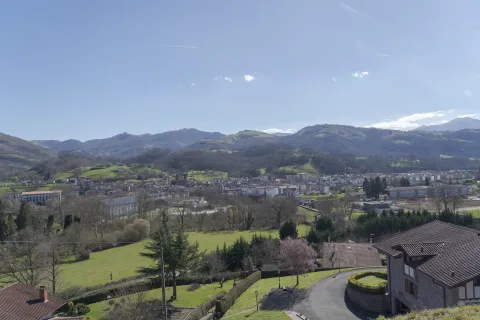
The Baztan Viewpoint is located between Ziga and the Zigaurre neighborhood, along the NA-2540 road. From there, one can enjoy a spectacular view of the nearby villages and the green landscape of the valley.


Online
