
Romanzado / Erromantzatua
A history of borders in the heart of the gorges

A history of borders in the heart of the gorges
The vertical cliffs rising over 300 metres and the flight of birds of prey over the Arbaiun Gorge mark the landscape of our valley as it transitions towards the Pyrenees. In this part of the Merindad de Sangüesa, the stonework of the small churches and the course of the River Salazar bear witness to the legacy of pre-Pyrenean architecture, where stone and water coexist with the daily life of villages such as Arboniés, Bigüézal and Domeño. The character of Romanzado is evident in the density of its holm oak forests and the silence of its gorges, maintaining its own chronology rooted in the mineral solidity of the land.
Located 45.5 km from Pamplona, our municipality is a small community situated in a historically borderland territory. The name derives from the Latin romaniceatus (the Romanised), referring to its status as a Romance linguistic wedge between Basque-speaking territories during the Modern Age.
Covering an area of 91.69 km², life in the valley is spread across three local councils and seven inhabited settlements where livestock farming and forestry have shaped a landscape of contrasts, with the administrative heritage preserved on Calle Santa María de Domeño.
Romanzado’s heritage is a fascinating blend of stunning geology and rural art.

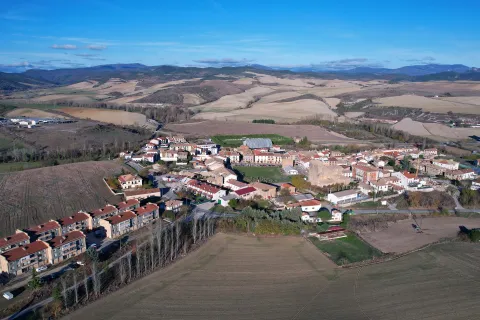
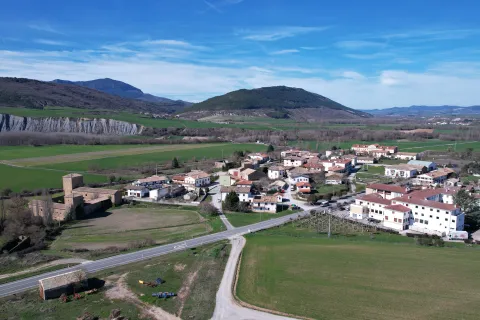
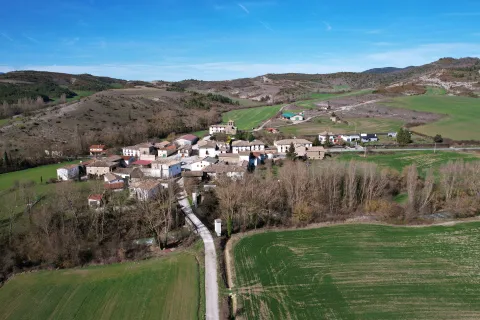
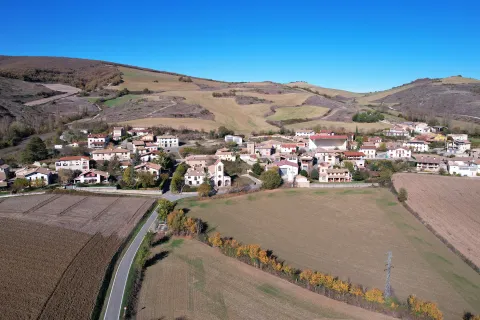
Aerial view of the village of Romanzado with scattered houses, green fields, and a mountain in the background in the pre-Pyrenees.

Traditionally built stone building in Romanzado with an arched door.

Stone church with a square tower in Romanzado, of medieval construction.
Resuelve las dudas más habituales sobre los diferentes parques y zonas naturales: cómo llegar, qué visitar, normas, rutas y servicios para planificar tu experiencia con facilidad.
Online
