
Lizoáin-Arriasgoiti / Lizoainibar-Arriasgoiti
The corner of the Erro where time flows slowly

The corner of the Erro where time flows slowly
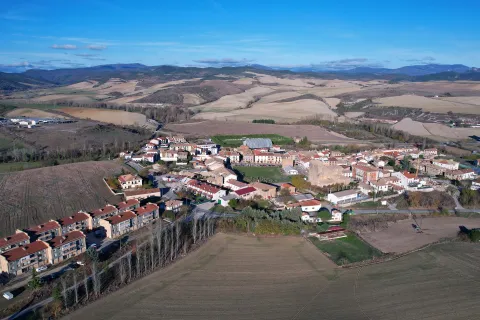
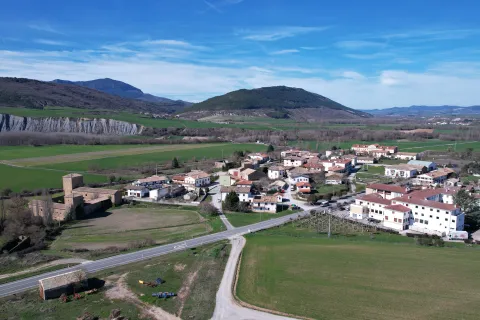
Our territory is defined by the flow of the River Erro, which has carved gorges and ravines across a landscape spanning 65.53 km². Here, the union of the valleys of Lizoáin and Arriasgoiti in 1943 gave rise to a landscape where fertile plains coexist with steeper slopes, integrating the stonework of medieval bridges into the daily life of our small villages. It is a scene that unfolds in the silence of the oak and beech woods, where heritage and the flow of water simply exist, chronicling a story that unfolds to the rhythm of the seasons in the Pre-Pyrenees.
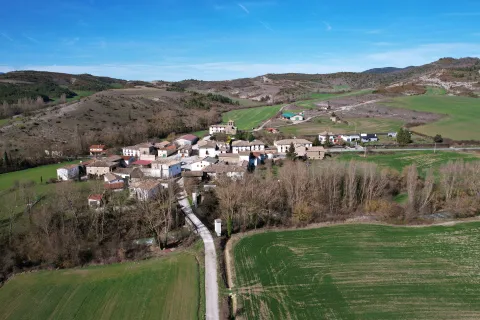
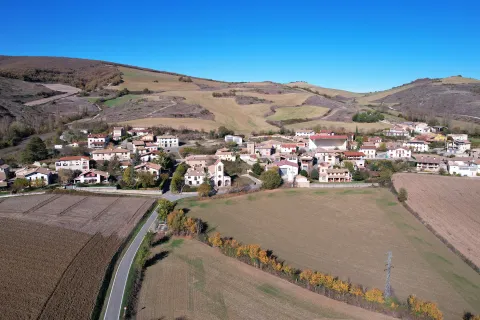
The identity of our municipality, situated a mere 20 kilometres from Pamplona, is reflected in a small community spread across hamlets such as Mendióroz, Yelz and Zalba. The historical record of this place dates back to possible Roman settlements and is firmly rooted in the Merindad de Sangüesa, where agriculture and livestock farming have shaped the landscape and the local character. The administrative centre is in Lizoáin, whilst the name Arriasgoiti (derived from harrias goiti) refers to the presence of the Aguinaga rock, a geological landmark that marks the boundary between the two valleys that today make up our bilingual community.
The heritage of Lizoáin-Arriasgoiti allows us to observe the union between historical engineering, the spirit of the rural villages and the legacy of the Pyrenean nobility.

Aerial view of Lizoain-Arriasgoiti with scattered houses, green fields, and forests.

Iron chain sculpture next to a stone facade in Lizoain-Arriasgoiti, with a barred window and a cobbled street.

Stone town hall with flags in Lizoain-Arriasgoiti, main facade with an arched door.
Resuelve las dudas más habituales sobre los diferentes parques y zonas naturales: cómo llegar, qué visitar, normas, rutas y servicios para planificar tu experiencia con facilidad.
Currently, the municipality has a population of around 300 inhabitants. It is a community dispersed across numerous small settlements, which contributes to maintaining that atmosphere of natural tranquility and exclusivity that characterizes it.
As a municipality composed of several villages, the festive calendar is varied. The patron saint festivals in Lizoáin are usually held around September, while the rest of the small localities spread their minor celebrations throughout the summer, always maintaining their character as family and community gatherings.
Online
