
Izagaondoa
A Romanesque sanctuary in the shadow of the great rock

A Romanesque sanctuary in the shadow of the great rock
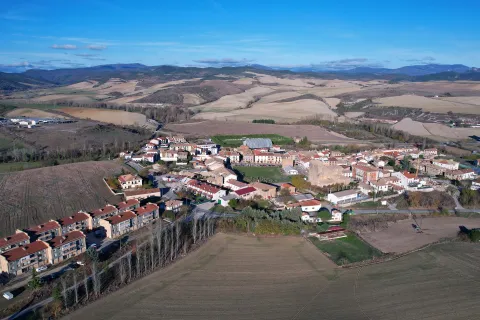
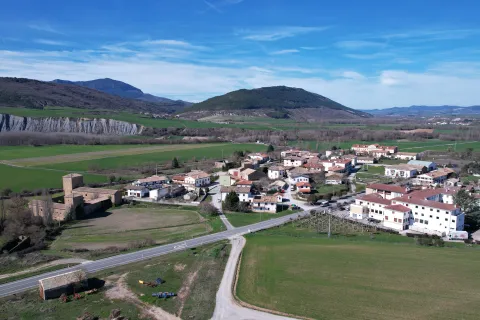
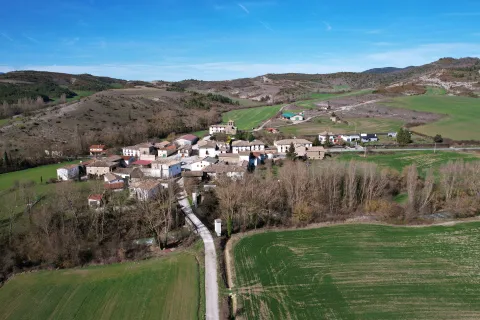
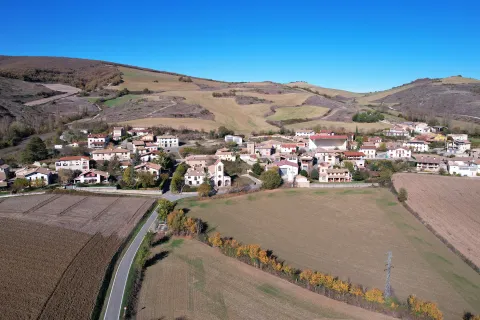
Here, time seems to have stood still to protect an exceptional artistic heritage. In this valley of marl and sandstone, the landscape of Ardanaz, Turrillas and Urbicáin bears witness to the legacy of ancient defensive structures and the traces of a life linked to sheep farming and cereal cultivation. It is a region to be discovered in the silence of its rural parishes and the verticality of its oak and pine forests, weaving the mystique of pilgrimages into a scene that unfolds under the constant watch of the summit.
Our municipality is organised around a dozen settlements, such as Ardanaz (the main town), Guerguitiain, Induráin, Iriso, Reta and Zuazu. The history of Izagaondoa preserves traces of the Leguín fortress, a landmark that in the Middle Ages defended the busy route between Lumbier and Pamplona. The valley’s identity is reflected in the solidity of its traditional architecture and in the use of mountain resources, where the ashlar stone of the palaces of Cabo de Armería coexists with the simplicity of the pre-Pyrenean farmhouses.
The valley’s heritage offers a wealth of rural Romanesque art, woven into the daily life of its villages.

Medieval stone hermitage in Izagaondoa with panoramic views of cultivated fields and forests of the Navarrese Pre-Pyrenees.

Stone church with a bell tower in Izagaondoa, a covered portico and a clay tile roof under a blue sky.

Stone portico with a pointed arch in Izagaondoa, entrance to the village church.
Resuelve las dudas más habituales sobre los diferentes parques y zonas naturales: cómo llegar, qué visitar, normas, rutas y servicios para planificar tu experiencia con facilidad.
Online
