
Beintza-Labaien
The refuge of the reservoirs and the memory of water

The refuge of the reservoirs and the memory of water
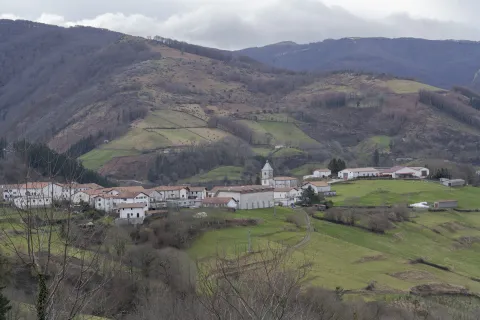
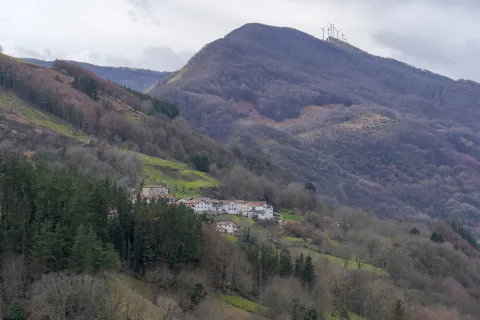
Deep within the Malerreka region, where the greenery becomes more intense, lies Beintza-Labaien. This municipality, comprising two neighbouring villages nestled on the hillside just a few metres apart, embodies the character of the Navarran mountains at an altitude of 450 metres. Surrounded by peaks looking towards Ultzama and Basaburua, this area is home to the Leurtza Reservoirs, a space where the presence of water and the forest define the character of the region. Here, a history dating back to the 12th century coexists with a heritage that reflects the daily life of yesteryear, allowing time to pass to the rhythm of the land and nature.
This municipality is characterised by its dual structure: Beintza and Labaien. Although both neighbourhoods are administered by the town hall located in Labaien, each retains an identity linked to its landscape. The history of the area is remarkable; in 1192, King Sancho VI the Wise granted charters to Labaien, consolidating its presence in the region.
Covering an area of 28.13 km², the territory borders villages such as Zubieta, Ituren and Urrotz. This is a region of exceptional natural beauty, where the silence is broken only by the sound of the streams and the rustling of the beech forests that guard the valley.
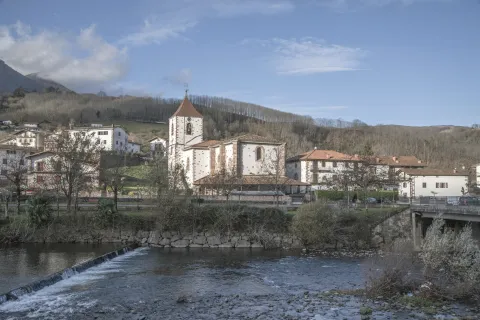
The municipality’s heritage can be discovered in the traces left by its stones and in the historical use of its water resources, where the legacy of the past lives on in the present.

View of the village pelota court in Beintza-Labaien next to a house.

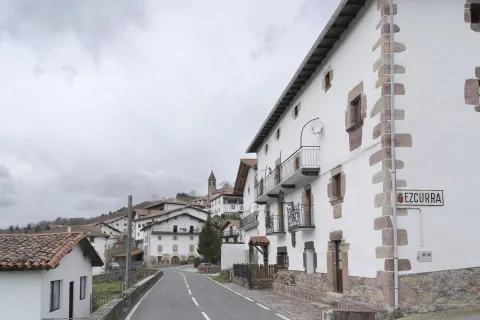
Group of traditional houses in Beintza-Labaien.

Group of traditional houses in Beintza-Labaien.
Resuelve las dudas más habituales sobre los diferentes parques y zonas naturales: cómo llegar, qué visitar, normas, rutas y servicios para planificar tu experiencia con facilidad.
Beintza-Labaien has a population of approximately 230 inhabitants. It is a small municipality in the Malerreka valley, formed by the villages of Beintza and Labaien, separated by barely 700 meters.
Online
