
Ezkurra
Cradle of rivers and history

Cradle of rivers and history
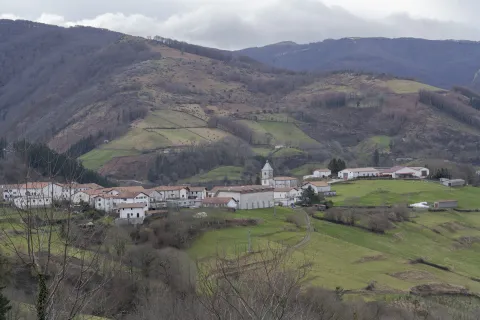
In the heart of the Basaburua Menor valley, at an altitude of 525 metres, the Ezkurra landscape stands as a watershed flanked by peaks. Here, the landscape itself is the cradle where the rivers Ezkurra and Urumea are born, marking a territory of woodland and industrial heritage. The history of ironworks and ancient manors lives on in the solidity of the walls and the silence of its megalithic routes, reflecting the character of Baztan-Bidasoa without the need for artifice.
The history of this place is evident in the prehistoric remains of its surroundings and in documents that mention its name as early as 1197. This is a region which, having been the administrative capital of the Beintza-Labaien valley, became an independent municipality in 1846. The textile and ironworking industries of the 19th century remain an integral part of the region’s heritage, where agriculture and livestock farming continue to shape the use of the land and the landscape of Baztan-Bidasoa.
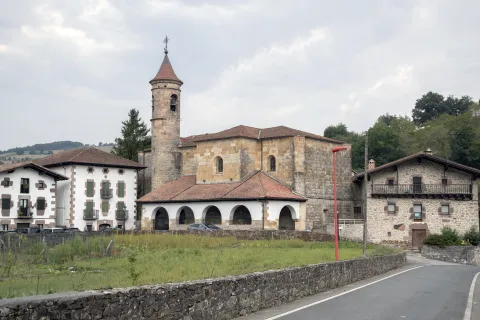
Ezkurra offers a glimpse of the coexistence between everyday life and the vestiges of a feudal and spiritual past.

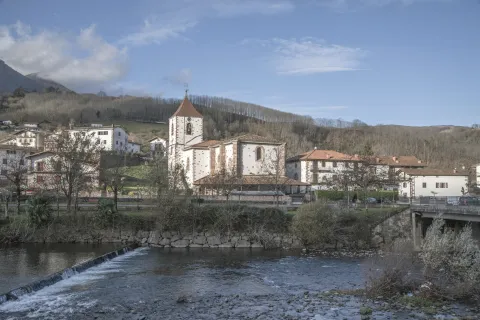
Back view of a couple of houses and the church of Ezkurra.

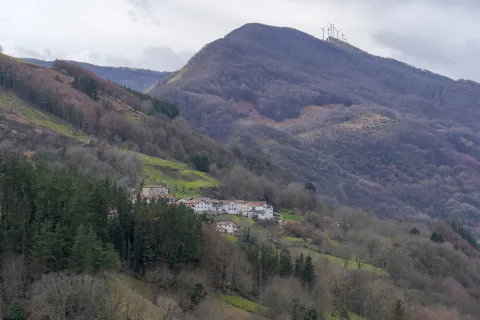
Mountain behind a group of traditional houses in Ezkurra.

Fronton of the town of Ezkurra.
Resuelve las dudas más habituales sobre los diferentes parques y zonas naturales: cómo llegar, qué visitar, normas, rutas y servicios para planificar tu experiencia con facilidad.
Online
