
Arizkun
The echo of the Agotes and the nobility of Ursúa

The echo of the Agotes and the nobility of Ursúa
Here, history is told through the solidity of the manor houses and the silence that still pervades the Bozate neighbourhood. Arizkun is a region where ashlar architecture coexists with the legacy of ancient lineages and the traces of those who, for centuries, shaped wood and stone on the valley’s edges.
Arizkun is the place where the elegance of Baroque convents coexists with legends of ancient lineages and the strength of carved wood. This is the place where the past can be felt in every stone of the Palace of Ursúa and where contemporary art pays homage to mythology in the Santxotena Museum.
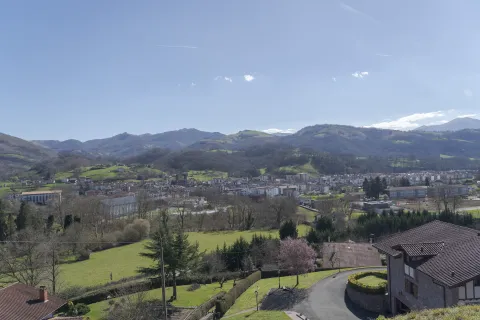
Arizkun has historically been one of the most significant towns in the Baztan Valley. Its social and economic development is reflected in a town centre of stately buildings and streets that hold the secret of centuries of coexistence.
Arizkun’s identity is inextricably linked to the Bozate neighbourhood. From the 14th century onwards, this corner of the valley was a refuge for the Agotes, a community historically discriminated against but renowned for their great talent as carpenters and musicians. Although they did not achieve equal rights until 1817, today their legacy is a fundamental part of the town’s culture . Arizkun is an example of how time has managed to heal the wounds of the past, creating a present rich in art and tradition.
Arizkun is a showcase of civil, religious and ethnographic heritage that leaves no one indifferent.

Visit to Casa-Lagar Gamioxarrea

Arizkun village square surrounded by traditional houses.

Map of Arizkun convent street.
Resuelve las dudas más habituales sobre los diferentes parques y zonas naturales: cómo llegar, qué visitar, normas, rutas y servicios para planificar tu experiencia con facilidad.
Arizkun, located in the Baztan valley, has a population of 589 inhabitants. It is a town rich in history, with a notable social and economic influence throughout the centuries, known for its noble buildings and well-preserved traditions.


Online
