

Yesa Reservoir
The Sea of the Pyrenees
At the Yesa Reservoir, water does not merely occupy space: it transforms it. The River Aragón widens into a blue horizon that seems to stand time still, whilst the wind sweeps across the surface as if reading ancient secrets. Between banks marked by the absence of villages and the constant presence of the nature , the landscape exudes a profound calm. The Yesa Reservoir is all about contrast: memory and movement, submerged history and life on the surface. A place where everything seems suspended, yet nothing remains still.
Yesa Reservoir general information
Located in the Pre-Pyrenees, the Yesa Reservoir stretches between eastern Navarre and north-western Aragon, occupying part of the Berdún Canal. With a surface area of approximately 1,900 hectares, it is the largest navigable body of water in the area.
It was inaugurated in 1960, profoundly transforming the landscape and leading to the abandonment of villages such as Ruesta, Tiermas and Escó, which are now visible on its banks or submerged beneath the water. Its main functions are water supply, irrigation (particularly for the Bardenas Reales) and hydroelectric power generation. It is also notable for its climate, with more hours of sunshine than other nearby areas such as the Pamplona basin, giving it a particularly bright character.
How to get to the Yesa Reservoir?
Access to the Yesa Reservoir is easy and well connected:
- By road: The N-240 runs along part of its right bank, offering direct views of the reservoir.
- From Pamplona: About 50 km via the Pyrenees Motorway (A-21).
- Key point: The dam is located very close to the town centres of Yesa , in Navarre.
What to do at the Yesa Reservoir?
Here, the landscape invites both action and contemplation. These are some of the highlights:
- Let the wind carry you away: It is an ideal spot for sailing, windsurfing and other water sports thanks to its wind conditions.
- Walking through history: The Camino de Santiago runs alongside part of the reservoir, passing landmarks such as the Roncaleses Bridge.
- Look up: From its banks, you can see iconic sites such as the Monastery of Leyre or the Castle of Javier .
- Fishing in its waters: It is home to species such as trout, carp and American perch, making it a popular spot for angling.
- Exploring what remains: The ruins of ancient villages such as Ruesta or Tiermas offer a glimpse into the region’s recent history.
Información sobre: Yesa Reservoir
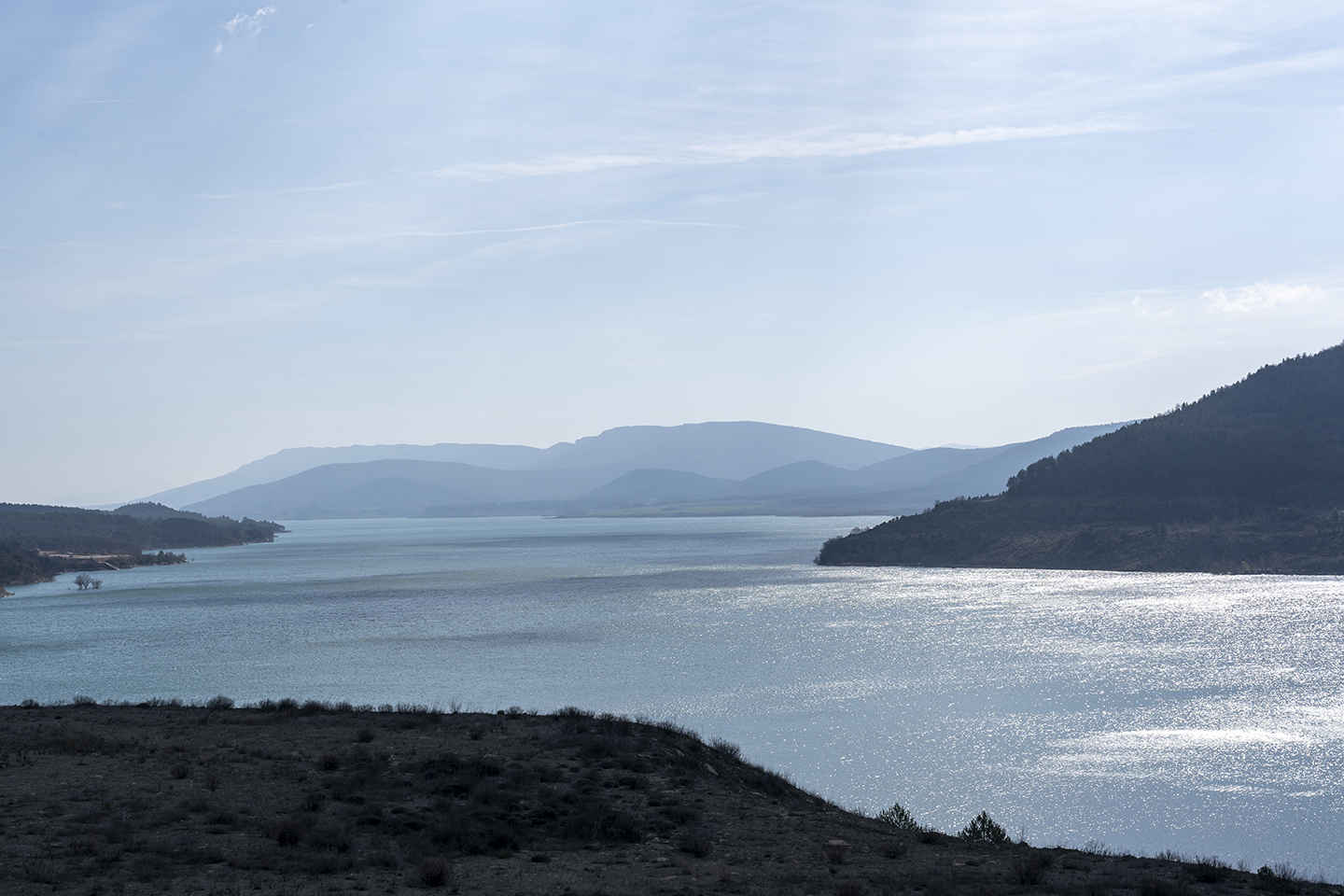
Panorámica del embalse de Yesa con montañas boscosas a ambos lados y cielo despejado.
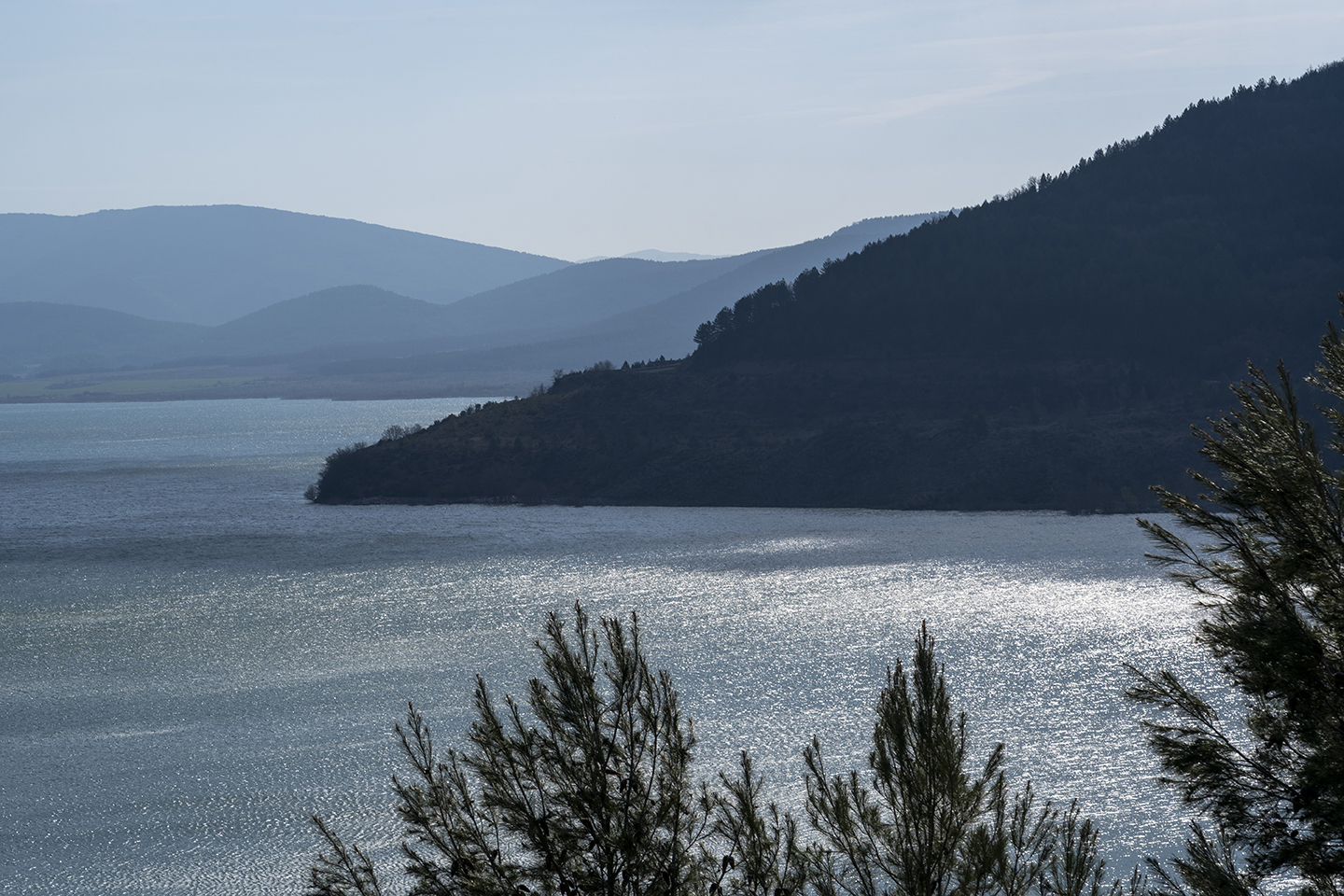
Embalse de Yesa con aguas turquesas y montañas boscosas al fondo.
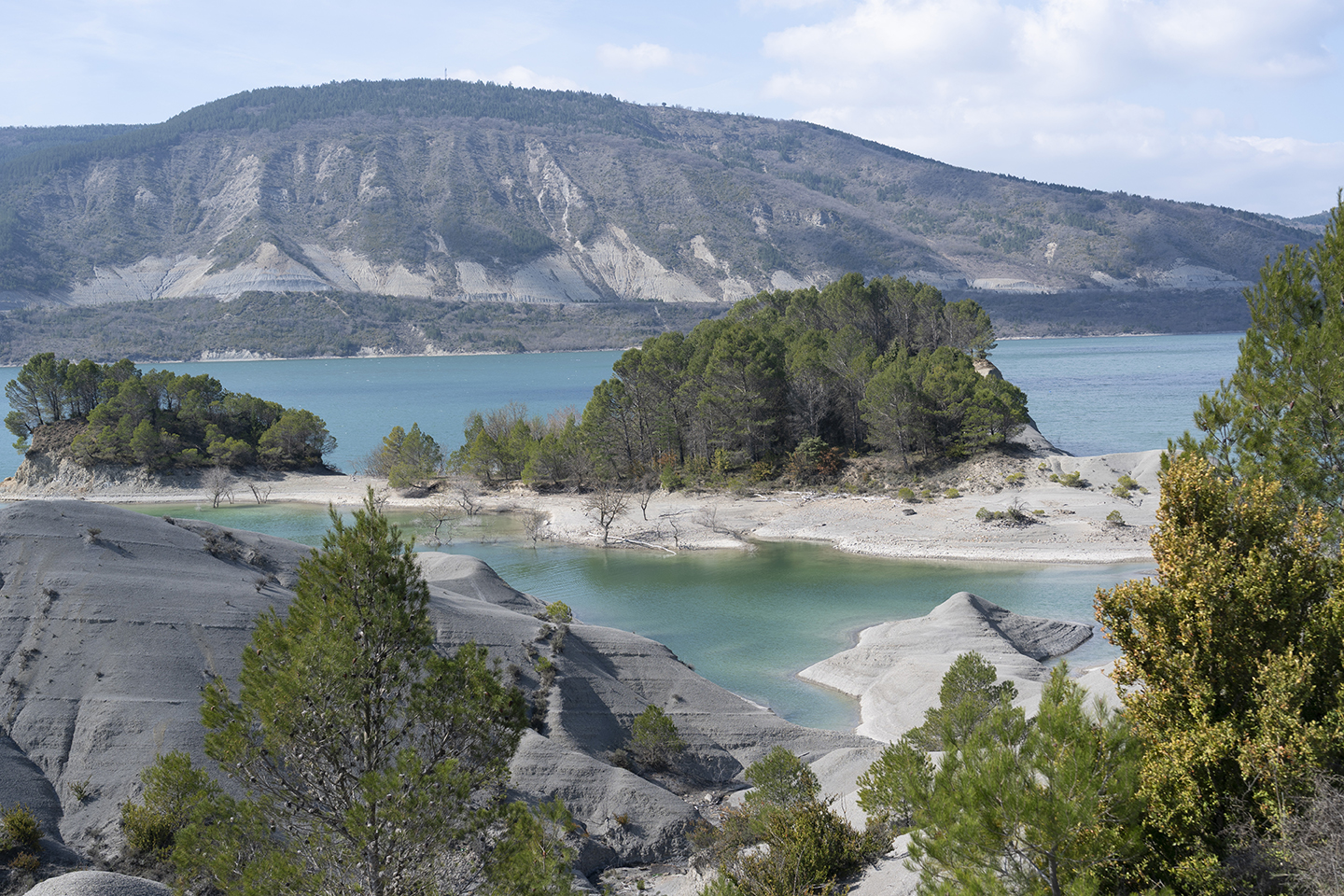
Embalse de Yesa con aguas turquesas, formaciones rocosas grises y vegetación dispersa, montañas al fondo.
-
The Irati River
Here, where its name recalls the old log drives to the sawmills and its waters now flow between the … -
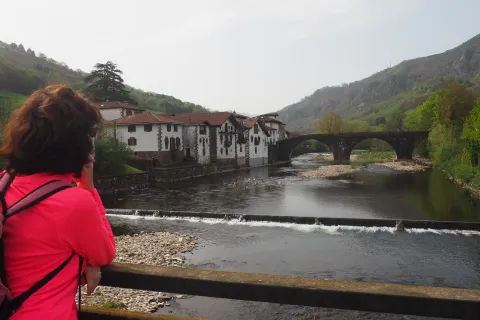
River Bidasoa
Here, where the river’s course preserves the memory of ancient paths and the water flows through the… -
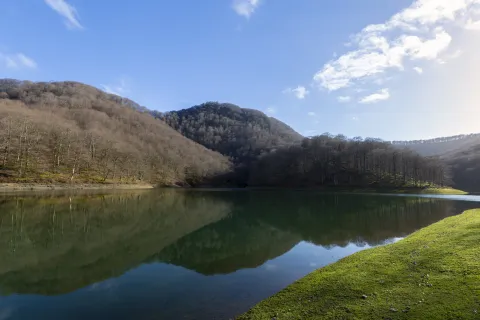
Leurtza Reservoir
Here, where two bodies of water lie hidden amidst the mist and the deep green of Malerreka, time dis…
