

Leurtza Reservoir
Where the forest embraces the water in silence
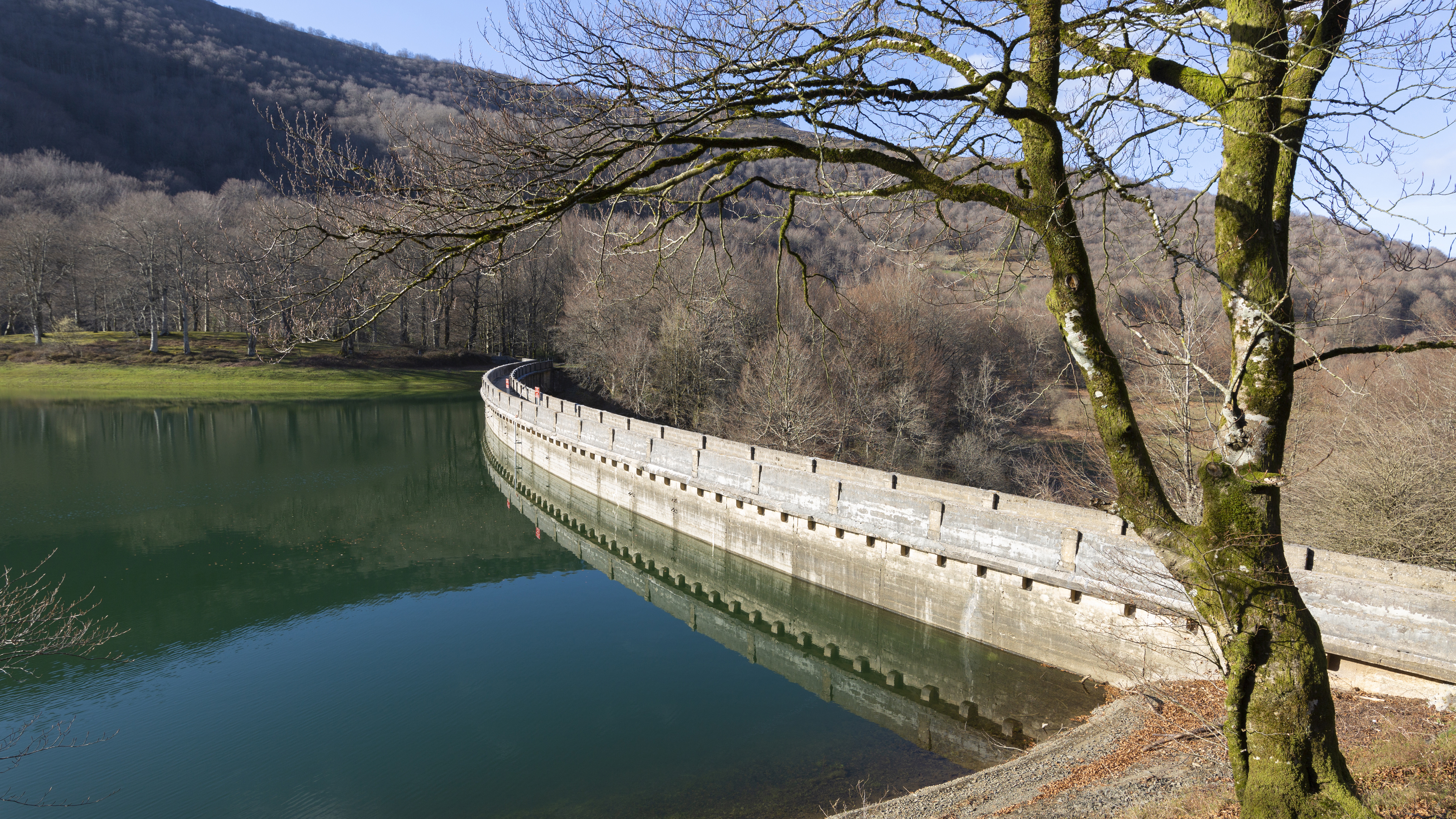
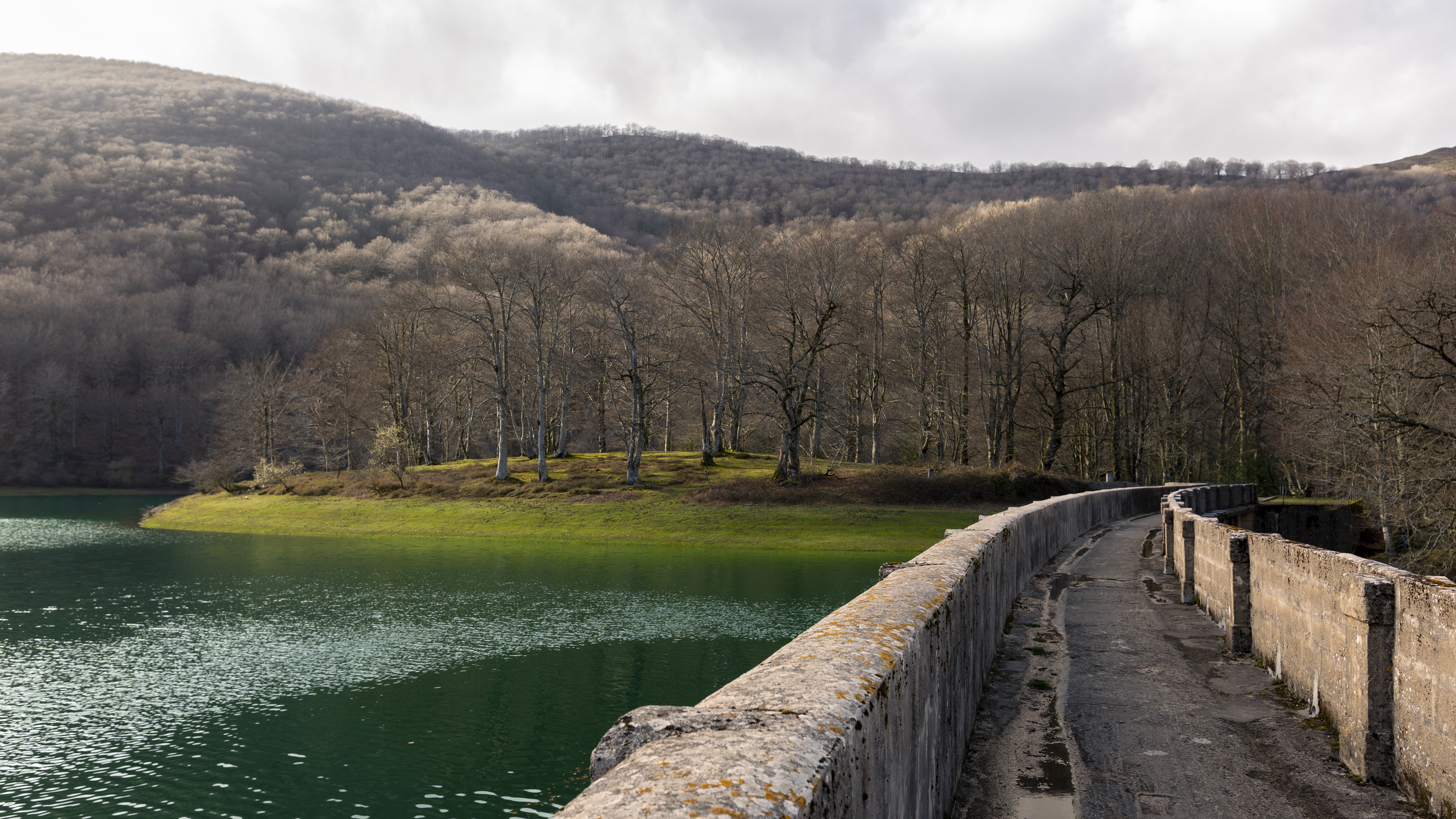
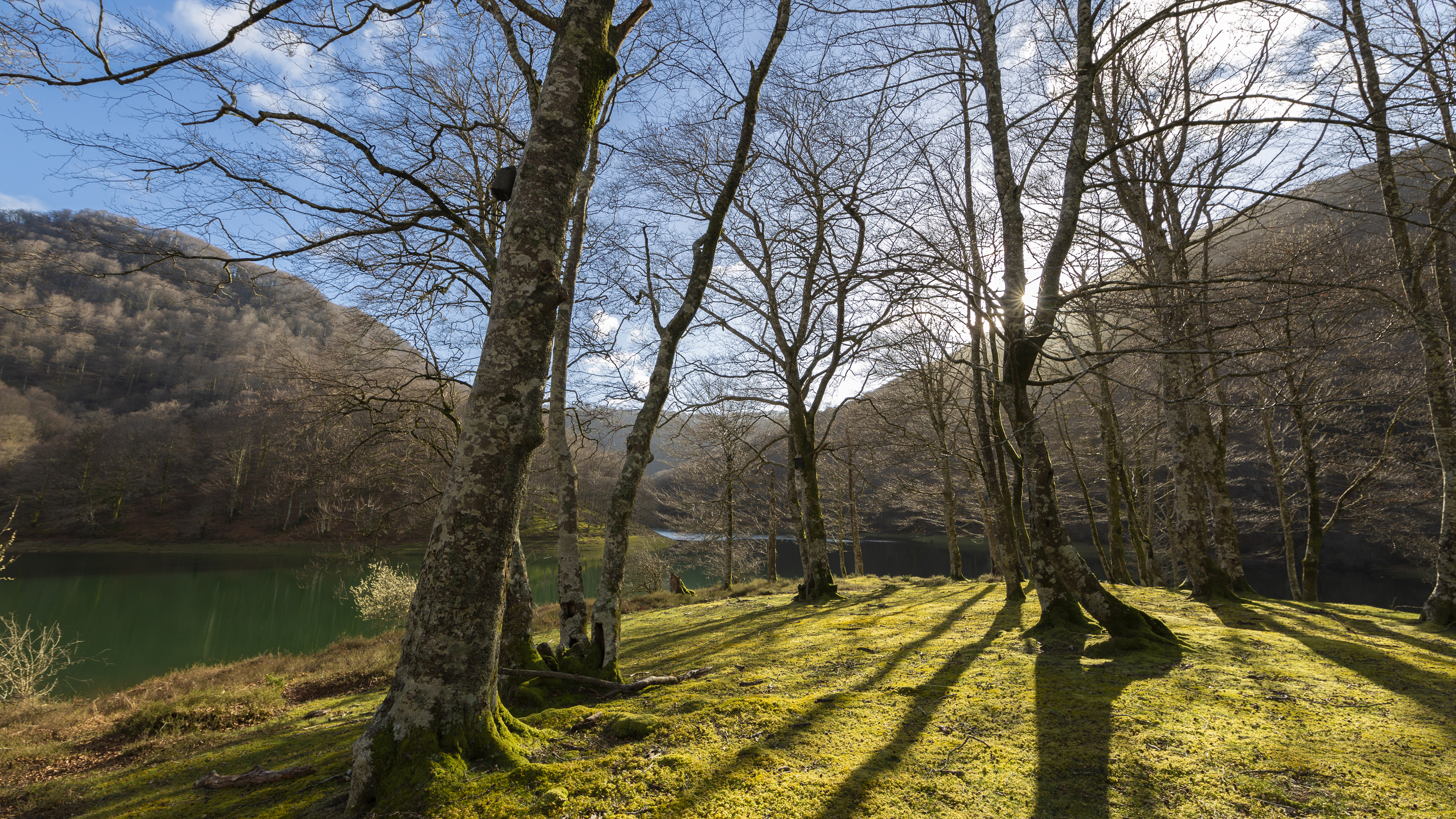
Here, where two bodies of water lie hidden amidst the mist and the deep green of Malerreka, time dissolves beneath the canopy of the beech forest. The Leurtza Reservoir is home to the croaking of the common frog and the traces of an ancient engineering feat that today blends into the forest as if it had always been there. It is a place of calm and un d observation, where the water and Atlantic life pulse unhurriedly, revealing themselves to those who choose to pause and listen.
Leurtza Reservoir general information
It is situated in the north of Navarre, straddling the municipalities of Urrotz, and Beintza-Labaien. Its identity is rooted in two reservoirs built in the early 20th century for electricity generation, an activity that today coexists with its designation as a Natural Recreation Area.
Its history records a transformation of the landscape from the former stone quarry to the current presence of young beech forests that have replaced the old charcoal-burning woods. Its oceanic climate brings abundant rainfall that nourishes vegetation dominated by beech and oak, home to species such as wild boar, roe deer and griffon vultures. It is, moreover, a place where environmental values are protected alongside traditional uses such as livestock farming and forestry.
How to get to the Leurtza reservoir?
To reach the reservoir, take the N-121-A road from Pamplona towards Irún.
- Main route: After taking the exit for Legasa , the route continues along the San Esteban-Saldías road (NA-4040) towards Urrotz.
- Final access: From the village of Urrotz, a tarmac track leads directly to the shores of the reservoir. This road is in good condition but is narrow and winding, so please drive with caution.
What to do at the Leurtza reservoir?
All around, the experience unfolds amidst mist, water and roots.
- Exploring its trails: A space to take in the landscape via an easy circular route of around 3.5 kilometres that circles the reservoir, or more challenging routes, such as the 7.35 km climb to the summit of Soratxipi.
- Archaeological sites: As you walk along the trails, you can see landmarks of ancient history such as the Pittortzar dolmen or various menhirs.
- Recreational use and picnics: There is a designated area with tables, drinking fountains and barbecues situated in the shade of the beech trees and near the car park. The use of fire is only permitted in the designated barbecues.
- Accessibility: There is a 2-kilometre path around the lower reservoir for people with reduced vision or mobility, including various signs in Braille.
- Red-bellied frog spotting: This is the preferred habitat of this species, which has become the symbol of this natural environment.
- Local cuisine: Once the spotting is over, you can experience the local culinary culture in the small neighbouring villages of Urrotz and Beintza-Labaien.
Información sobre: Leurtza Reservoir
Embalses de Leurtza
Embalses de Leurtza
Embalses de Leurtza
-
The Irati River
Here, where its name recalls the old log drives to the sawmills and its waters now flow between the … -
River Bidasoa
Here, where the river’s course preserves the memory of ancient paths and the water flows through the… -
Yesa Reservoir
At the Yesa Reservoir, water does not merely occupy space: it transforms it. The River Aragón widens…
