

Bertiz Natural Park
Where time dissolves into greenery
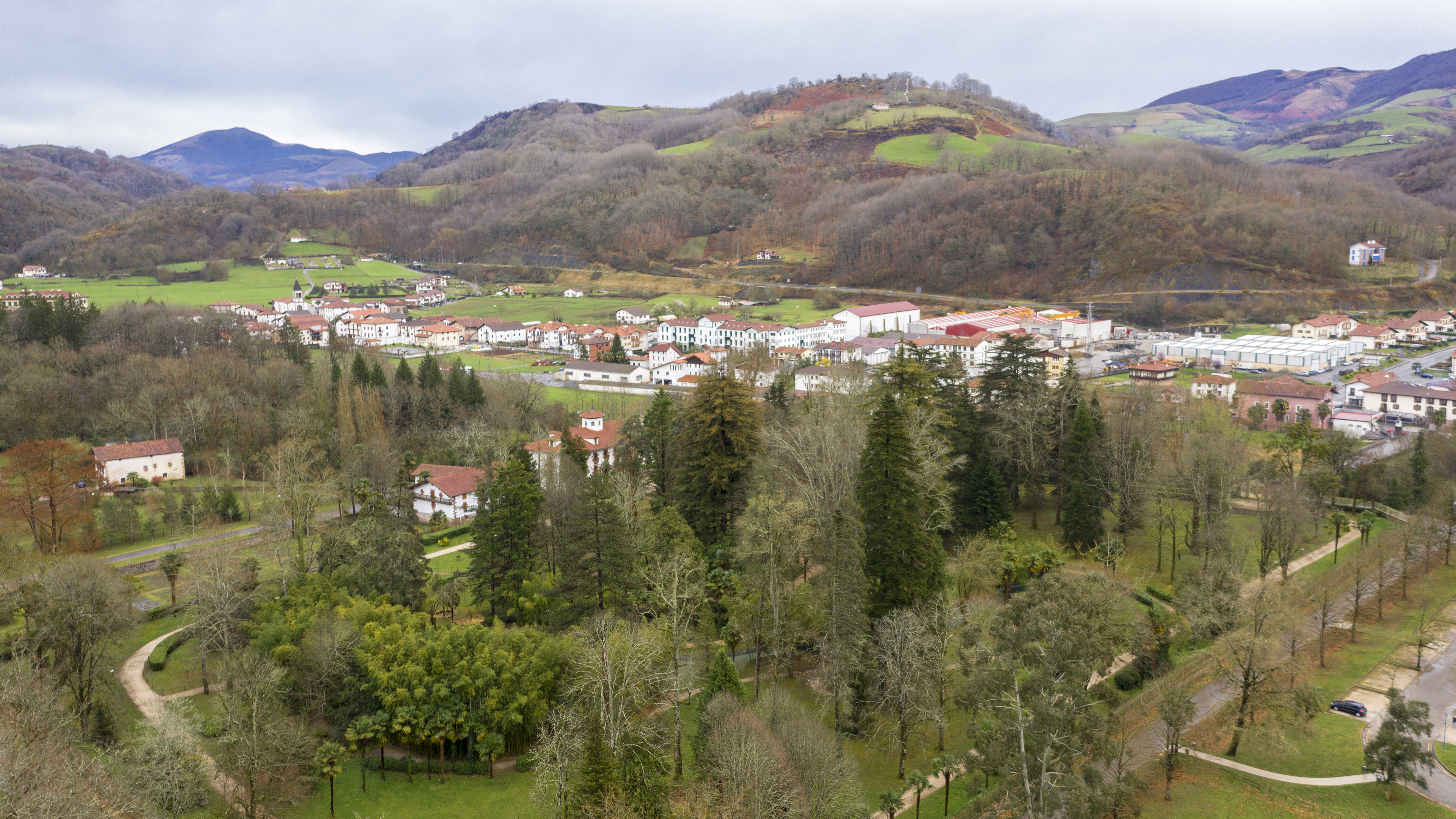
In this corner where the River Bidasoa flows towards the sea and legends still drift amongst the streams, time seems to dissolve beneath the deep shade of the forest. Moisture clings to the bark of beech and oak trees, and the air retains a serene density that envelops every step. At the entrance, a modernist-style garden draws a subtle boundary between the orderly and the untamed. Here, nature and memory coexist effortlessly: in the stillness of the stone, in the rustling of the leaves and in the persistence of a landscape that has survived to the present day without losing its balance.
Bertiz Natural Park general information
Bertiz Natural Park covers 2,052 hectares of Atlantic forest in the Bertizarana Valley, in the north of Navarre. Its documented history dates back to 1392 and, for centuries, it remained private property, which helped to preserve it from intensive exploitation.
In 1984, it was declared Navarre’s first Natural Park, following a donation by Pedro Ciga and Dorotea Fernández, who stipulated that its natural features must be preserved intact. Today it forms part of the Natura 2000 network as a Special Area of Conservation (SAC). Within its boundaries lies one of the most important beech forests on the Iberian Peninsula, alongside oak and alder groves that are home to species such as the black grouse, roe deer, red deer and European mink.
How to get to Bertiz Natural Park?
The main entrance is at Oronoz-Mugairi, where the valleys of Malerreka and Baztan converge. From there, you cross the stone bridge over the River Bidasoa, rebuilt in the late 19th century, which marks the entrance to the park’s visitor centre.
What to do in Bertiz Natural Park?
In Bertiz, man-made features alternate with areas of unspoilt nature.
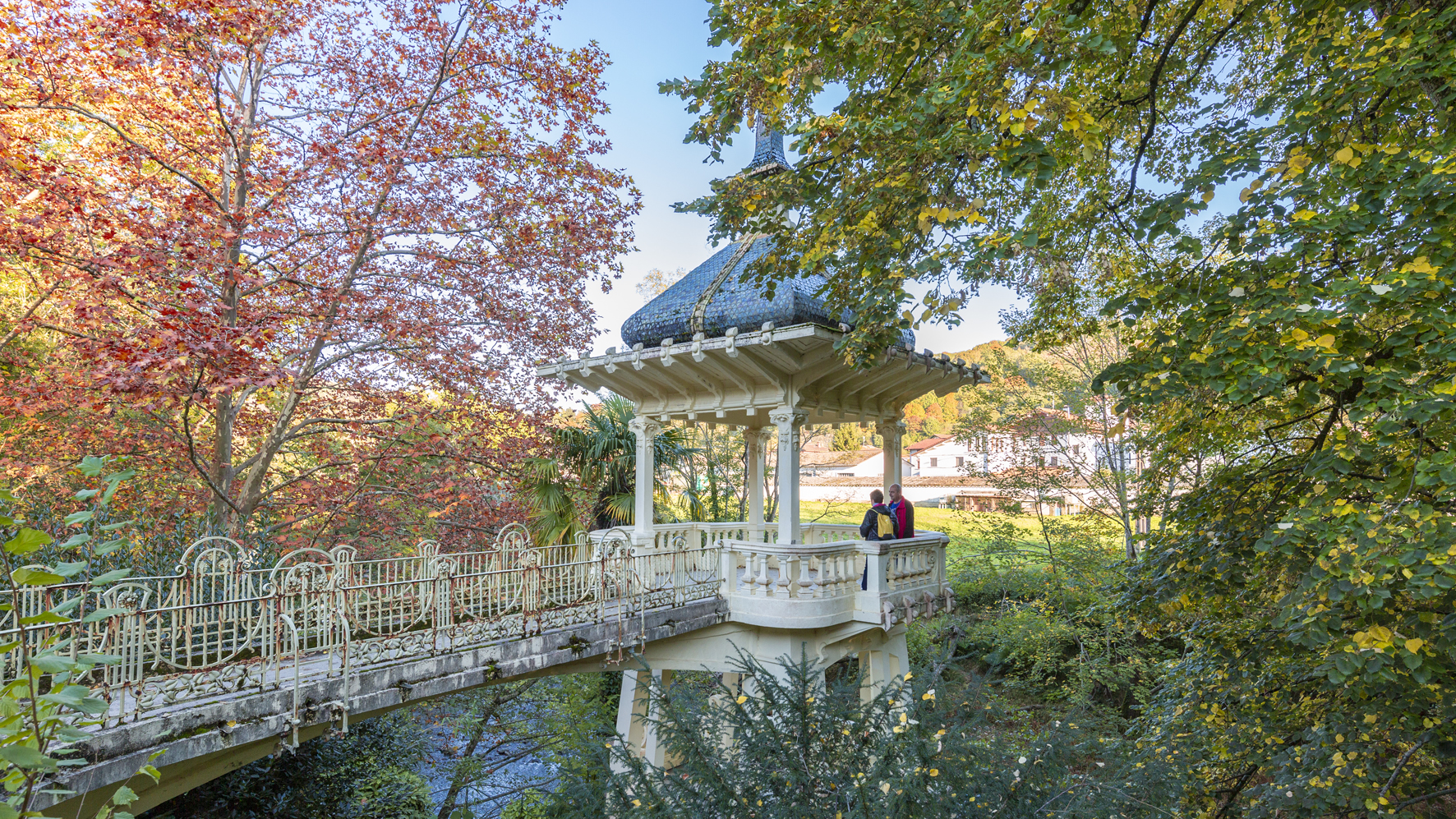
- Historic-Artistic Garden: A 100-year-old observation area where species from all over the world coexist, such as sequoias, ginkgos and cedars, amidst Art Nouveau-style ponds and bridges.
- Chapel and stained-glass windows: A celebration of Bertiz’s light through its modernist stained-glass windows, restored as a benchmark for the conservation of glass art.
- Nature Interpretation Centre (CIN): Located next to the palace, it offers a space to explore, through models and real materials, the conservation work carried out in the forest.
- Watercourse observation: Paths allowing visitors to observe the flow of water in waterfalls and streams such as Suspiro or Ayansoro, which nourish the beech forest.
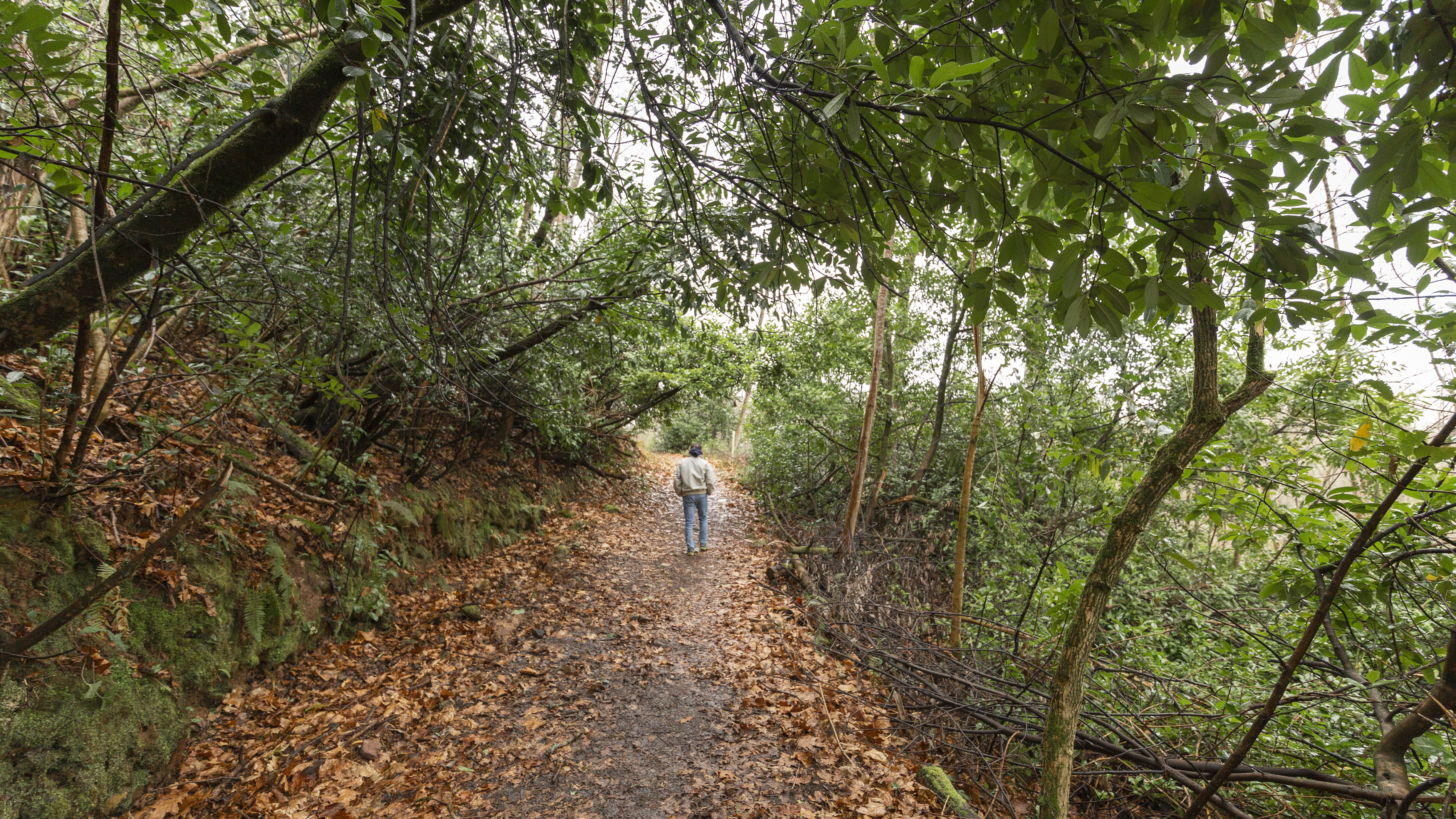
- Network of trails: An area to explore on foot via 7 signposted routes:
- Aizkolegi: This is the most demanding route, covering 22 kilometres (there and back) with an elevation gain of 680 metres. The trail climbs through beech and oak trees until it reaches the summit, where the ruins of the old stately home now serve as a vantage point offering sweeping views of the Pyrenees and the coast.
- Iturburua: A route designed to observe water and plant biodiversity in a very natural setting.
- Walk to Reparacea: A gentle 1.5-kilometre walk with hardly any difficulty, connecting the visitor centre with the stone bridge and the palace in the centre of Oieregi.
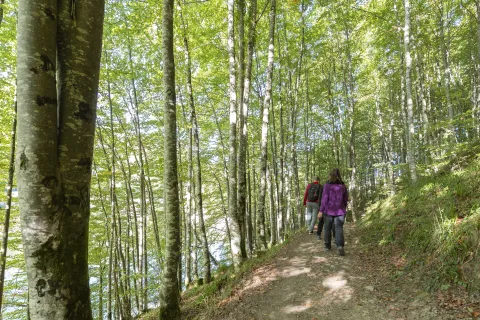
- Regatas Trails: Paths that follow the murmur of streams such as Ayansoro and Suspiro, where moisture trickles down the tree trunks, capturing the essence of one of the best-preserved forests in southern Europe.
Información sobre: Bertiz Natural Park
Parque Natural del Señorío de Bertiz
Parque Natural del Señorío de Bertiz
Parque Natural del Señorío de Bertiz
-
Aralar SAC
In this Aralar Special Area of Conservation (SAC), the landscape unfolds amidst deep beech forests a… -
Irati Forest
The Irati Forest unfolds as a dense landscape, where beech and fir trees form a continuous canopy th… -
Urbasa-Andía Natural Park
Amidst open meadows and deep beech forests, the Urbasa-Andía mountain range forms an elevated landsc…
