

Urbasa-Andía Natural Park
A landscape shaped by stone and mist
Amidst open meadows and deep beech forests, the Urbasa-Andía mountain range forms an elevated landscape where mist clings to the edges of the karst terrain and chasms interrupt the continuity of the land. Springs flow across the plateau and the Ubaba cliffs rise above the source of the Urederra, marking one of the park’s most recognisable contrasts. It is a mountain range linked to the land and those who have inhabited it, where the traces of ancient flint workshops coexist with the pastoral activity that still defines the use of the landscape.
Urbasa-Andía Natural Park – general information
The Urbasa-Andía Natural Park covers more than 21,000 hectares in the north-west of Navarre, forming one of the largest natural areas in the region. The territory is divided into four zones that explain its diversity:
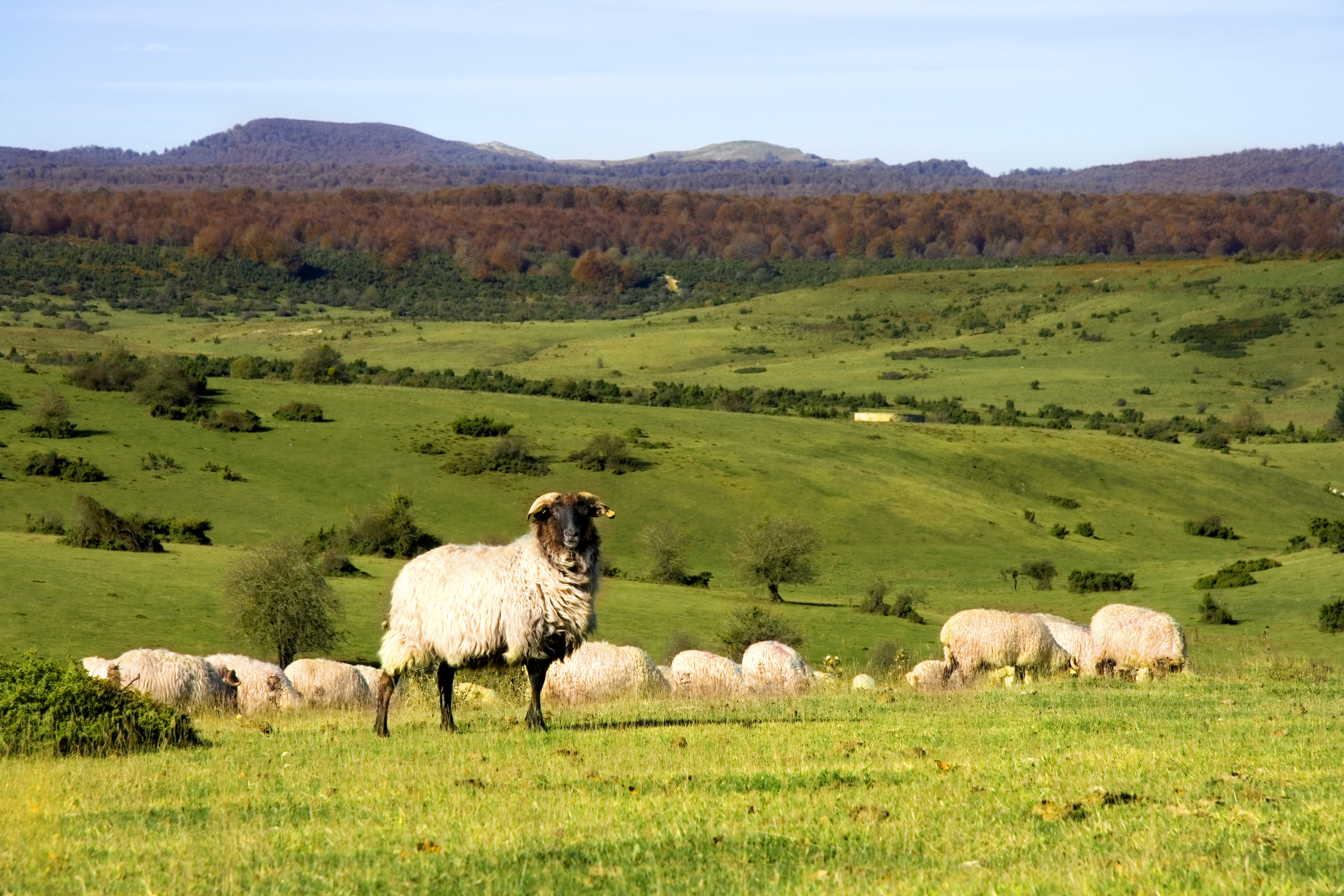
- Urbasa Mountains: A limestone plateau where beech forests alternate with open grasslands at around 1,000 metres, covered with pastures, hawthorns and junipers.
- Sierra de Andía: A vast eastern plateau dominated by grasslands, with woodland concentrated in the ravines.
- Monte de Limitaciones: South of Urbasa, characterised by the dry stone walls that once marked the boundaries of the land. Its use was recognised for the people of Amesco by King Charles III in 1412.
- Source of the Urederra: The point where turquoise waters emerge from calcareous tuff formations, beneath towering rock faces.
Human presence dates back thousands of years, with flint quarries and workshops linked to prehistoric communities. Numerous megalithic monuments are also preserved, such as the Arteko Saro dolmens and the Peña Blanca cromlech. Today, the landscape retains its connection with livestock farming: every 15 April, the cattle return to the mountain pastures and the lowlands resume their usual activity.
How to get to the Urbasa-Andía Natural Park?
Access to the mountains is mainly via two roads:
- From the NA-718: This road passes through Urbasa and connects with the Information Centre, the Balcón de Pilatos and the Palace of Urbasa.
- From the N-120: This provides access via the Lizarraga Pass. Currently, the car park at Alto de Lizarraga is closed for works, so it is recommended to use those at Arbeltz and Zalbide, heading towards Abárzuza.
What is there to do in the Urbasa-Andía Natural Park?
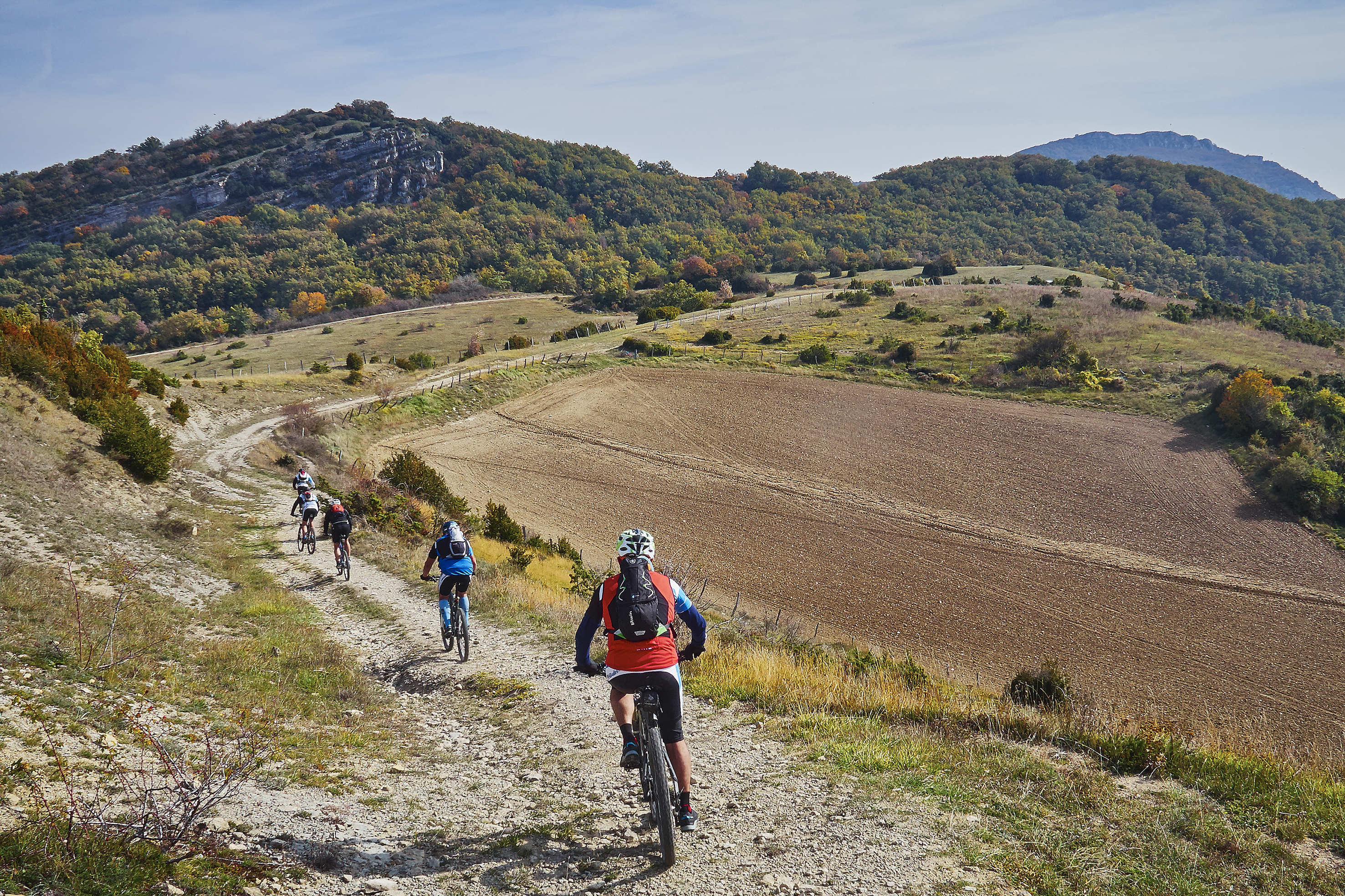
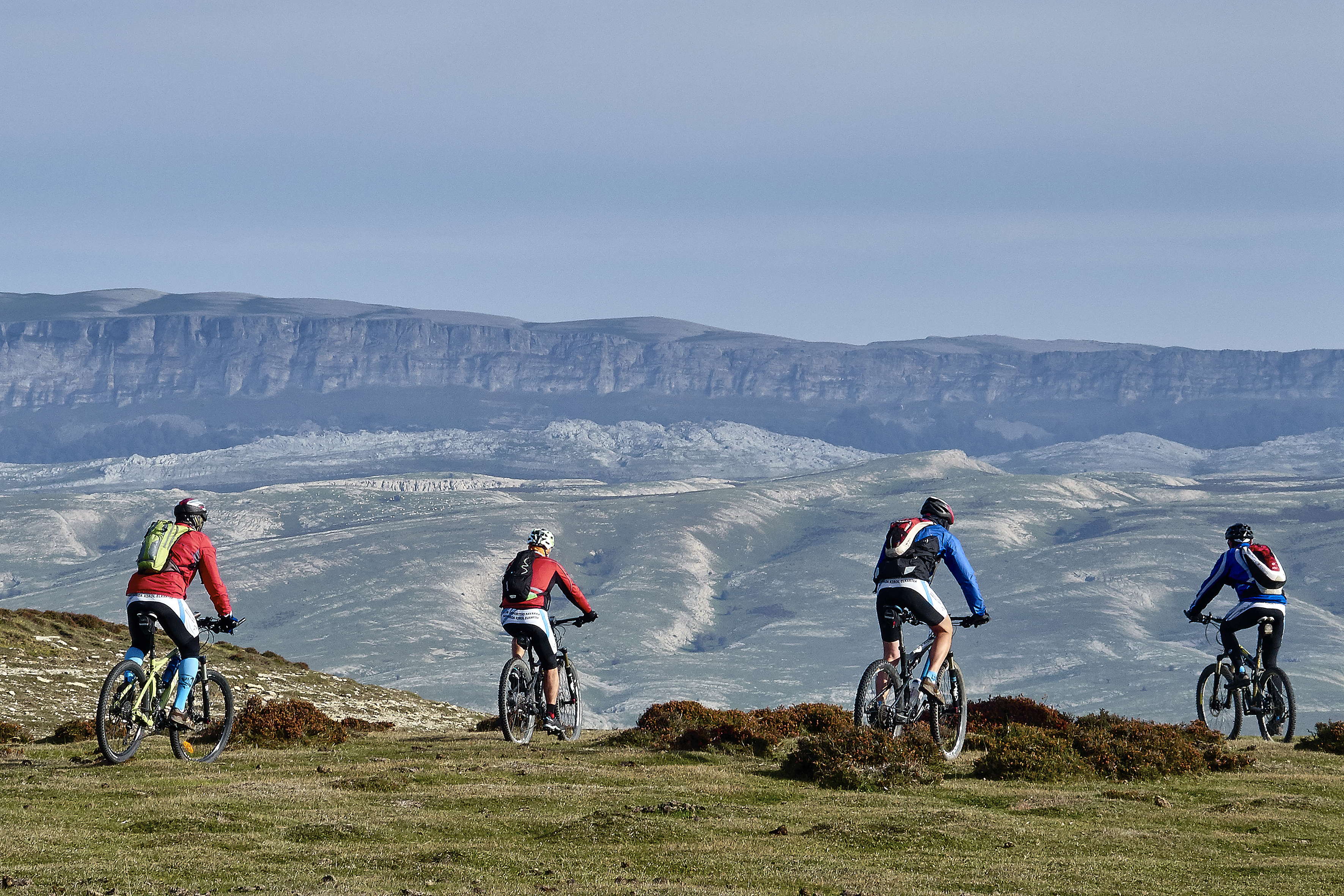
The route through Urbasa-Andía combines panoramic viewpoints, signposted trails and areas linked to traditional life.
- Viewpoints: Ubaba (Pilate’s Balcony), overlooking the Urederra cirque, and the Lizarraga viewpoint.
- Borda de Severino: An interpretive centre focusing on pastoral life and traditional buildings.
- Caving: The limestone terrain features numerous chasms and caves of interest.
- Trails and routes:
- Walk through the Urederra River Source Nature Reserve
- Accessible trail at Morterutxo
- Zelaiaundi Trail – “Enchanted Beech Forest”
- Trail through the Ubaba karst cirque
- Trail of the cup-shaped huts at Mirueta
- Visitor Centre – “Enchanted Beech Forest”
Información sobre: Urbasa-Andía Natural Park
Parque Natural de Urbasa-Andía
Parque Natural de Urbasa-Andía
Parque Natural de Urbasa-Andía
-
Aralar SAC
In this Aralar Special Area of Conservation (SAC), the landscape unfolds amidst deep beech forests a… -
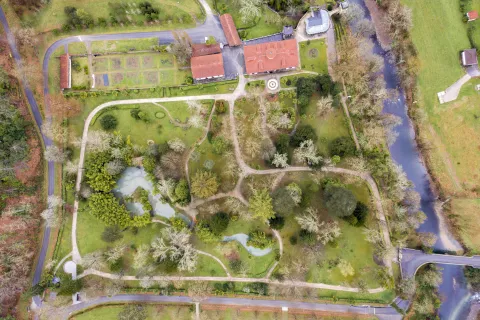
Bertiz Natural Park
In this corner where the River Bidasoa flows towards the sea and legends still drift amongst the str… -
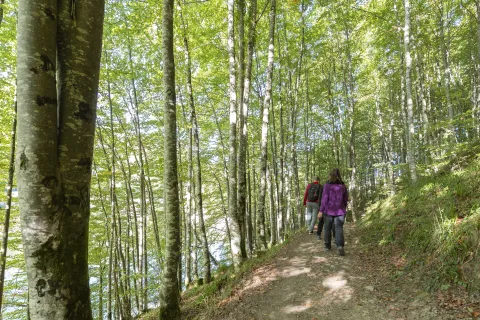
Irati Forest
The Irati Forest unfolds as a dense landscape, where beech and fir trees form a continuous canopy th…
