Iza / Itza

Where tranquillity is divided into sixteen hamlets

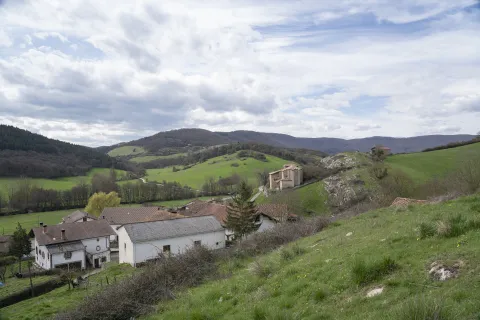
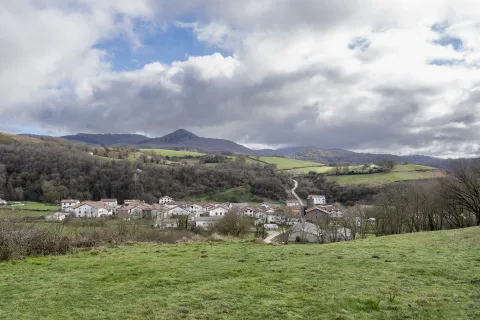
Here, where the stone holds the memory of two intertwined territories and the reed beds whisper the origin of the name, time moves at a pace that is barely perceptible. In Itza, the atmosphere is revealed in the imposing presence of the palaces of Cabo de Armería that dominate the basin and in the stillness of the ponds, where the air is filled with the flight of migratory birds. It is a place of passage and contemplation, where the language of Romanesque architecture and the scattered life of our villages intertwine in serene harmony, allowing the identity of the region to emerge in every stone-built corner.

Itza general information

Itza is a composite municipality situated a short distance from the capital, where the landscape opens up in a transition between valleys and plains. The territory, covering just over 50 km², is the result of the historical union between the former Cendea of Iza and the Gulina Valley, a merger that shaped the current network of councils and localities.

Life here revolves around Erice, the administrative centre, whilst the rest of the municipality is scattered across small settlements that retain their own identity. We find ourselves in an area where Basque and Spanish coexist as living expressions of the local culture. With a population of over 1,400 inhabitants, the economy maintains a direct link with the land: agriculture, livestock farming and activities linked to the processing of raw materials, both in quarries and in industrial areas. 

What to see in Itza?

Every corner of the area offers an insight into the relationship between landscape and tradition.  

  • Monastery of Santa María de Yarte (Lete): Declared a Site of Cultural Interest, this 12th-century complex preserves the memory of its affiliation with the monastery of Irache until the confiscation.
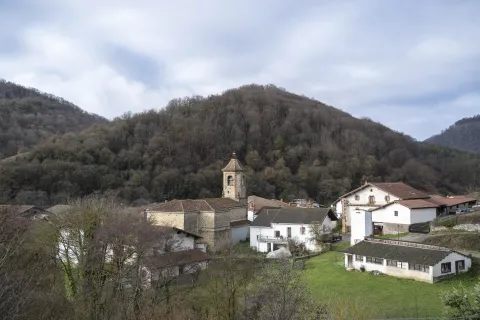
  • Parish Church of San Vicente de Larumbe: A building that marks the transition to the Gothic style, featuring a portico whose sculpture displays the narrative style typical of the period on a Romanesque base.
  • Church of San Andrés (Zuasti): A recently restored 13th-century church that preserves the faith of this historic village.
  • Palaces of Cabo de Armería: A site showcasing stately civil architecture, with towers and ashlar blocks found in Atondo, Iza, Lete, Ochovi, Sarasa and Zuasti.
  • Iza and Loza Wetlands: Endorheic wetlands where the reed and rush vegetation forms a vital ecosystem for migratory species and amphibians.
  • Basilica of Our Lady of Osquía (Atondo): A chapel situated near Erroz that houses the image of the town’s patron saint and serves as a meeting point for the May pilgrimage. 

Towns and villages of Itza

The municipality unfolds like a mosaic of settlements, each with its own rhythm and history:

  • Aginaga: A district in the ancient Gulina valley where stone structures and the local dog-walking service coexist at a leisurely pace.
  • Aldaba: A territory of the ancient cendea that holds its pilgrimage to the Virgin of Legarra in May and savours the tranquillity of its festivities.
  • Aldatz: An ancient manor that preserves the traces of its history amidst the tranquillity of a landscape that today has a sparse population.
  • Aritz: A municipality that celebrates Saint Michael in September, where the solidity of the ashlar reveals the legacy of the ancient cendea.
  • Atondo: A place that watches over the river crossing and guards the chapel of Osquía, whilst also bearing witness to the constant work of its stone quarry.
  • Eritze: Our administrative capital, where the daily life of the town hall coexists with the festive tradition of the Exaltation of the Holy Cross.
  • Gulia: The settlement that gave its name to the ancient valley. Its façades bear witness to the administrative merger that formed our current municipality.
  • Itza: The southern reed bed, where the inland ponds serve as a vantage point for observing the migratory birds that inhabit the valley.
  • Larunbe: Guardian of the church of San Vicente, whose Gothic sculpture displays a unique narrative style that adorns the parish church’s portico.
  • Lete: The area home to the Romanesque gem of Yarte. Its stones bear witness to the history of the monastery of Irache up to the confiscation.
  • Otxobi: A municipality that preserves its armoury palace and celebrates its festive identity during the last weekend in May.
  • Orderitz: An ancient settlement of the Cendea region, integrated into the landscape. Its stones now bear witness to the silence of a village with no registered inhabitants.
  • Saratsa: A place where the activity of the industrial estate and the sturdiness of its stately palace coexist in the daily life of the village.
  • Saratsate: A parish in the Gulina Valley that celebrates the Virgin of the Rosary, preserving the traditional architecture of our region.
  • Zia: A village situated to the north that bears witness to the heritage of the ancient valley, nestled in a landscape that transitions towards neighbouring Imoz.
  • Zuasti: A place that has transformed its 16th-century palace into a community space, whilst also preserving the small Romanesque church of San Andrés. 

Preguntas frecuentes

Resuelve las dudas más habituales sobre los diferentes parques y zonas naturales: cómo llegar, qué visitar, normas, rutas y servicios para planificar tu experiencia con facilidad.

The Itza Valley celebrates ‘Cendea Day’, organised on a rotating basis by a local council every Sunday in summer. It also celebrates the town’s patron saint on 15 May (San Isidro), and each village holds its own festivities throughout the year.

The area offers a blend of nature and tradition, with activities ranging from taking part in traditional walks to the Trinidad de Erga or the Osquía chapel, to visiting the Iza ponds to observe migratory wildlife in a preserved natural environment.

According to the INE’s official census for 2025, the community has a total population of 1,459 inhabitants.
chatbot

Living Stone

Online

18:32:37
Hello! How can I help you?