
Lekunberri
The echo of the train that linked two worlds

The echo of the train that linked two worlds
Amidst the solid stone of the farmhouses and the traces of the old railway, Lekunberri unfolds its history of transit and encounter. The forests flanking the valley and the tracks that linked Pamplona and San Sebastián continue to shape the landscape of daily life . The wind caresses the chimneys, and the stonework of yesteryear seems to preserve the echo of the former merchants, pilgrims and craftsmen. It is a place where the everyday and the historical have learnt to coexist, inviting you to walk slowly, look up and discover that every corner has a story to tell.
Lekunberri lies at the crossroads between the mountains and the road linking Pamplona and San Sebastián. Its 6.71 km² territory borders the Larraun Valley, from which it was administratively separated in 1995. The town has successfully balanced its industrial development with the preservation of the rural landscape, receiving international recognition as a "Best Tourism Village" in 2021.
Lekunberri is a meeting point between the mountains and the route linking Pamplona and San Sebastián. Its territory of 6.71 km² borders the Larraun Valley, from which it was administratively separated in 1995. The town has managed to balance its industrial growth with the preservation of the rural landscape, receiving international recognition as a "Best Tourism Village" in 2021.
Here, life revolves around industry, commerce and local culture. As part of the Basque-speaking region, the Basque language remains a living legacy that defines the identity of its people. The old town, with its ancient stately farmhouses, recalls the historic passage of traders and travellers who crossed the valley, whilst the modern connection via the A-15 allows the town to remain a hub of activity and services.
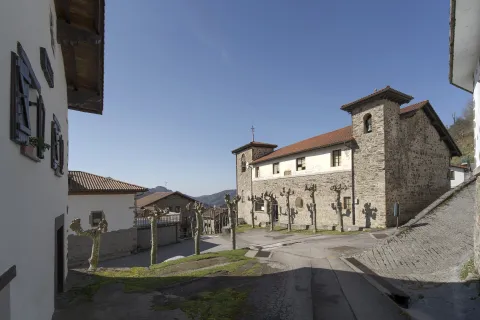
Lekunberri combines traditional architecture, nature and traces of the railway in a single stroll.

Old traditional laundry room in Lekunberri.

Casa Antonenea in Lekunberri, with a white facade and a stone tower.

Tourism office building in Lekunberri.
Resuelve las dudas más habituales sobre los diferentes parques y zonas naturales: cómo llegar, qué visitar, normas, rutas y servicios para planificar tu experiencia con facilidad.
Lekunberri comes from the Basque language: leku (place) and berri (new), meaning “New place”. Some interpretations add on (good), giving “Good new place”, alluding to the historical reconstruction of the town.
According to the latest available records from the INE, in 2025 the population of Lekunberri was 1,746.
In Lekunberri, you should visit the old town with its grand houses, the Plazaola Greenway, the Parish Church of St John the Baptist, and nearby attractions such as the Mendukilo Caves and the Sanctuary of St Michael of Aralar.



Online
