
Urdazubi / Urdax
The bridge over the water that connects caves and legends

The bridge over the water that connects caves and legends
Urdazubi/Urdax is a town situated in the Xareta region, very close to the French border. It is a thousand-year-old town that grew up around an ancient monastery which served as a hospital for pilgrims on the route of the 'Camino de Santiago'.
Walking through its streets is to discover stately architecture dotted with water channels, where medieval bridges and working mills coexist with imposing Indian-style houses. But its greatest treasure lies hidden underground: a magical world of stalactites and stalagmites which, it is said, was once home to the mythological lamias.
Urdazubi/Urdax is a place where water is the common thread running through everything. Upon arrival, the first thing that captivates you is the constant sound of the canals winding their way between the houses, spanned by stone bridges that look as though they’ve stepped out of a fairy tale. Here, imposing stone-built mansions with flower-filled balconies stand alongside the majestic shadow of the old monastery, creating an atmosphere of absolute peace.
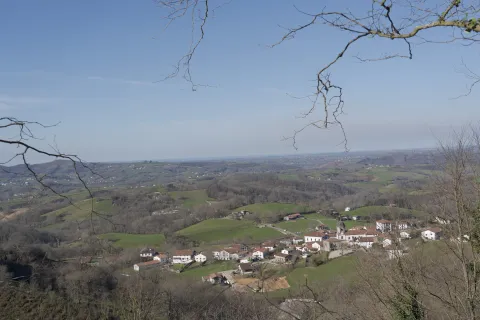
Life in Urdax moves at a different pace. It is the perfect place in Baztan-Bidasoa to lose yourself in its rural neighbourhoods such as Leorlas or Alquendi, where the green of the meadows is so intense it seems to glow. Whether exploring its mysterious underground depths or enjoying the hospitality of its people on a riverside terrace, Urdax envelops you in a unique blend of stately elegance and untamed nature.
Urdax offers a complete experience that blends geology, history and legends.

Water canal and tropical vegetation in the foreground, with the church among the trees in the background in Urdax.

Church of Urdax with a light stone bell tower, Romanesque windows, and a traditional multi-story Basque religious architectural structure.

Traditional Basque house in Urdax, with decorative wooden balconies next to a water canal.
Resuelve las dudas más habituales sobre los diferentes parques y zonas naturales: cómo llegar, qué visitar, normas, rutas y servicios para planificar tu experiencia con facilidad.
Online
