Imagen


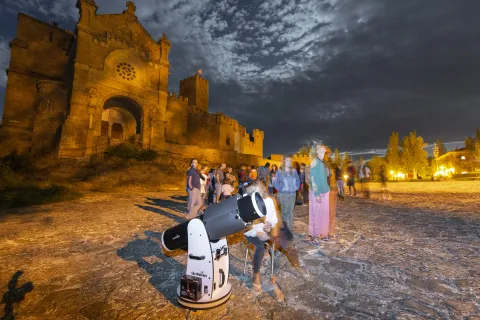
Every tower, every section of wall, every moat dug into the earth of Navarre responds to an ancient need: to observe, to protect, to resist. Here, time does not stand still, but neither does it erase. It slips between the ashlars, leaving intact the mark of those who defended these lines of the horizon.
This is a landscape that can be understood through its solidity. The fortresses do not intrude; they emerge from the ground as an extension of the landscape itself. In them, one can still sense the logic of surveillance, the calculation of distance, and the constant reading of the surroundings. They do not speak of the past in the abstract, but of a specific function that can still be intuited.
Exploring these structures helps us understand how a territory was organised around defence. The fortresses of Navarre are not isolated entities, but part of a network that coordinated control of the landscape and the borders. Furthermore, they offer a tangible insight into history: the use of brick in lower-lying areas, stone in mountainous regions, and adaptations to the terrain. Each structure responds to a specific context and helps us understand the political and military evolution of the ancient kingdom. Visiting these sites offers a glimpse into a way of inhabiting the territory based on resistance, strategy and permanence.

Online
