

Monastery of San Salvador de Leyre
The origin of a kingdom in stone
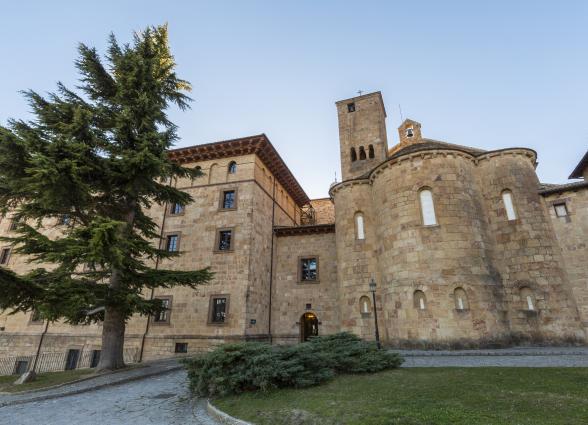
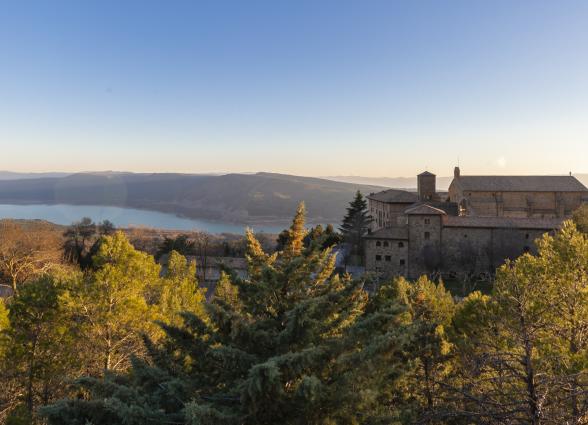
Here, where ancient stone opens out onto the mountain horizon and gazes upon the so-called ‘Sea of the Pyrenees’, time slips by without haste. The Monastery of Leyre is home to the echo of ancient chants and the stillness of walls that have served as a refuge for kings, monks and silence. It is a place where the depth of the crypt and the rhythm of monastic life intertwine, revealing a presence that does not impose itself, but rather allows itself to be discovered slowly by those who pause in its tranquillity.
Leyre Monastery – general information
It is recognised as one of the most important monastic complexes in Spain and is considered the spiritual cradle of Navarre. Its identity is rooted in a privileged setting on the slopes of the mountain range that bears its name, overlooking the Berdún Canal and the Yesa Reservoir .
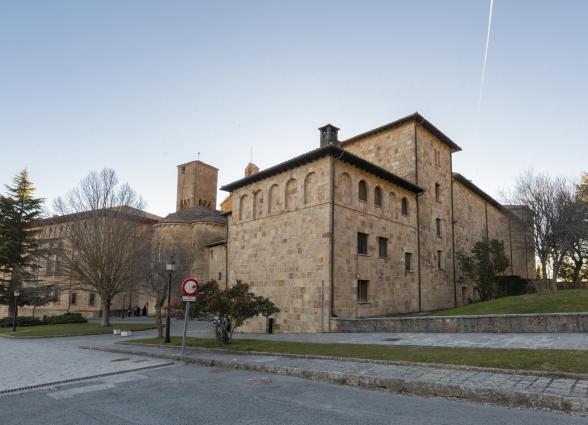
This site, home to a community of Benedictine monks, is the finest example of Romanesque architecture in Navarre. Its stonework preserves the pillars of the ancient Kingdom, housing the pantheon of its first monarchs and architectural features of great value such as the 11th-century crypt and the Porta Speciosa.
How do I get to Leyre Monastery?
It is easily accessible via the roads connecting the capital of Navarre with the Pyrenees.
- From Pamplona: It is located about 50–52 kilometres away.
- By road: Take the A-21 motorway (Pamplona–Jaca), taking the exit for Yesa.
- Final stretch: From Yesa , a local road of about 4 kilometres leads directly to the monastery.
What to do at Leyre Monastery?
The complex offers a profound insight into history, where art and spirituality intertwine.
- Explore the church and the crypt: A space to admire one of the oldest Romanesque complexes on the peninsula, with its characteristic ‘forest of columns’ and the imposing apses.
- Listen to Gregorian chant: You can take part in the monks’ liturgy, where Gregorian chant is an essential part of the experience.
- Visit the royal pantheon: A place that preserves the memory of the first kings of Navarre in a setting of great sobriety.
- Admire the Porta Speciosa: A 12th-century Romanesque doorway featuring biblical scenes and symbolic figures carved in stone.
- Explore the mountains: The surrounding area offers routes to Arangoiti or walks to the Fuente de San Virila, through beech and oak forests.
- Enjoy the cuisine and surroundings: The site offers café facilities and areas where you can sample local produce, including the liqueur made by the community.
Información sobre: Monastery of San Salvador de Leyre
-

Zamartze Monastery
Here, where the ashlar stone bears the imprint of the ancient road and the shadow of the Aralar Moun… -

Sanctuary of San Miguel de Aralar
Here, where the ashlar stone captures the passing of the clouds and the heights suspend the heartbea… -

Royal Collegiate Church of Orreaga / Roncesvalles
Amidst the mist of the Pyrenees and the solidity of the stone, time unfolds at a different pace. In …
