

Traditional Carnivals
Celebrations that connect with the heritage of Navarre
Here, where winter is still felt amidst the mountains, smoke and damp paths, the traditional carnivals of Navarre retain a power that is hard to explain. The sound of cowbells echoes through the valleys, masks transform the streets, and characters drawn from ancient legends restore to the villages a heritage that remains very much alive.
Far removed from urban carnivals, these celebrations maintain a deep connection with nature, the cycles of the year and rural identity. Amidst animal skins, straw, fire and music, each village performs its own ritual, passing on a heritage that has survived for centuries.
What are the most famous traditional carnivals in Navarre?
Navarre’s rural carnivals form part of the region’s most distinctive cultural heritage. Each village maintains its own characters, symbols and celebrations, many of which are linked to ancient winter and fertility rituals.
Ituren and Zubieta
In the Malerreka Valley, the Joaldunak take centre stage in one of Navarre’s best-known carnivals: the Ituren and Zubieta Carnival. On the Monday and Tuesday following the last Sunday in January, they make their way between the two villages, ringing large cowbells strapped to their backs. Dressed in sheepskins, conical hats and long manes, they advance in a group following a perfectly synchronised rhythm. The clanging of the cowbells and the collective movement form one of the most recognisable images of winter in Navarre.
Alsasua
The rural carnival of Alsasua transforms the streets of Sakana with unsettling figures and scenes of great visual intensity. The Momotxorros appear clad in skins, horns and blood-stained cloths, accompanied by characters such as the sorginak, the Akerra or the Juantramposos. The celebration blends fire, music and dance in a performance that keeps alive the wildest and most symbolic aspects of traditional carnival.
Lantz
The Lantz carnival revolves around the figure of Miel Otxin, a straw giant representing a legendary bandit. The story unfolds over several days through characters such as Ziripot, Zaldiko and the blacksmiths, who roam the village streets amidst chases and festive scenes. The celebration culminates with the burning of Miel Otxin, one of the best-known moments of the Navarrese carnival.
Información sobre: Traditional Carnivals
-
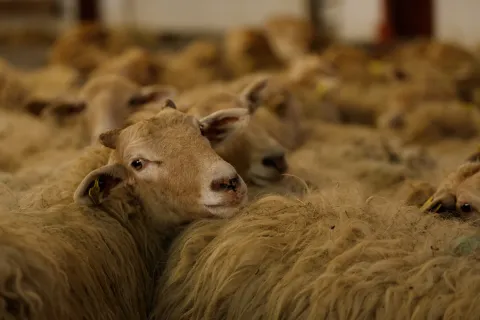
Sheep Shearing Day
With the aim of preserving and promoting one of Navarre's most traditional livestock farming practic… -
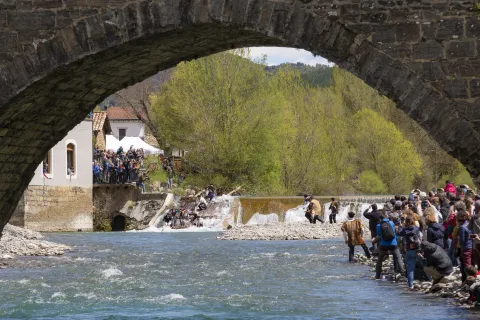
Raft Day
In honor and remembrance of the raftsmen of the Roncal, Salazar, and Aezkoa valleys, "Raft Day" was … -
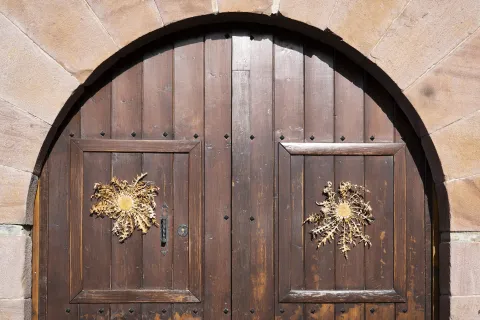
Common symbols: Eguzkilore
In Navarre, certain symbols have been part of everyday life for centuries. The Eguzkilore is one of … -
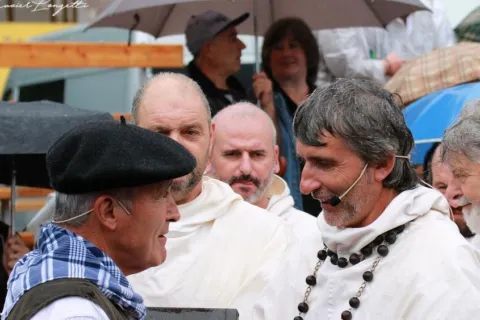
Iron Day
Here, where the valley paths linked the inland ironworks with the Cantabrian Sea, Urdazubi/Urdax kee…
