

Sierra de Leyre
Where the rock bears witness to the passing of the centuries
Here, where the mountain rises like an ancient wall guarding the entrance to the Pyrenean valleys, time stands still under the gaze of Arangoiti. The Sierra de Leyre is characterised by the contrast between its two worlds. On the southern slope, the light falls upon the Yesa reservoir as if the stone were breathing warmth. On the northern face, the damp gives way to a shadowy forest where the woodland grows with an almost primeval density. It is a land of passage and observation, a natural corridor between lands and eras. The slopes still echo with the footsteps of ancient loggers and the silence of the monastery perched high above. Here, history is not told; it accumulates in the rock.
Sierra de Leyre general information
It is recorded as the first pre-Pyrenean mountain range, a thirty-kilometre-long structure that forms the backbone of north-eastern Navarre. Its identity is rooted in a limestone landscape that acts as a vital biogeographical barrier, separating the Alpine world of the mountains from the Mediterranean and continental influences of the south. Its geology bears witness to the millennia-long work of the rivers Esca, Salazar, and Irati , whose waters have carved deep and spectacular gorges into its rock, serving as a refuge for large birds of prey.
Its history preserves the memory of the Pamplona monarchy and the pulse of the Cañada Real de los Roncaleses, a trace of a pastoral culture that still inhabits its slopes. Administratively, its relief forms the southern boundary of the Romanzado valley and rises above the Berdún canal, creating a unique geographical setting where the rock and the history of the Irati Valley coexist in a state of absolute tranquillity.
How to get to the Sierra de Leyre?
Access to the mountain range is straightforward via the main roads connecting to the eastern Pyrenees:
- By road: It is usually accessed via the A-21 Pyrenees Motorway, taking exit 47 to begin a picturesque route that climbs towards the monastery.
- From Yesa: It is located about 5 kilometres from the town of Yesa, from where a well-signposted turn-off leads directly to the southern foothills of the mountains.
What to do in the Sierra de Leyre?
In Leyre, the landscape is not merely observed from the outside; it is traversed as an uplifting experience.
- Exploring the Monastery of San Salvador: A Romanesque sanctuary that chronicles the history of Navarre in its crypt of ashlar blocks and the magnificent Porta Speciosa. You can immerse yourself in the silence whilst listening to the Gregorian chants of the Benedictine monks.
- Exploring the gorges: A landscape to experience the sheer verticality of the Lumbier and Arbayún gorges, the latter renowned for being home to Navarre’s largest colony of griffon vultures.
- Nature and viewpoints: Take in the views from the mountain range, a strategic vantage point from which to gaze out over the snow-capped peaks of the Pyrenees, the Pico de Oroel and the Pamplona basin.
- Things to do in Yesa: The reservoir, known as the ‘Sea of the Pyrenees’, is ideal for water sports and fishing at the foot of its cliffs.
- Hiking: The terrain is ideal for exploring sections of the Cañada Real de los Roncaleses (GR-13) or the Camino de Santiago on its Toulouse route.
Información sobre: Sierra de Leyre
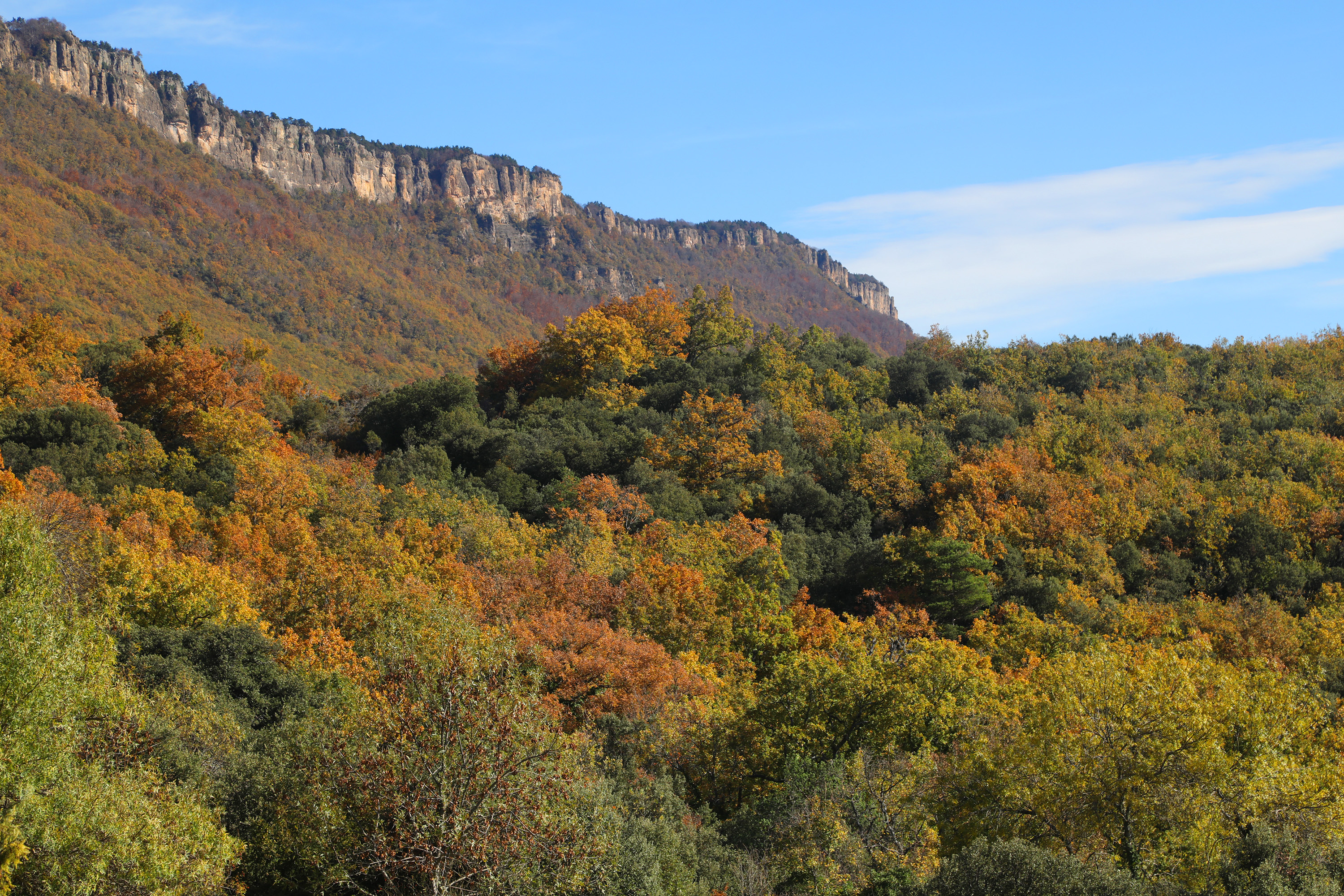
Bosque en otoño con acantilados rocosos al fondo en Sierra de Leyre, Prepirineo de Navarra.
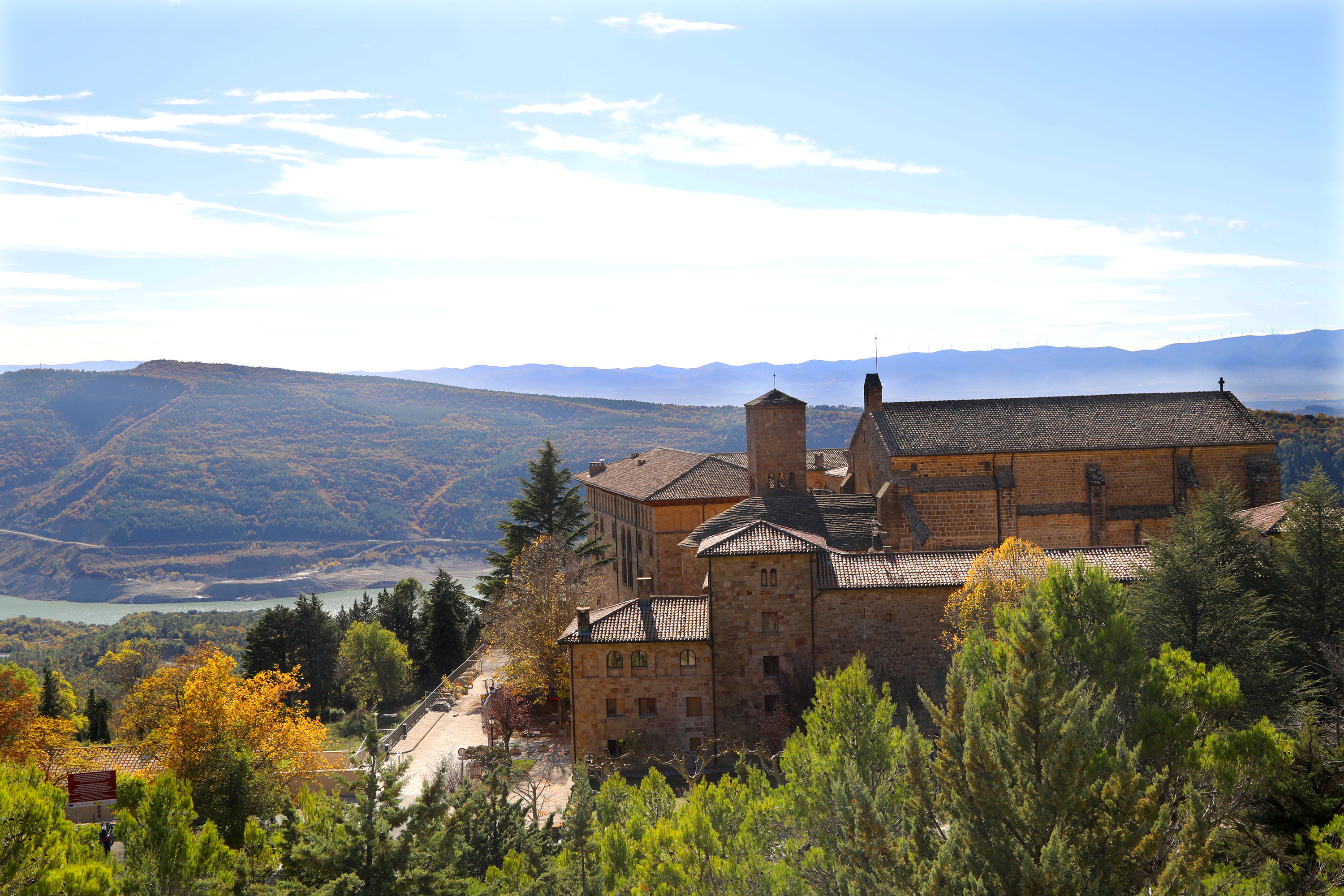
Monasterio medieval de piedra en Sierra de Leyre con valle y montañas al fondo.
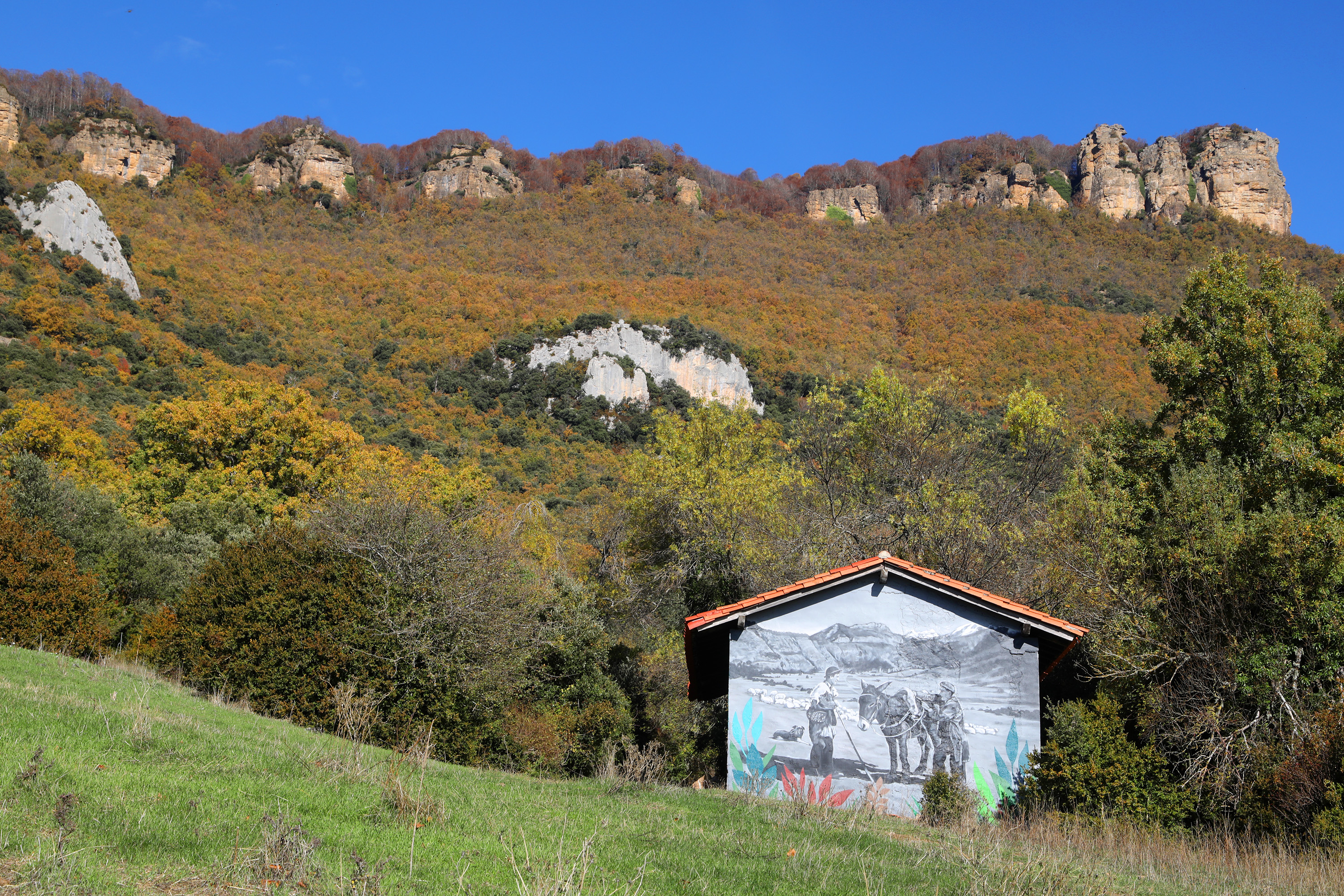
Cabaña con mural en Sierra de Leyre, frente a acantilados calizos y bosque de otoño bajo cielo despejado.
-

Urbasa Range
Here, where the name whispers of the “water of the forest” and the plateau stretches out like a mant… -

Peña Izaga
Peña Izaga rises above the Izagaondoa valleys as a broad and serene mountain, where the landscape se… -

Higa de Monreal
The Higa de Monreal rises above the Navarran landscape with a pyramidal silhouette that seems to eme… -
Aralar Mountain Range
Here, where the limestone holds the memory of time and the landscape opens up into bottomless chasms…
