
Oronz / Orontze
Where stone remembers and the river marks the passing of time

Where stone remembers and the river marks the passing of time
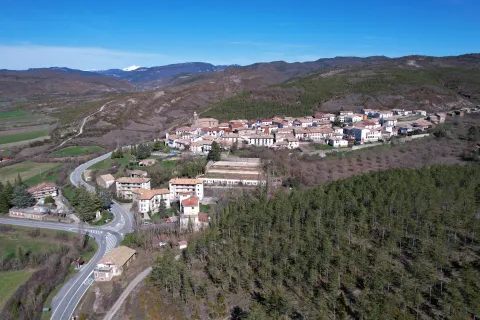
Here, in the serene flow of the River Salazar between folds of ancient rock, time does not move forward: it stands still. In Oronz, the light of the Pyrenees falls upon façades that bear the marks of lineage, whilst the silence of the valley envelops every daily gesture. The atmosphere is felt in the solidity of the stone and in the pause with which the landscape allows itself to be inhabited, as if everything were arranged to be discovered without haste.
The village sits at an altitude of 729 metres, forming part of the historical fabric of the Valle de Salazar . Its identity emerges in a region where the climate oscillates between Atlantic and Mediterranean influences, shaping a landscape of beech and oak forests that changes character with each season. For centuries, Oronz formed part of the Atabea estate, until it consolidated its autonomy in the 19th century. Today, it maintains a direct connection with the land: potato farming, livestock rearing and the use of the forest continue to set the pace of life. Some 82 kilometres from Pamplona, the village retains its traditional structure, where stone, wood and coats of arms tell a story of belonging and continuity.
Oronz’s heritage offers a glimpse of the union between 13th-century faith, the traces of the nobility in the stone, and the geology of the Salacenco landscape.

Traditional stone and whitewashed houses with tile roofs in Oronz.

Stone church with a bell tower in Oronz, surrounded by vegetation.

Oronz square with a church, stone houses, and a park, surrounded by forest.
Resuelve las dudas más habituales sobre los diferentes parques y zonas naturales: cómo llegar, qué visitar, normas, rutas y servicios para planificar tu experiencia con facilidad.
According to the official INE records of 2025, our village has a population of 51 inhabitants.


Online
